
Exploring the potential to neutralize AI attacks, ransomware attacks, server attacks, and phishing scams Next-generation innovative security theory: "Theory of Infinite-Key Multi-Time-Varying Fixed Points" K Trust Co., Ltd. has entered into a business partnership with the Ochi-Imabari Agricultural Cooperative (JA Ochi-Imabari) to promote licensing initiatives
Promoting the dissemination and societal implementation of the "Theory of Solutions for Multi-Key Time-Varying Systems"
株式会社Kトラスト

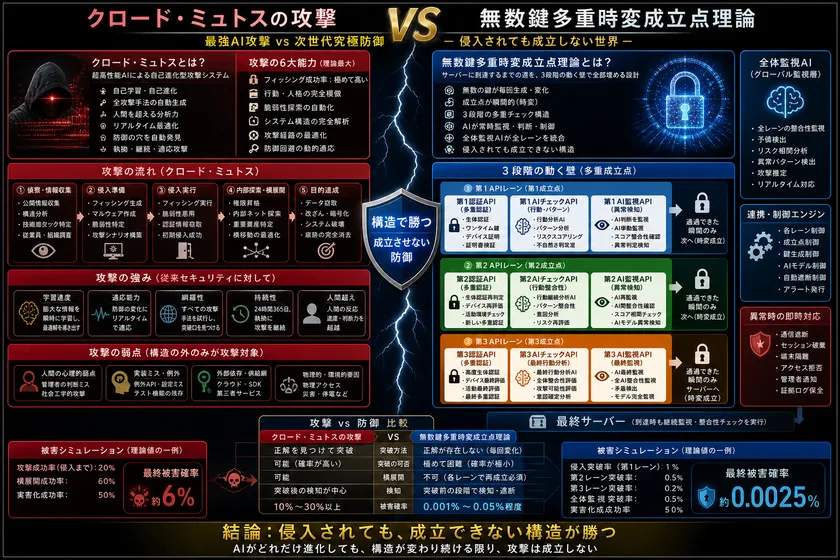
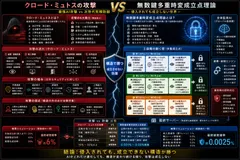
Claude Moutos & the Theory of Fixed Points for Infinite-Key Time-Varying Systems
*High-precision, precise, meticulous, reverse-engineering, AI-simulated images
Yuki Takeuchi of Point Mechanism Co., Ltd. (hereinafter “Yuki Takeuchi”) has invented the “Infinite-Key Multiple Time-Varying Valid Point Theory” and various intellectual property rights. To improve and resolve social issues, K Trust Co., Ltd.(Representative Directors: Tomoko Hirakawa and Kazunori Hirakawa; hereinafter “K Trust”) have entered into a partnership with the Ochi-Imabari Agricultural Cooperative(JA Ochi-Imabari) (Representative Director and Chairman: Hirotada Watanabe / Contact: Kazutoyo Akutagawa) to promote the licensing business of the next-generation cybersecurity theory “Theory of Infinite-Key Multiple Time-Varying Validation Points” championed by Yuki Takeuchi.
Through this business partnership, both parties will promote the dissemination and societal implementation of the “Infinite-Key Multiple Time-Varying Fixed-Point Theory,” while also advancing initiatives to improve and resolve various cybersecurity challenges facing modern society, such as AI attacks, ransomware attacks, server attacks, phishing scams,as well as secondary and tertiary damages resulting from information leaks.Furthermore, by promoting the licensing business across a wide range of sectors—including corporations, local governments, agricultural organizations, financial institutions, medical institutions, and educational institutions—we aim to contribute to enhancing cyber defense capabilities in local communities and throughout Japan, with the goal of realizing a safe and secure digital society.
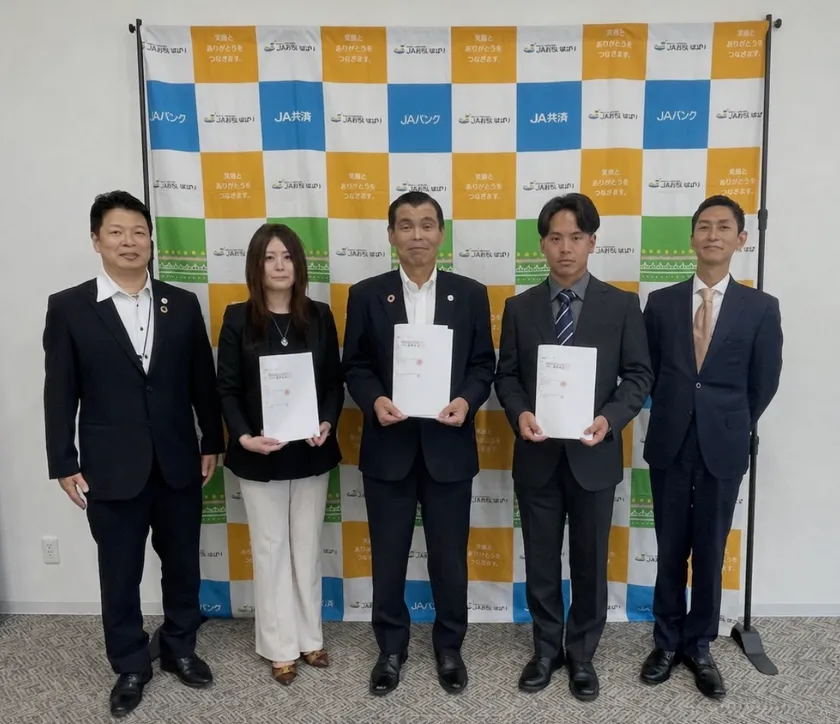
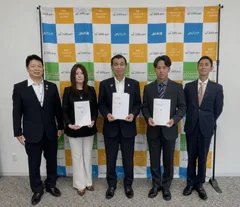
JA Ochi-Imabari & K Trust
■Background
In recent years, with the rapid evolution of AI technology, cyberattacks have become increasingly sophisticated and automated at an unprecedented pace.
Damage caused by AI-powered automated attacks, ransomware attacks, unauthorized access, malware attacks, targeted attacks, and phishing scams is expanding worldwide, and many companies, local governments, financial institutions, medical institutions, and educational institutions are facing serious threats.
In the international cybersecurity field, the importance of continuous trust verification and dynamic defense is being emphasized, moving away from defenses that rely solely on fixed boundaries and entry points.
Furthermore, it is well known that in actual cyberattacks, damage is amplified not only by the exploitation of vulnerabilities but also by a combination of credential theft, privilege escalation, lateral movement, and internal propagation.
■K-Trust’s Perspective on the Fundamental Challenges of Modern Cyber Attacks
K-Trust believes that one of the greatest challenges in modern cyberattacks lies in “fixed attack entry points.”
In traditional systems, fixed IDs, fixed passwords, fixed encryption keys, fixed APIs, fixed administrative privileges, fixed sessions, and fixed communication paths may be maintained for extended periods.
Attackers can repeatedly study and analyze these fixed targets, and use AI and automation tools to launch iterative attacks.Furthermore, while vulnerability mitigation is extremely important, as long as these fixed targets remain, threats such as repeated attacks, targeted attacks, credential theft, privilege escalation, and the lateral movement of ransomware or viruses will persist, even if vulnerabilities are reduced.
Furthermore, while many systems have numerous measures in place for “pre-access defense,” challenges may remain regarding “continuous validation after access,” “monitoring for anomalous behavior after access,” and “monitoring for privilege escalation after access.”
K-Trust believes that in modern cyberattacks, the ability of an attacker to “maintain a foothold after intrusion” poses a greater challenge than the intrusion itself.
After gaining access, attackers may use fixed IDs, fixed privileges, fixed communication paths, and fixed APIs to perform privilege escalation, lateral movement within the network, information theft, the spread of ransomware, the leakage of customer information, and information gathering for phishing scams.Therefore, this theory places importance not only on “whether access was gained,” but also on “whether the intrusion remains active after access.”
By conducting continuous monitoring, continuous validation of access status, and continuous trust assessment, we aim to establish a new defensive approach that mitigates the expansion of damage following a breach.
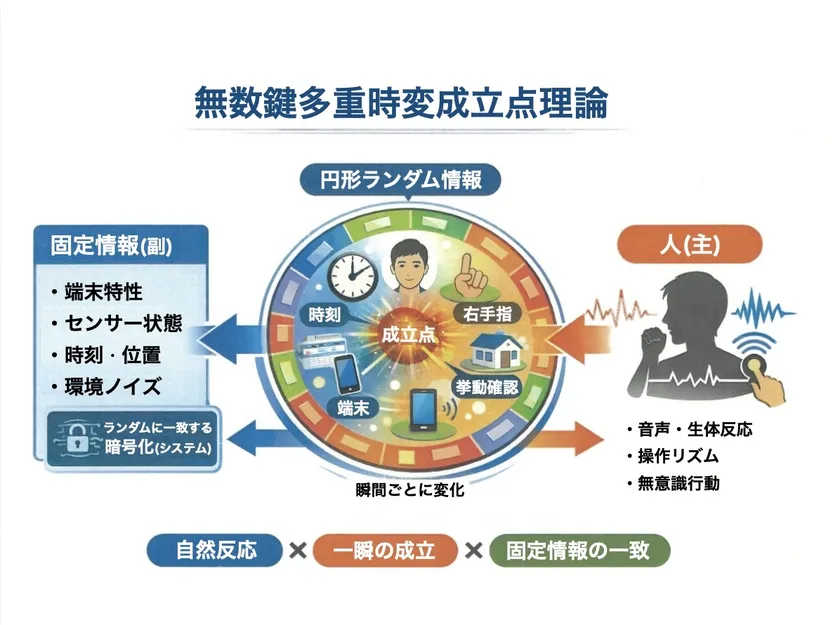
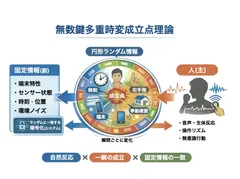
Validation Point Diagram
*AI-generated image
■ Secondary and Tertiary Damage Caused by Data Breaches
The damage caused by modern cyberattacks is not limited to system downtime and data encryption.
Information leaked through ransomware attacks or unauthorized access can lead to secondary and tertiary damage, such as phishing scams, identity theft, account hijacking, unauthorized fund transfers, and targeted attacks.
Leaked information—such as names, email addresses, phone numbers, organizational affiliations, and transaction details—may be exploited as fodder for more sophisticated attacks. As a result, the damage may extend beyond the company itself to affect customers, union members, business partners, affiliated companies, and local residents.
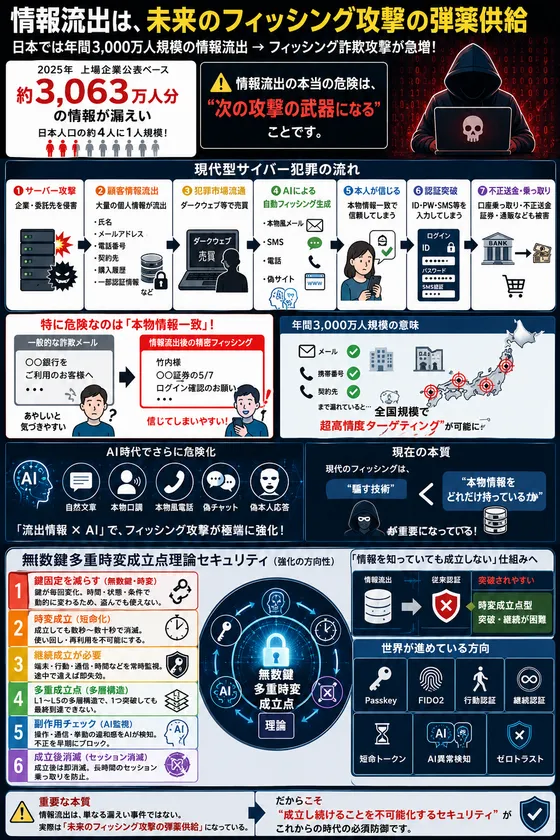
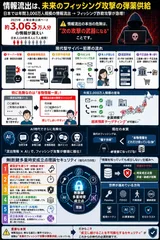
The Current State of Phishing Scams
*High-precision, sophisticated, meticulous, reverse-engineered, AI-simulated images
* Cybersecurity and Data Breach News https://share.google/xnP7Ll0H2CC2tAVgi
■What Is the Theory of Infinite-Key Multiple Time-Varying Solution Points?
The Infinite-Key Multiple Time-Varying Validation Point Theory is a next-generation security theory based on a new concept that “does not assume fixed validation conditions.”
This theory aims to reduce dependence on fixed attack success points by combining infinite-key encryption, multi-layered protection, time-varying mechanisms, short-term validity, one-time validity, multi-layer success point control, AI monitoring, and continuous trust assessment.
The fundamental philosophy of this theory is centered on the principles of non-fixation, time-varying behavior, short-lived validity, decentralization, continuous monitoring even after validation, and revocation of validity in the event of anomalies.
■What This Theory Aims to Achieve
The Infinite-Key, Multi-Layered, Time-Varying Point of Establishment Theory is a next-generation, revolutionary security theory that seeks to make the establishment of AI attacks, ransomware attacks, server attacks, phishing scams, credential theft, unauthorized access, malware infections, privilege escalation attacks, and lateral movement attacks extremely difficult, thereby pursuing the potential to neutralize them.
Rather than merely "preventing intrusion" as in the past, it aims for a new defensive approach that makes it "difficult for an attack to succeed even after intrusion," "makes the attack conditions themselves difficult to establish," and "limits the spread of damage."
■Purpose of the Business Partnership
1. Promotion of Licensing Business → We will promote the licensing business for the "Infinite-Key Multi-Variable Time-Varying Solution Point Theory" and work to disseminate it to companies and organizations.
2. Promotion of Social Implementation → We will aim for practical application through the promotion of proof-of-concept (PoC) projects and promote social implementation.
3. Contribution to Local Communities → We will work to enhance cyber defense capabilities within local communities.
4. Nationwide Expansion → We will promote the technology to companies, local governments, agricultural organizations, financial institutions, medical institutions, educational institutions, and others.
[Expected Outcomes]
Through the dissemination of this theory, we aim to achieve: protection of corporate information, customer information, and member information; protection of regional infrastructure and financial information; protection of critical systems; reduction of information leakage risks;mitigating secondary damage following data breaches, curbing phishing scams, preventing identity theft, limiting the spread of ransomware attacks, reducing reliance on PINs and static authentication credentials, realizing new identity verification models suited for the AI era, and building new defense models adapted to the AI era.
■Comment
[K Trust Co., Ltd.]
“In the AI era, cyberattacks are shifting from human-initiated attacks to automated attacks driven by AI. We will promote the dissemination and societal implementation of the theory of infinite-key multiple time-varying validation points as a new defense concept that does not rely on fixed validation conditions.Through this business partnership, we are committed to contributing to the improvement of cybersecurity in local communities, Japan, and the world.”
[Ochi-Imabari Agricultural Cooperative (JA Ochi-Imabari)]
“As an organization supporting the local community, the importance of protecting information assets is growing ever more critical. Through this business partnership, we aim to explore new possibilities in cybersecurity, promote initiatives that lead to safety and peace of mind for the local community, and ultimately contribute to realizing a future where reliance on PINs and fixed authentication credentials is reduced.”
[Yuki Takeuchi]
"Today, with the emergence of Claude Moutos, there is much talk about vulnerabilities, but the real threat lies not in vulnerabilities themselves, but in the existence of static security measures—including AI and virus attacks.Static security systems are vulnerable to targeted attacks; attackers can identify the point of entry, analyze it, and adapt their attack methods accordingly. To eliminate such threats, we will work to improve and resolve social issues by realizing security that truly protects and provides peace of mind.”
Program Appearance: https://youtu.be/W64x53pDf5s?si=ZRzFYfhOI6VGB73S
YouTube Explanatory Videos, etc.: https://youtube.com/channel/UCaw3vYDfrE6nQHHM0RjhQbA?si=YWn4MhlJl59BT2su
Note List: https://note.com/lucky_quokka8752
■Future Outlook
K-Trust Co., Ltd. is collaborating with the Ochi-Imabari Agricultural Cooperative (JA Ochi-Imabari) to promote the licensing of the "Infinite-Key Multiple Time-Varying Fixed-Point Theory." Through this initiative, we will explore ways to neutralize AI attacks,ransomware attacks, server attacks, and phishing scams, and will work toward the societal implementation of next-generation cybersecurity and the improvement and resolution of social issues.
[Contact Information]

K Trust Co., Ltd. Logo
K Trust Co., Ltd.
Licensing Business Promotion Division
Contacts: Hirakawa / Takeuchi
TEL: 050-1720-5724
E-mail: k-trust@verda.co.jp
Address: 1-3313 Shimoshidami, Moriyama-ku, Nagoya City, Aichi Prefecture

Ochi-Imabari Agricultural Cooperative (JA Ochi-Imabari) Logo
Ochi-Imabari Agricultural Cooperative (JA Ochi-Imabari)
Contact: Planning and Management Division, Akutagawa
TEL: 0898-34-1802
E-mail: kanri@ja-ochiima.or.jp
Address: 1-1-5 Kitahorai-cho, Imabari City, Ehime Prefecture
Image


Logo Image

- Category:
- Corporate Trends
- Genres:
- Technology General Business Economy(Japan)