
Possibility of the World's Strongest Security Advanced version of Zero Trust, no PIN required The next generation of cutting-edge security
~Disclosing the critical difference between Zero Trust and Zero Trust: about after logging in.
株式会社ポイント機構

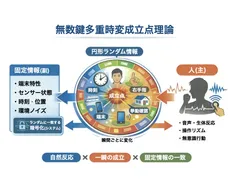
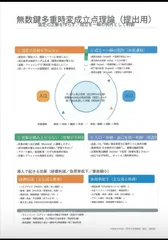
The Point Organization, Inc. (Head Office: Shibuya-ku, Tokyo; CEO: Yuki Takeuchi), together with K Trust Corporation (Head Office: Moriyama-ku, Nagoya City, Aichi Prefecture; CEO: Tomoko Hirakawa and Kazunori Hirakawa; hereinafter "K Trust"), has released a new security theory, the "infinite-key multiple time-varying fixed-point theory".
YouTube video explanation list
Comparison of Zero Trust and Formal Point Security: https://youtu.be/rOjugXCmKz0?si=nRVailF1Wmx3E0LL
About the contents after logging in to the established point security: https://youtu.be/ba-lk05dABo?si=CS8uEJujQxfHg6Y6
About the contents of login : https://youtu.be/W09Wwy6bEVU?si=tBhqtHaB8Mmoif4-
About making PIN and ID unnecessary: https://youtu.be/IkQZSjOUpOQ?si=nH2jdQcj4sDVJ562
About multiple patent multiple patent rights: https://youtu.be/hxV3rdUfklY?si=Wf-Q675fr-tTfnjM
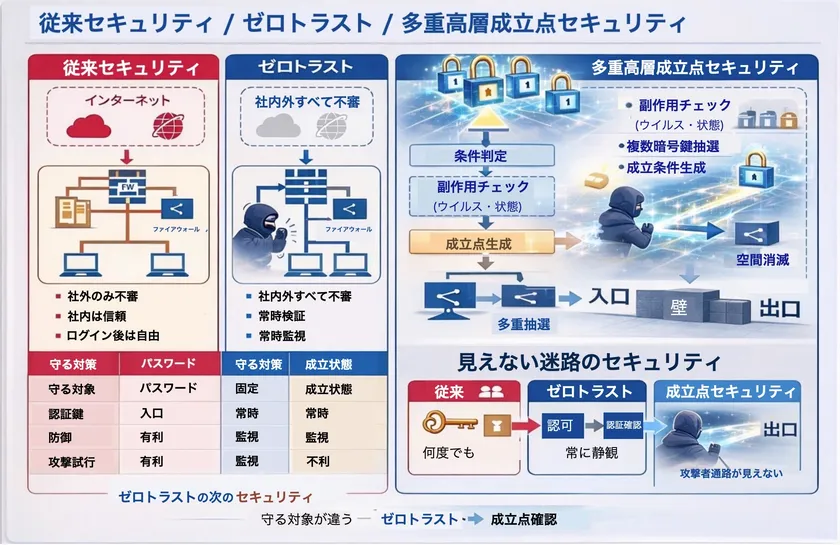
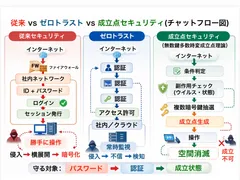
Comparison of Conventional, Zero-Trust and Establishment Point Security
This theory is positioned as a next-generation state-of-the-art security structure that goes beyond conventional and zero-trust, and is a multiple layer of defense against viruses within the system,
No passwords required
No fixed keys
Automatic virus checks on multiple layers
Instantaneous control of the status of the system
This is a new security concept characterized by ● No password required ● No fixed key ● Multi-level automatic virus check ● Instantaneous control of the status of establishment
Limitations of Conventional Security
Conventional security is
Fixed IDs
Fixed passwords
Fixed passwords ● Fixed keys
Fixed passwords ● Fixed keys ● Fixed session continuity
The structure is as follows. Because of this, it is possible to
Once the authentication is breached, it can be deployed horizontally.
Encryption can be performed after authentication
AI has the advantage of trial
AI has the advantage of trial by trial.
Positioning of Zero Trust
Zero Trust is based on the concept of "trusting no one.
Always authenticated
Continuous monitoring
Continuous monitoring. However, in essence, since there is a fixed correct answer (ID/token),
Attacks after authentication is breached
lateral expansion
Abuse of execution rights
However, since there is a fixed correct answer (ID/token), attacks after authentication breakthrough ● lateral development
New Theory: Formation Point Security → This theory is fundamentally different from the conventional one.
The core of this theory is that "formation itself is limited to a single moment.
Formation space model
Normal: Does not exist
Conditional matching: Instantaneous generation
After operation: Immediate disappearance
In case of an anomaly: Immediate shutdown
In other words, formation is a "time event" and cannot be reused.
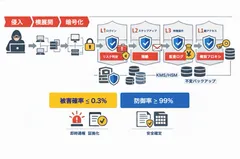
Multi-Layered High-Level Structure (L1-L5) → This theory is controlled by a 5-layered structure.
L1: Entrance (login) → Check user, terminal, and environment
L2: Side effect check → Detection of virus and abnormal behavior
L3: Key draw →Random generation of multiple encryption keys each time
L4: Establishment status → Permitted only when conditions are met
L5: Space disappearance →After the operation is completed, the passage disappears

Multiple high-layer defense until login
The greatest feature
(1) Key is not fixed: encryption keys are
Temporary
Random
Random ● Multi-layer generation
Random
In other words, the structure does not have a fixed cipher.
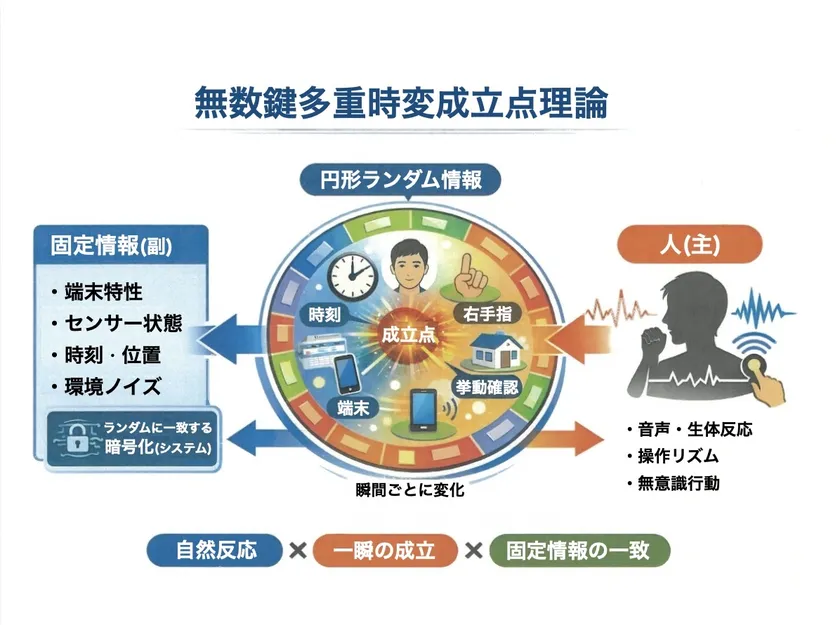
Diagram of a multi-composite encryption key
(2) Automatic virus check of multiple layers: At each layer
Behavior verification
Operation validation
Authorization abuse validation
● Operation validity verification ● Authorization abuse verification If an abnormality is detected, the key for the next tier is not issued → Operation is not validated
(3) Structure that does not issue execution rights until the end
Conventional → Operation is possible after successful login
This theory → Execution is not possible without passing through to the final layer
Difference from attack model
Conventional: Penetration → Authentication breakthrough → Lateral expansion → Encryption
This theory: Penetration → L1 passage → Side effect check → L2 key → Side effect check → L3 key → Fruition point → Execution *Abnormality detected during execution → Immediate blocking
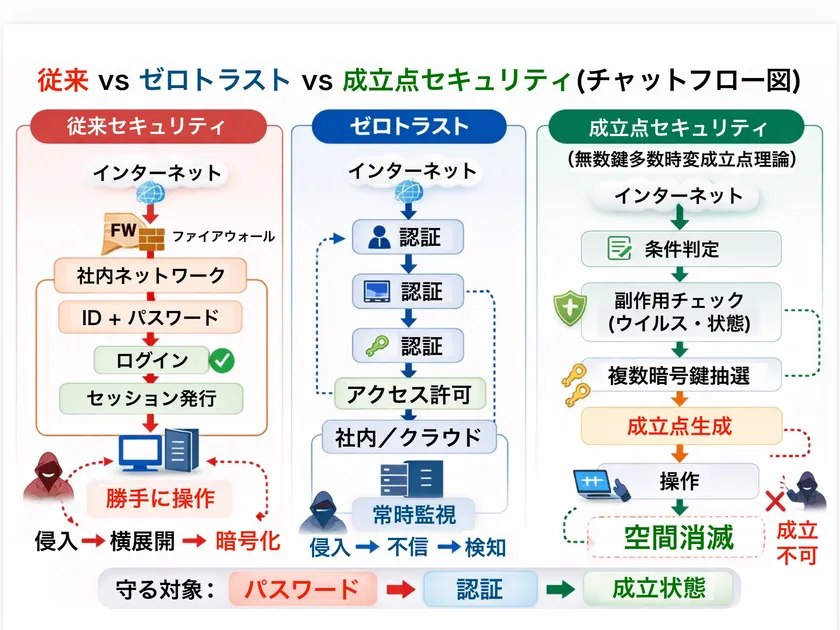
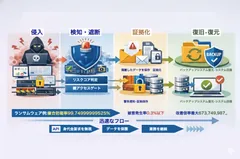
Chat flow of conventional, zero-trust and fixed point security
Effect on ransomware
Ransomware requires the right to execute encryption
In this theory
Control by privileged key (L3)
Blocked by side-effect detection
Space extinction and cannot be reused.
As a result, encryption is difficult to be established.
Numerical model (design value): ransomware
Conventional defense ratio: approx. 55.9
Theory: 99.7% or higher
Damage probability: approx. 0.3% or less
Improvement factor: Approx. 176 times
Comparison of 73 attacks
Phishing
AI fraud
Malware
API abuse
API exploits ● Cross-deployment
The theory has been proven to significantly improve the effectiveness of 73 types of attacks, including
Technical essence: This theory
No fixed secret
Establishment is a time event
The number of attempts is not advantageous.
The more the attacker tries, the less favorable the result.
The more the attacker tries, the worse it is.
In a nutshell
Conventional → Protect the correct answer
Zero Trust → Do not trust
This theory → do not allow it to be established
Conclusion: The theory of infinite-key multiple time-varying fixed points is
The next generation of Zero Trust
No password required
No password required
Multilayer high-level security
Instantaneous control of execution rights
This is a next-generation, state-of-the-art security infrastructure that realizes
This technology is a new security theory that structurally prevents conventional "damage after authentication breakthrough" by not fixing encryption keys and allowing operations to be executed only when security is confirmed through automatic virus checks using a multi-level high-rise structure.
About Point Organization, Inc.
Company name: Point Organization, Inc.
Representative: Yuki Takeuchi, Representative Director
Head Office: Room 301, HOUSE 2717, 2-7-9 Sendagaya, Shibuya-ku, Tokyo
Date of establishment: December 24, 2021
Fiscal year end: March
URL : https://point-kikou.co.jp/
Official website of the FSA Supervisory Public Search (Edinet) URL:
https://disclosure2.edinet-fsa.go.jp/WEEE0030.aspx?bXVsPeODneOCpOODs+ODiOapn+aniyZjdGY9b24mZmxzPW9uJmxwcj1vbiZycHI9b24mb3RoPW9 uJnBmcz03Jnllcj0mbW9uPQ==
About K Trust Co.
Company name: K Trust Co.
Representative: Tomoko Hirakawa and Kazunori Hirakawa, Representative Directors
Headquarters : 1-3313 Shimo-Shidami, Moriyama-ku, Nagoya City, Aichi Prefecture, Japan
URL : https://www.ktrust.info
Relationship with Point Organization: Sole agent for A-GEL gift points & A-GEL gift cards
Image




Logo Image

- Category:
- Corporate Trends
- Genres:
- Technology General Business Economy(Japan)