
Toei Shinyaku, a Research-Focused Agaricus Manufacturer, Obtains Its Third U.S. Patent for β-Glucan Measurement Technology
— Technology developed through research on open-field-cultivated Agaricus KA21. Three patents have been registered in both Japan and the United States. Expected applications include the diagnosis of fungal infections and the evaluation of supplement quality —
Toei Shinyaku Co., Ltd.

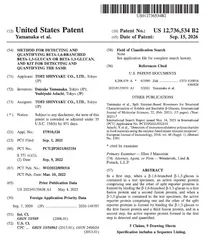
Toei Shinyaku Co., Ltd. (Mitaka, Tokyo; Representative Director: Akitomo Motoi), a research-focused Agaricus manufacturer, announces that U.S. Patent No. 12,736,534 B2 was issued on September 15, 2026, for "Method for detecting and quantifying β-1,6-branched β-1,3-glucan or β-1,3-glucan, and kit for detecting and quantifying the same." The technology arose from joint research on Brazilian open-field-cultivated Agaricus KA21 ("Agaricus KA21").
The technology was conceived in joint research with the Department of Immunology, School of Pharmacy, Tokyo University of Pharmacy and Life Sciences. As a result, all three β-glucan measurement technologies patented in Japan are now also patented in the United States.
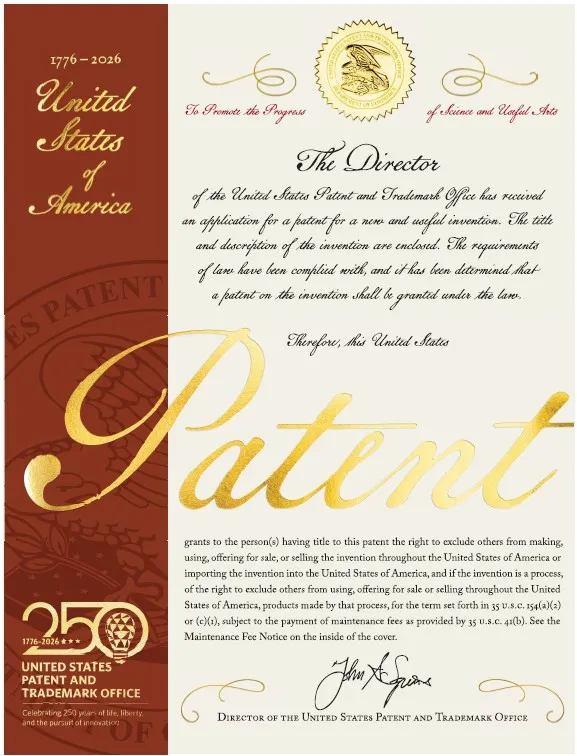
U.S. Patent Certificate
■ Overview of the U.S. Patent
U.S. Patent No.: US 12,736,534 B2
Date of Patent: September 15, 2026
Title: Method for detecting and quantifying beta-1,6-branched beta-1,3-glucan or beta-1,3-glucan, and kit for detecting and quantifying the same
Patentee/Applicant: Toei Shinyaku Co., Ltd.
Inventors: Daisuke Yamanaka, Yoshiyuki Adachi
Application No.: U.S. 17/910,526 (International Application PCT/JP2021/032154; priority date: September 7, 2020)
Corresponding Japanese Patent: Japanese Patent No. 7632898 (registered February 10, 2025)
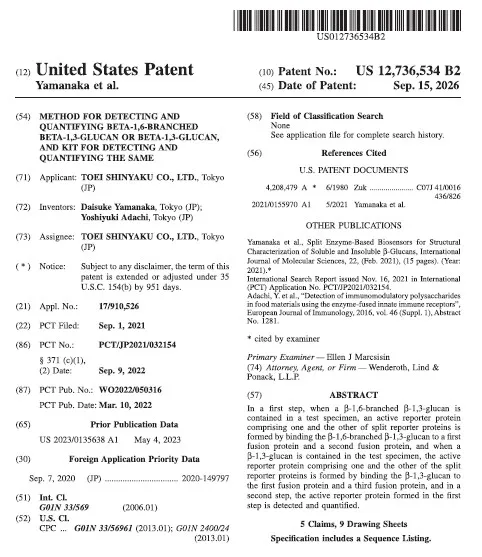
U.S. Patent Certificate (details)
■ About the Technology
β-glucans are major components of mushrooms such as Agaricus, and their properties differ depending on their bonding patterns and branching structures. This technology detects and quantifies β-1,6-branched β-1,3-glucan and β-1,3-glucan using split reporter proteins. When the target glucan is present in a sample, fusion proteins that bind to it reconstitute an active reporter protein, and the glucan is quantified by measuring the amount of that protein.
Expected applications include:
・Diagnostic kits for fungal infections
・Measurement of β-glucan content and quality evaluation of supplements, including those made with open-field-cultivated Agaricus KA21
・Research on the mechanisms of action of β-glucans
The technology has also been filed in China. On September 1, 2026, we received a notice regarding the registration procedures toward the grant of a patent. We are currently proceeding with the registration.
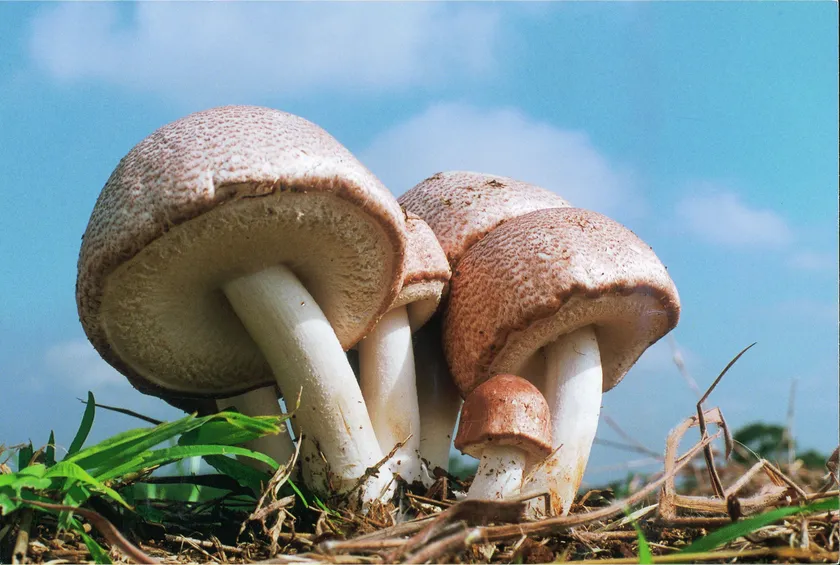
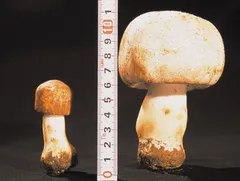
Open-field-cultivated Agaricus KA21
■ β-Glucan Measurement Patents (Japan and the U.S.)
Patents have been obtained in both Japan and the U.S. for the following three technologies:
・β-glucan-binding protein, β-glucan detection kit, artificial DNA and bacterium: Japan Patent No. 6966756 (registered October 26, 2021) / U.S. US 11,542,307 B2 (issued January 3, 2023)
・β-1,6-glucanase variant and method for measuring β-1,6-glucan: Japan Patent No. 7052967 (registered April 4, 2022) / U.S. US 11,479,803 B2 (issued October 25, 2022)
・Method for detecting and quantifying β-1,6-branched β-1,3-glucan or β-1,3-glucan, and kit for detecting and quantifying the same (this patent): Japan Patent No. 7632898 (registered February 10, 2025) / U.S. US 12,736,534 B2 (issued September 15, 2026)
All patents are held by Toei Shinyaku Co., Ltd.
■ About β-Glucans and Agaricus
β-glucans are polysaccharides found in the cell walls of fungi such as mushrooms, molds and yeasts, and include β-1,3-glucan and β-1,6-glucan. β-1,3-glucan binds to Dectin-1 on immune cells and is involved in immune responses, and the mechanism by which it is recognized is used in clinical practice to diagnose invasive fungal infections.
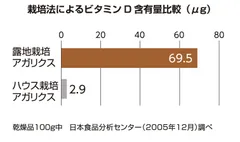
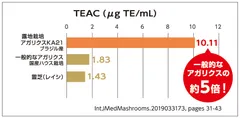
Open-field-cultivated Agaricus KA21 is Agaricus (scientific names: Agaricus blazei / brasiliensis / subrufescens) grown outdoors in sunlight in Brazil, the native habitat of Agaricus, using the KA21 strain (King Agaricus 21 strain), which Toei Shinyaku holds exclusively. Compared with house-cultivated products grown in the dark, it grows larger fruiting bodies and has been confirmed to contain more nutrients such as vitamin D (according to the Japan Food Research Laboratories). Its antioxidant activity has also been reported to be more than five times that of house-cultivated products (International Journal of Medicinal Mushrooms, 2019; 21(3): 31–43).
■ Future Outlook
As a research-focused Agaricus manufacturer, Toei Shinyaku will work to develop accurate β-glucan measurement technologies and to elucidate their mechanisms of action, strengthening the scientific foundation of Agaricus research. We will make another announcement when the patent takes effect in China.
■ About Toei Shinyaku Co., Ltd.
Toei Shinyaku was founded in 1973 and is a research-focused Agaricus manufacturer. Since 1996, it has been engaged in the research, development and commercialization of the KA21 strain. Through joint research with Tokyo University of Pharmacy and Life Sciences, Azabu University, Keio University, the National Center for Geriatrics and Gerontology, Juntendo University, the University of Tokyo, Shigakkan University and others, it has published 34 international papers to date.
Company name: Toei Shinyaku Co., Ltd.
Head office: 1-11-23 Shimorenjaku, Mitaka, Tokyo 181-0013, Japan
Representative: Akitomo Motoi, Representative Director
Capital: 10 million yen
Business: Research, development, manufacturing and sale of open-field-cultivated Agaricus KA21
Image

Logo Image

- Category:
- Corporate Trends