
[Shimotsuma City, Ibaraki Prefecture] A Former Gas Company Salesperson Makes the Switch to Farming with No Prior Experience! Utilizing “Smart Agriculture,” this new farmer—who won the Kanto Regional Agricultural Administration Bureau Director’s Award just five years after starting his farming career— is in the spotlight.
~New Possibilities for Relocation and Entry into Farming, as Demonstrated by Next-Generation Agricultural Models~
茨城県下妻市

Shimotsuma City, Ibaraki Prefecture (Mayor: Hiroshi Kikuchi) is a town where abundant nature and urban amenities coexist in harmony, and it is known as the “kitchen of the Tokyo metropolitan area” due to its thriving agricultural sector. Amid nationwide challenges such as the aging farming population and a shortage of successors, there is one person who has moved to the city to become a farmer and is embodying a model for the next generation of agriculture.
Hidefumi Suzuki (43), a former sales representative at a gas company, took over a vast tract of farmland in Reiwa 2 with no prior experience.Starting from scratch, he moved forward with determination, supported by the city and the local community and aided by the latest “smart agriculture” technologies. By Reiwa 7, he had gone on to win the Kanto Regional Agricultural Administration Bureau Director’s Award in the “Japan’s Highest Yield of Feed Rice” contest.
Through his journey of starting from scratch, we’ll share what life is like as a newcomer in Shimotsuma City and the appeal of this new form of agriculture—one that anyone can take on, even without prior experience.
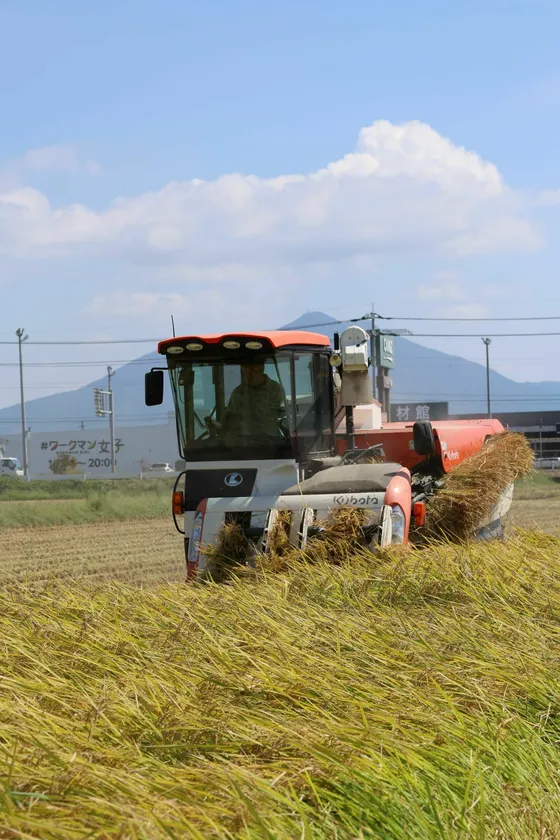
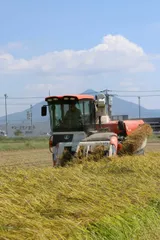
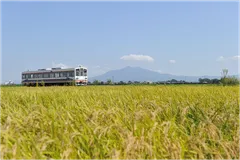
A scene of rice harvesting with Mount Tsukuba in the background
■ A Sudden Handoff: Starting from Scratch—I Didn’t Even Know Where the Rice Fields Were
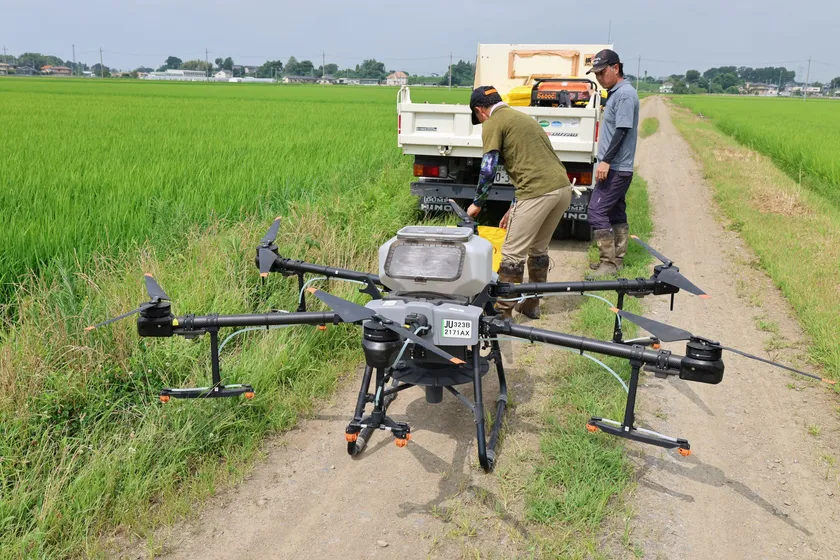
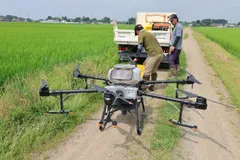
An agricultural drone loaded with fertilizer, waiting for its turn
Mr. Suzuki, a native of Ryugasaki City, Ibaraki Prefecture, built a house and moved to Shimotsuma City following the Great East Japan Earthquake.He plunged into the world of farming in Reiwa 2. Just a few weeks after his father-in-law was hospitalized and asked him, “I’d like you to work in farming with me in the future,” his father-in-law passed away suddenly. Without having been taught anything about farming, he suddenly found himself inheriting approximately 20 hectares of farmland.
At first, he didn’t even know the locations of the rice paddies he was managing, but an official from the city hall created a map color-coding the scattered fields. Furthermore, relatives and neighboring farmers patiently taught him the basics of farming and how to operate machinery from scratch, as the entire community came together to offer him warm support.
■ “I lacked ‘instinct and experience.’ That’s precisely why I put my faith in ‘data and technology.’”
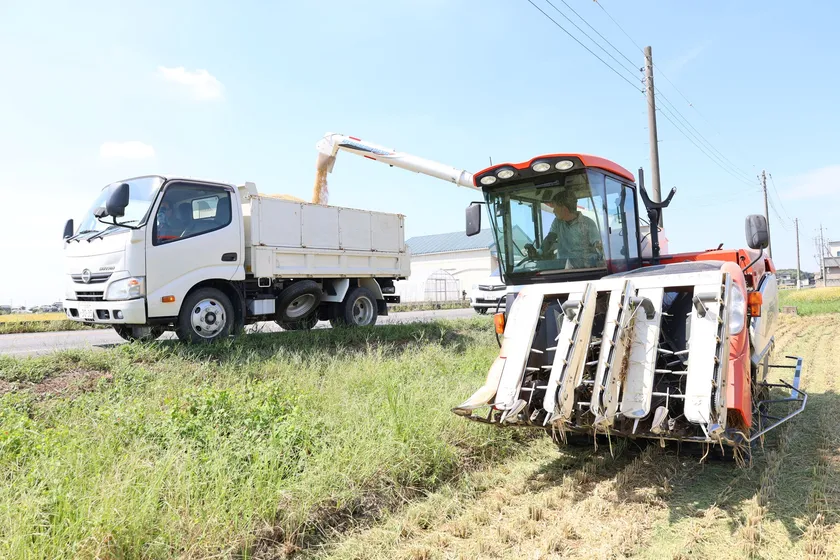
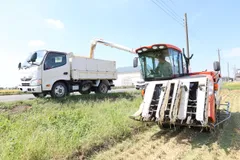
Unloading a massive amount of unhusked rice from the combine harvester into a truck container all at once
During his first farming experience, he couldn’t even drive the tractor in a straight line and kept running into walls. That’s when Mr. Suzuki discovered the tractor’s “straight-line assist system.”
Realizing he lacked the “years of intuition and experience” possessed by veteran farmers, he resolved that he “had no choice but to rely on data and the power of machinery,” and made a major shift toward smart agriculture.
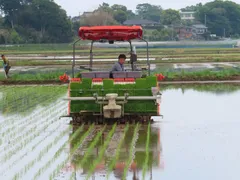
Taking advantage of national subsidy programs, he was one of the first in the prefecture to introduce the latest “robotic rice transplanter.”Autonomous operation using RTK-GNSS (*) ensures precise seedling placement, eliminating fertilizer waste and leading directly to a significant increase in crop yield. Furthermore, by using drones and AI to predict the optimal timing for supplemental fertilization based on weather data, it has become possible to apply fertilizer at the best possible time—even without the experience of observing the rice paddies every day.
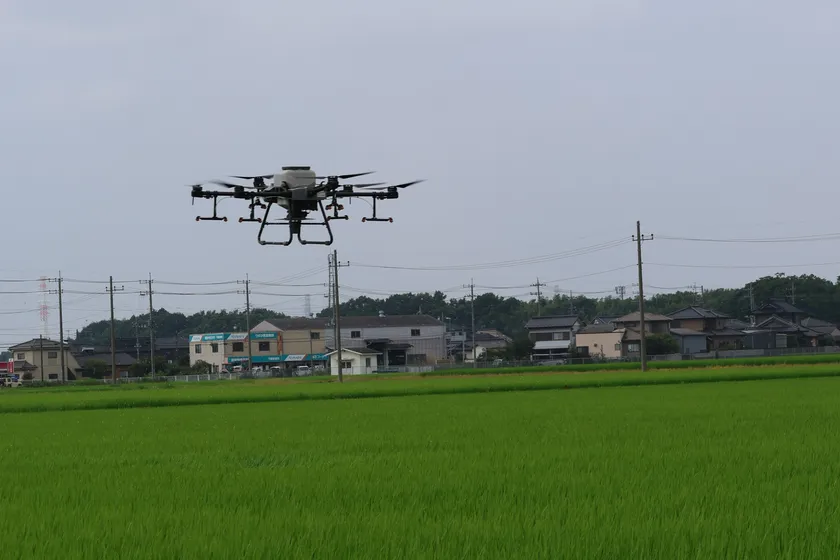
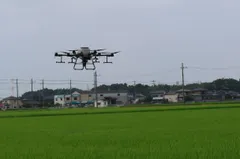
Drones fly over vast farmland to apply supplemental fertilizer efficiently
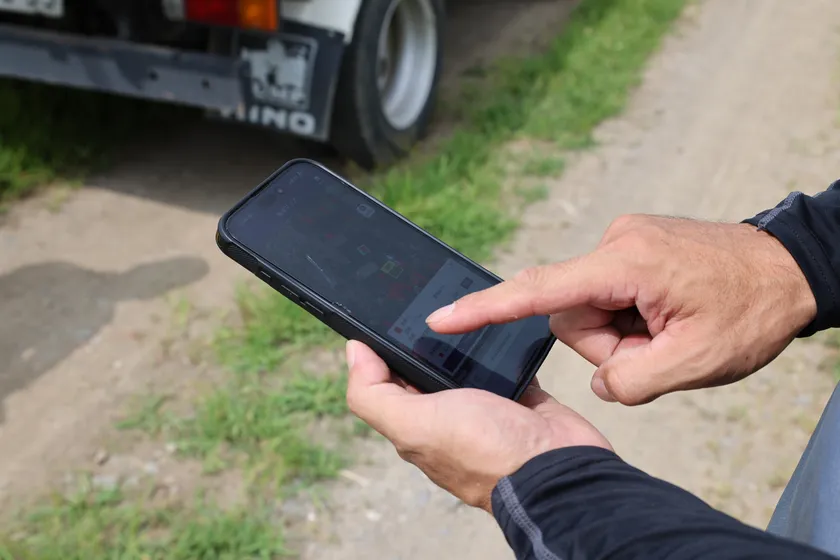
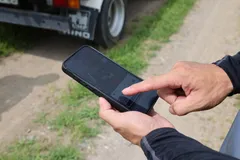
Drone operation progress is centrally managed via a smartphone
*What is RTK-GNSS?
This technology receives correction data from ground-based reference stations in addition to signals from satellites, reducing the margin of error—which is typically several meters with standard GPS—to just a few centimeters, thereby enabling position data to be acquired with extremely high precision.
■From office worker to farmer: The thrill of seeing your efforts pay off directly
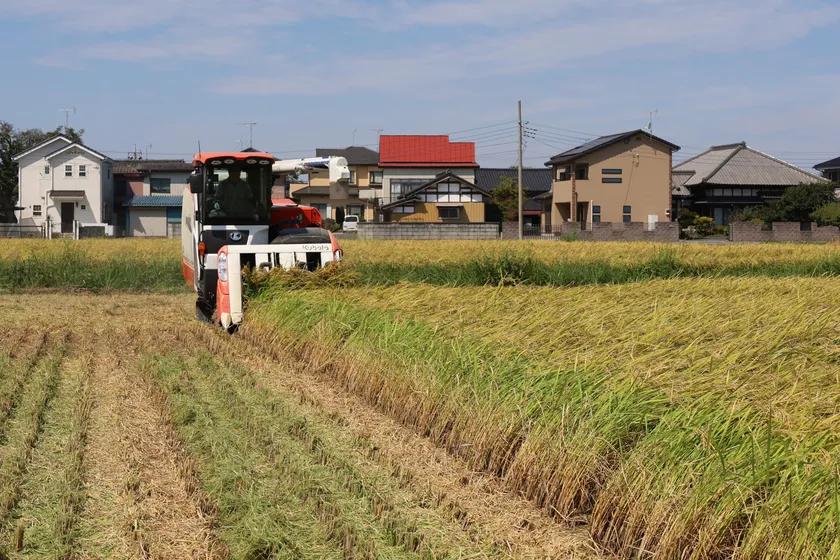
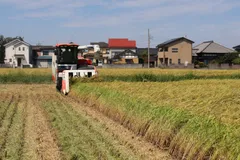
A large combine harvester moving through vast rice paddies, swiftly harvesting the rice
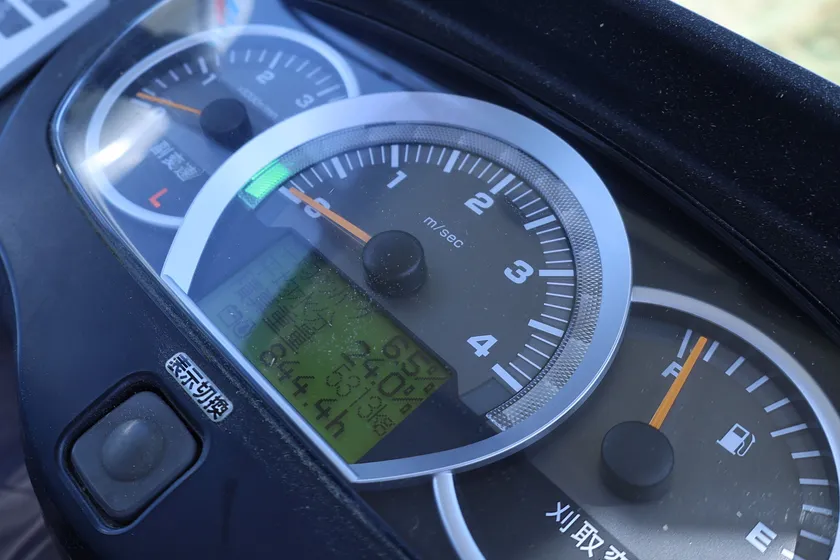
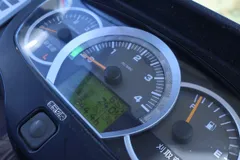
Instantly visualize yield and rice quality on the monitor inside the combine
In his previous job, Mr. Suzuki worked as a sales representative for a gas company, visiting dozens of private homes every day. The communication skills and professional experience he gained during that time have become major assets in his agricultural business.
“When I was a company employee, no matter how hard I worked, it had only a minimal impact on my salary, but farming is different. The more I learn, innovate, and expand my operations, the more it directly translates into income and results. There’s a unique ‘thrill’ that comes from being solely responsible for everything,” he says.He has now hired a classmate with no prior farming experience as his right-hand man. By utilizing smart farming technologies, this employee has grown to the point where he can perform tasks on par with seasoned veterans, despite his lack of experience.
■ Taking Shimotsuma’s Farmland into the Future: Giving Back to the Community and Taking on the Next Challenge
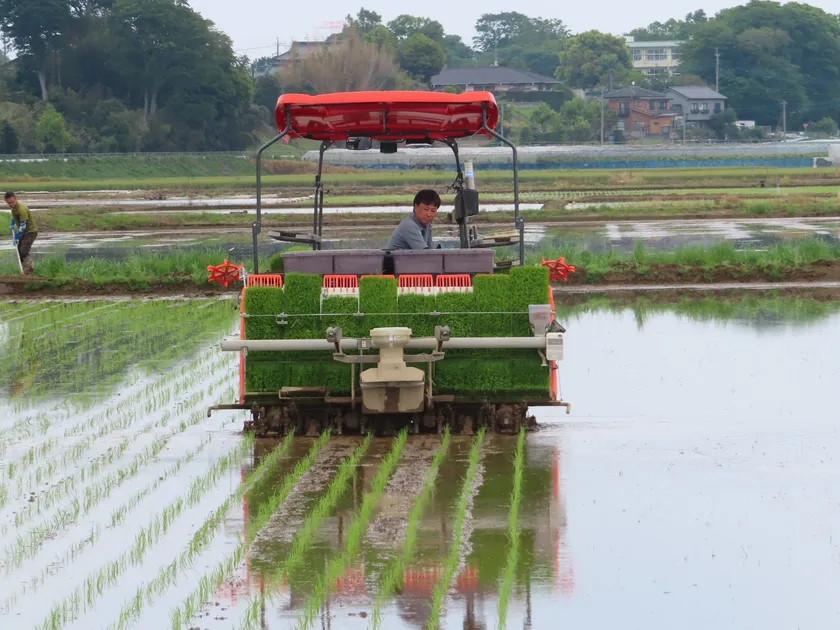
State-of-the-art robotic rice transplanter capable of autonomous operation
As a result of consistently applying data-driven, precise approaches, he achieved yields far exceeding the regional average and received the Kanto Regional Agricultural Administration Bureau Director’s Award just five years after starting his farming business. “This award is not the result of my efforts alone,” he says gratefully. “It is thanks to my father-in-law, who left me a solid business foundation, and to everyone in the community who has guided and supported me.”
“As the farming population continues to age, I aim to expand the scale of my operation in the future by taking over abandoned farmland in the region.“As a way to give back to everyone who has supported me, I want to reduce the number of fields overgrown with weeds—even if it’s just one—and preserve Shimotsuma’s beautiful rural landscape for future generations,” says Mr. Suzuki. Having overcome the adversity of starting with no prior experience through smart agriculture and the support of the community, his determination is shining a bright light on the future of agriculture in Shimotsuma City.
■Profile
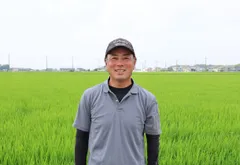
Hidefumi Suzuki (43, resident of Sakai, Shimotsuma City)
A native of Ryūgasaki City, Ibaraki Prefecture, he began farming in Reiwa 2 after working for a gas company. He currently cultivates rice for human consumption and feed rice on approximately 50 hectares of farmland. He serves as vice-chairman of the local producers’ association and is also engaged in the cultivation of wheat and buckwheat using block rotation.By making full use of smart agricultural machinery such as robotic rice transplanters and drones, he has succeeded in reducing labor and expanding the scale of his operation despite starting with no prior experience. In Reiwa 7, he received the Kanto Regional Agricultural Administration Bureau Director’s Award in the “Japan’s Highest Yield for Feed Rice” contest.
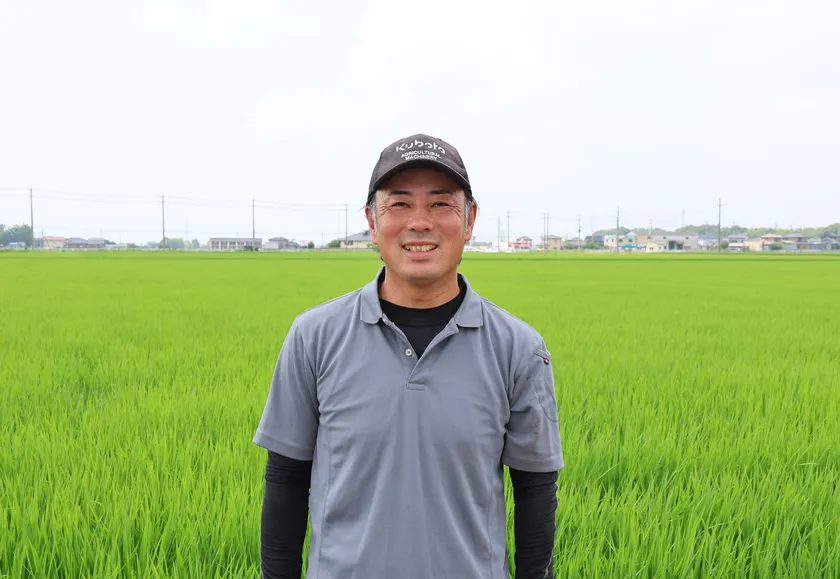
Hidefumi Suzuki
■ About Shimotsuma City, Ibaraki Prefecture
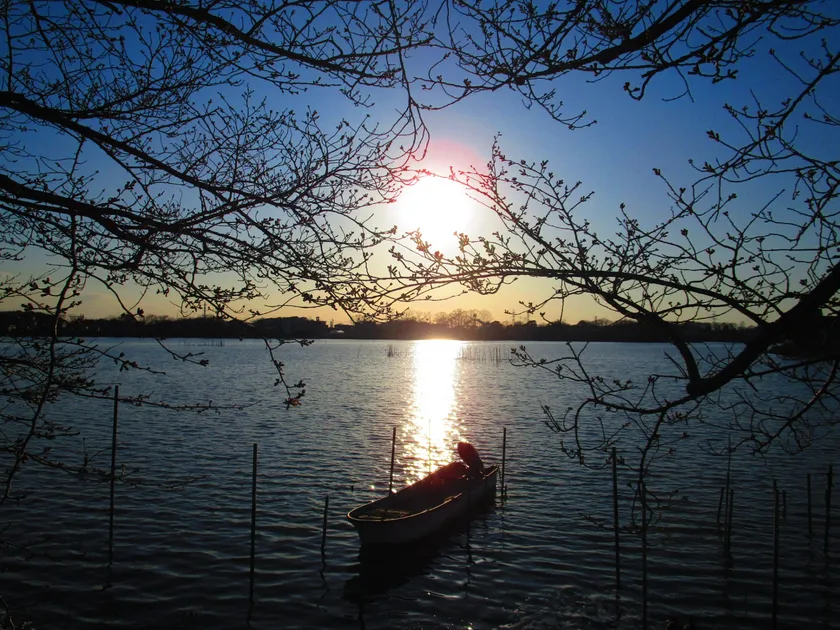
“Sanuma,” located in the center of Shimotsuma City
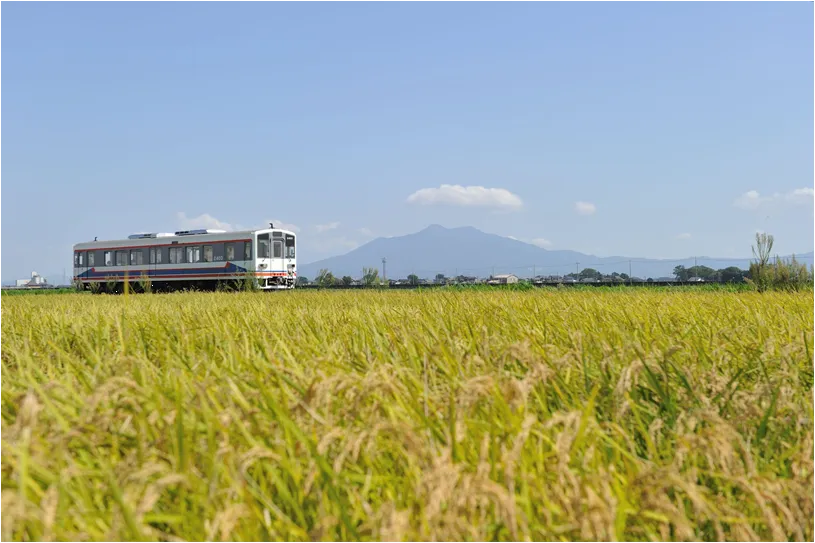
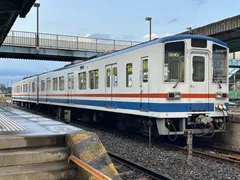
The Kanto Railway Joso Line running through the countryside of Shimotsuma City
Located in southwestern Ibaraki Prefecture, Shimotsuma is a city where nature and urban amenities blend seamlessly. Taking advantage of its convenient location within a 60-kilometer radius of Tokyo, the number of commuters to the capital is on the rise.
Set in a lush, green environment with views of Mount Tsukuba, the city center features “Sanuma,” a relaxing public space where residents can enjoy the natural beauty of the waterfront.It is also known as the “Kitchen of the Greater Tokyo Area,” producing high-quality agricultural and livestock products such as the exceptionally sweet “Shimotsuma Pears,” high-sugar “Melons,” and the flavorful brand pork “Rose Pork.” The city is also committed to enhancing administrative services through the use of digital technology, making it a place where residents can enjoy a relaxed parenting lifestyle and live life on their own terms.
[Basic Information]
・Population: 40,566 (as of October 1, 2026)
・Area: 80.88 km² (12.4 km east-west, 10.9 km north-south)
・Location: Southwestern Ibaraki Prefecture, within approximately 60 km of Tokyo
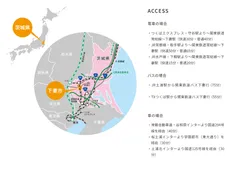
[Access]
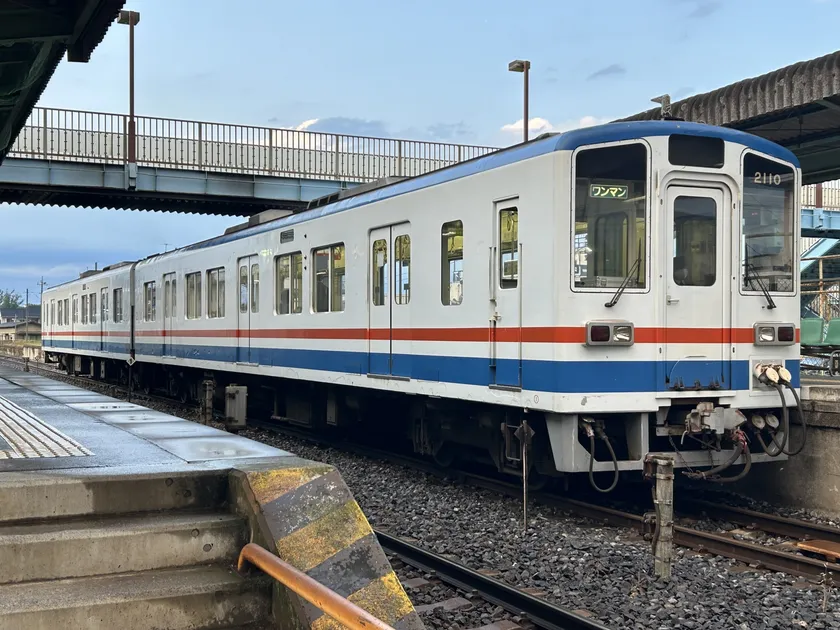
“Shimotsuma Station” on the Kanto Railway Joso Line
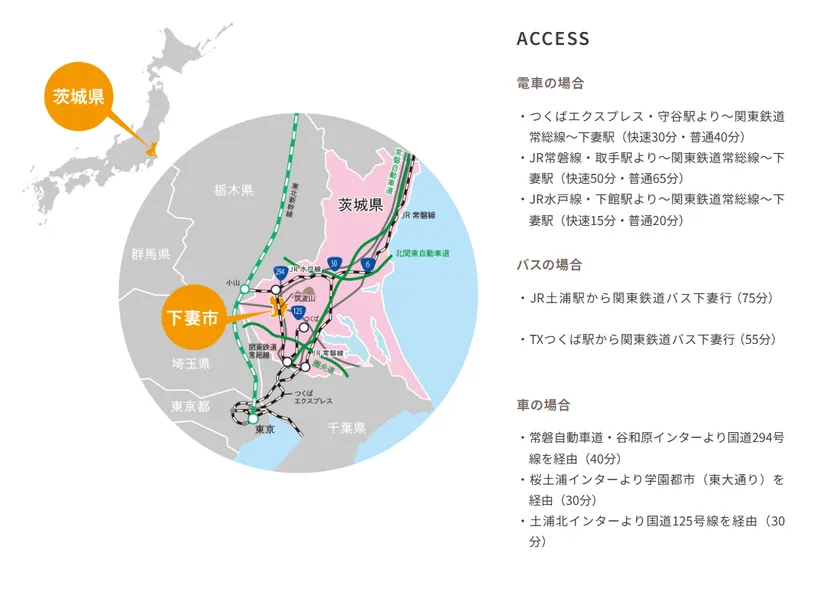
Shimotsuma City Access Map
・Rail (Accessible from central Tokyo in about 1.5 hours!)
○ From Akihabara Station
Take the Tsukuba Express (Rapid) to “Moriya Station” (approx. 35 min) + transfer to the Kanto Railway Joso Line to “Shimotsuma Station” (approx. 30 min on the Rapid train or 40 min on the Local train)
○ From Tokyo Station or Ueno Station
Take the JR Ueno-Tokyo Line or Joban Line to “Toride Station” (approx. 40 min) + transfer to the Kanto Railway Joso Line to “Shimotsuma Station” (approx. 50 min [Express]–65 min [Local])
〇 From the Northern Kanto region (Tochigi and Gunma)
From Shimodate Station on the JR Mito Line, take the Kanto Railway Joso Line to “Shimotsuma Station” (15 minutes by express, 20 minutes by local)
・Bus
From TX Tsukuba Station, take the Kanto Railway Bus bound for Shimotsuma (55 minutes)
From JR Tsuchiura Station, take the Kanto Railway bus bound for Shimotsuma (75 minutes)
・By Car (Just over an hour from central Tokyo!)
○ From the Tokyo metropolitan area
From the Joban Expressway, take the Yawara Interchange and follow National Route 294 (about 40 minutes from the interchange)
*The drive from Misato IC to Yawara IC takes about 20–30 minutes.
〇 Other Routes:
From the Joban Expressway, take the Sakura-Tsuchiura Interchange and proceed via the Tsukuba Science City (Gakuen Higashi-Odori) (30 minutes)
From the Joso Interchange on the Tokyo Metropolitan Central Link Expressway (Ken-O Expressway), take National Route 294 (25 minutes)
[Official Information]
・Shimotsuma City Official Website https://www.city.shimotsuma.lg.jp
・List of Official Social Media Accounts
YouTube: https://www.youtube.com/channel/UCjq2OPSKJA1-LVcoe0eYoaA
Instagram: https://www.instagram.com/shimotsuma_city/
TikTok: https://www.tiktok.com/@shimotsuma_city?_t=ZS-8tQc8c92fm3&_r=1
X (formerly Twitter): https://x.com/shimotsuma_city
Image

Logo Image
- Category:
- Corporate Trends