
WEF Technology Development Achieves 2,000°C Inside the Furnace Using Only an 850W Blower Effectiveness Confirmed in Industrial Waste Treatment Tests Using Energy-Efficient High-Temperature Incineration System
WEF技術開発株式会社

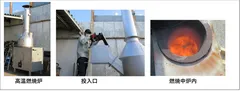
WEF Technology Development Co., Ltd. (Shiga Prefecture) is developing an incineration system capable of maintaining an internal furnace temperature of up to 2,000°C using only an 850-watt blower. In a test conducted on October 6, 2026, the system processed approximately 1 cubic meter of industrial felt in about 5 hours, confirming continuous combustion without any auxiliary fuel.
The furnace temperature at the time of feeding was approximately 1,500–2,000°C, and approximately 1.0 m³ of industrial felt was processed in about 5 hours. Rapid combustion was confirmed, as the fed felt visually disappeared in about several tens of seconds.
This technology aims to establish an energy-efficient and low-cost treatment method for hard-to-decompose materials by controlling the airflow within the furnace, promoting high-temperature combustion through the injection of active oxygen, and effectively utilizing the combustion energy inherent in the waste itself.
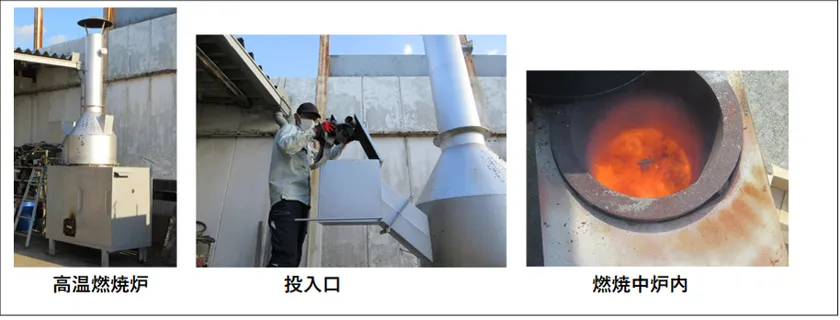
High-Temperature Combustion System
1. Background of Development
In recent years, reducing treatment costs, lowering energy consumption, and minimizing environmental impact have become key challenges in industrial waste treatment.
In particular, the treatment of waste plastics, rubber, and textiles requires stable combustion and efficient heat utilization.
To address these challenges, WEF Technology Development Co., Ltd. has been developing high-temperature incineration technology focused on controlling the airflow within the furnace.
This technology aims to optimize the mixing of fuel and oxygen, stabilize combustion, and ensure efficient heat utilization by carefully controlling the direction of air supply and the flow conditions within the furnace.
2. Features of the 2,200°C High-Temperature Incineration System
A major feature of this system is the active control of the airflow within the furnace.
By utilizing a swirling airflow, the system aims to promote the mixing of combustion gases and reactions in the high-temperature zone, thereby achieving highly efficient combustion.
In this study, we verified the combustion efficiency when reactive oxygen species were mixed with the air supplied to the test unit, and examined waste feeding methods and exhaust gas treatment.
By combining these technologies, we aim to achieve the following performance improvements:
・Rapid waste processing through high-temperature combustion
・Improved combustion efficiency through airflow control
・Reduction in external energy consumption
・Volume reduction of waste
・Effective use of energy through waste heat recovery
3. Effectiveness Confirmed in Industrial Waste Treatment Tests
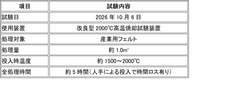
On October 6, 2026, we conducted a treatment test on industrial felt at a test facility in Shiga Prefecture.
[Test Overview]
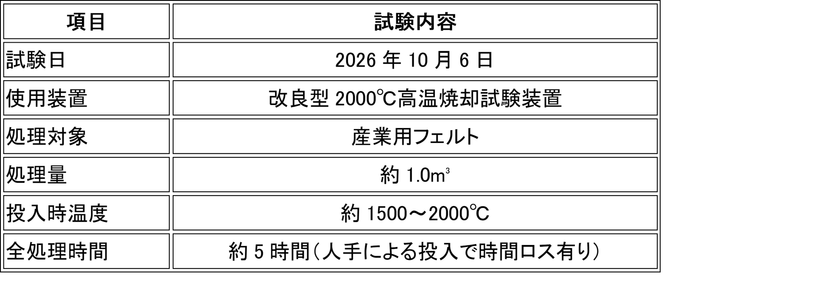
Treatment Details
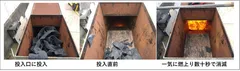
In the test, the felt was divided into small portions and fed into the hopper sequentially.
As a result, we observed that the introduced felt burned rapidly, with individual pieces visually disappearing within about several tens of seconds.
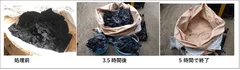
Processing of approximately 1.0 m³ of felt was completed in about 5 hours from the start of feeding.
A small amount of black carbonized material was observed after processing; this is presumed to be residue from the wood used in the initial combustion.
Furthermore, while the material was burning stably at high temperatures, no white smoke was visually observed coming from the chimney.
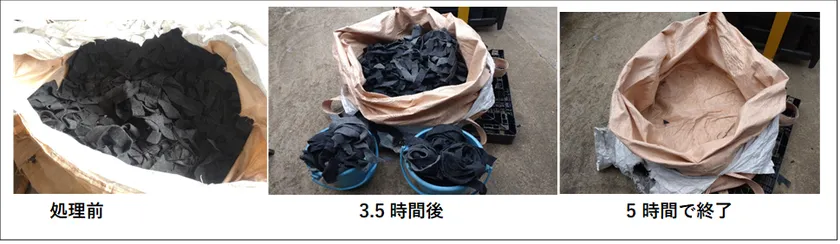
Processing Test
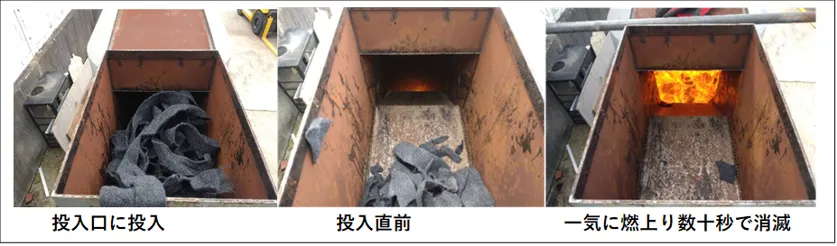
Felt Feeding
4. Future Development and Practical Application
Based on the results of this test, WEF Technology Development Co., Ltd. will proceed with the following development efforts toward the practical application of the system.
Moving forward, we will work to elucidate the combustion mechanism, conduct quantitative evaluations of energy-saving performance, and implement measures to address exhaust gas emissions, with the goal of commercializing this system as a next-generation high-temperature treatment unit capable of handling even hard-to-treat waste.
(1) Treatment of Hard-to-Treat Waste
We will develop treatment systems specialized for PFAS-adsorbing activated carbon, chlorinated materials such as PVC, and medical waste—for which treatment methods have not yet been established. Combustion at 2,000°C significantly increases the feasibility of treating these materials.
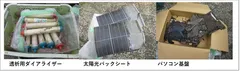
(2) Recovery of metals from solar cell backsheets, electronic circuit boards, and other materials
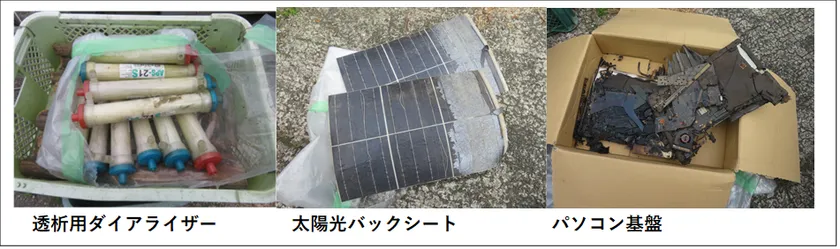
Test Materials
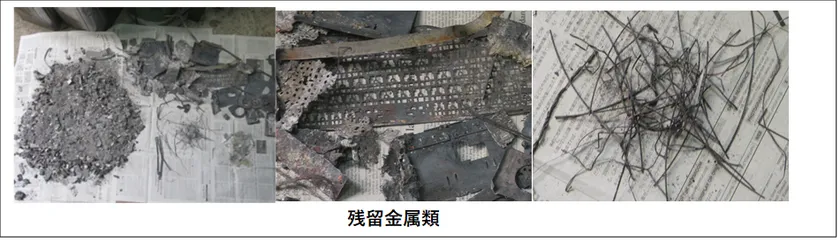
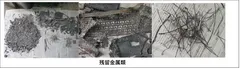
Residual Metals After Treatment
As shown in the test results above, the organic components—such as the backsheets—are completely eliminated within a few minutes. Since a 2000°C flame circulates inside the furnace, the metals can be recovered without melting.
(3) Supply of Ignition Flame via Pipe Heater
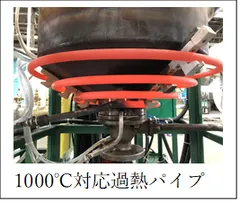
Currently, the ignition source for combustion is provided by wood. By replacing this with a newly manufactured pipe heater capable of withstanding 2000°C, we will eliminate the need for manual wood feeding and ensure stable, mechanized processing moving forward.
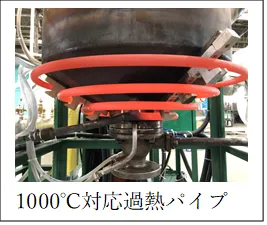
Superheated Pipe
(4) Verification of Environmental Performance
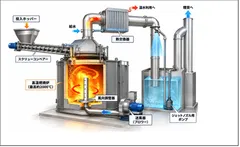
We will measure CO, NOx, particulate matter, dioxins, and other substances in the exhaust gas. By implementing rapid cooling and scrubber treatment, we will advance the exhaust gas treatment and environmental measures necessary for practical application.
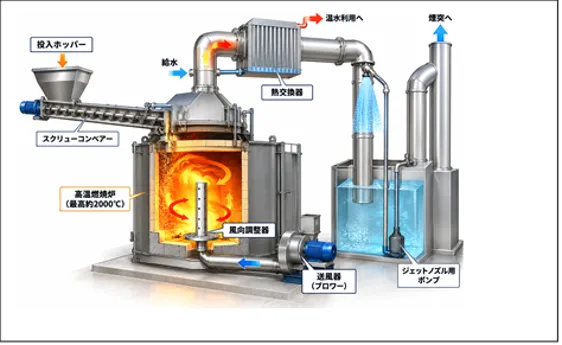
Conceptual Diagram of the 2,000°C Treatment System
5. Future Prospects
WEF Technology Development Co., Ltd. aims to commercialize equipment that utilizes its proprietary high-temperature combustion technology to achieve both the efficient treatment of waste that was previously difficult to process and a reduction in energy consumption.
Moving forward, we plan to elucidate the combustion mechanisms within the furnace and advance the sophistication of our technology, with a view to collaborating with universities and research institutions.
In the future, in addition to domestic industrial waste treatment, we will contribute to solving waste problems overseas.
We are currently seeking companies to partner with us in joint development, manufacturing, and sales.
■Company Overview
Company Name: WEF Technology Development Co., Ltd.
Representative: Akira Aoyama, Representative Director
Address: 1-19-15 Do, Otsu City, Shiga Prefecture
Established: July 2016
Business Activities: Water treatment, waste recycling, development and sales of magnesium-related technologies
https://mgworld.aoyama-wefit.com (Magnesium World)
Image
Logo Image

- Category:
- Services