
On Saturdays, Schools Become “Learning Hubs” “Tsuna-guhi,” an experiential program where students choose their own courses, has begun
From Classroom to Hands-On Experience: Wayo Kokudai Girls’ High School’s Elective Program “Tsuna-guhi”—A Day for Parents and Children to Learn Together
学校法人和洋学園

Wayo Kokudai Girls’ Junior and Senior High School (Wayo Gakuen Educational Foundation) launched “Tsuna-guhi,” an elective experiential program in which students choose and participate in courses on their own, starting in the 2026 academic year (Reiwa 8).
At a time when AI is redefining the value of knowledge, what should students learn in school? Wayo Kokudai Girls’ Junior and Senior High School (Principal Yasushi Miyazaki) in Ichikawa City, Chiba Prefecture, sought the answer in “hands-on experiences.”Starting in April 2026, the school shifted Saturday classes to weekdays and launched “Tsuna-guhi,” an elective experiential program where students choose their own courses.
Although attendance is not mandatory on these days in principle, more than 50 courses were offered in the first semester alone, and approximately 80 percent of students signed up. Starting in the second semester, the school expanded the range of courses available for parents and children to take together and also began offering courses for parents. The school has positioned its Saturday campus—where students, families, universities, businesses, and the local community come together—as a “hub for learning.”
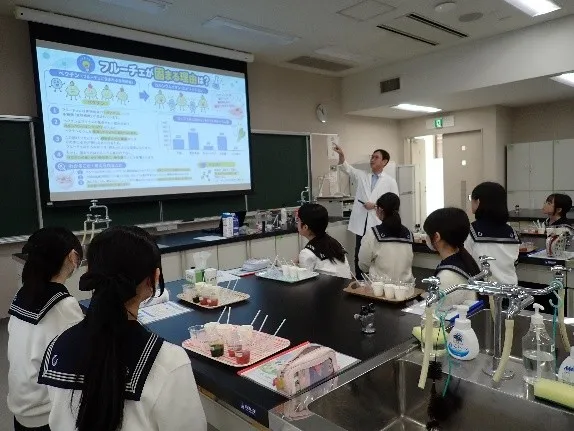
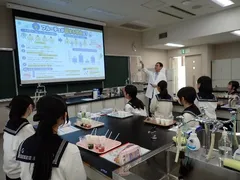
As part of “Tsuna-guhi,” faculty members from Wayo Women’s University also conducted workshops for middle and high school students. They explained the mechanism behind how the popular snack “Fruche” sets, combining experiments with tastings.
■ Saturday Is “Decide-for-Yourself Day”
The school believes that “interpersonal skills” for collaborating with others and the “ability to set one’s own goals”—the capacity to formulate questions independently—are difficult to cultivate through classroom learning alone. Therefore, starting in the 2026 academic year (Reiwa 8), Saturdays were transformed into days where students decide for themselves how to spend their time. Students choose and participate in courses that interest them.
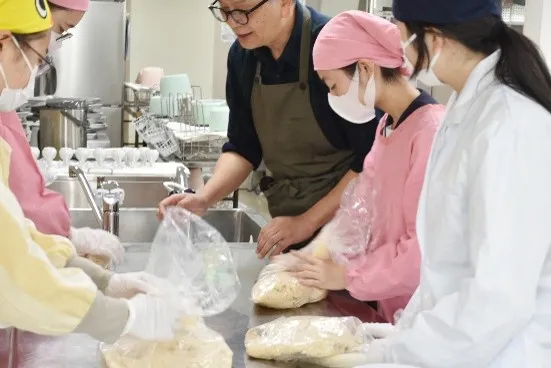
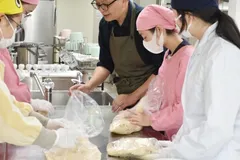
A scene from the “Tsuna-gu-hi” workshop titled “The Secrets of Fermentation: Experience It Through Miso Making.” Some students participated alongside their parents.
■ Diverse Workshops Build Students’ “Career Assets”
The workshop leaders come from a wide variety of backgrounds: faculty members from Wayo Women’s University, located on the same campus; professionals active in various fields; and alumni who share insights about their careers and future paths. As part of “Field Learning,” which involves visiting companies, students toured Ricoh Co., Ltd. and Kokuyo Co., Ltd. during summer vacation.
Starting in the second semester, workshops born from students’ own ideas also began. In November’s “An Astronomer’s Workplace—What Do Star Researchers Do?”, students explored the work of researchers through a tour of the National Astronomical Observatory of Japan’s telescopes.In January’s “Understanding the World of the Deaf Changes How You See Society,” students learned about the lives of deaf people and tried their hand at communicating through sign language.
The “Science Team,” in which students plan and run science workshops for elementary school students, and the “Wayo Volunteer Support Club Launch Team,” which devises volunteer activities based on community needs in Ichikawa City, have also begun their activities. Additionally, we are implementing the “Social Startup Program,” in which students launch their own businesses and take on the challenge of running them, with support from the Tokyo Stock Exchange and certified public accountants.
These experiences of engaging with society become “career assets” for each individual. At Wayo Gakuen, we believe that such experiences foster an attitude of “determining one’s own happiness” and serve as a foundation for supporting women’s independence.
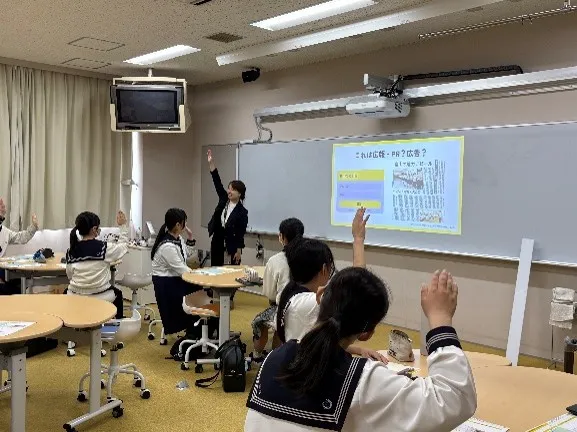
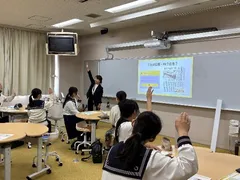
Students learned communication methodologies from public relations professionals active in the workforce. One after another, students raised their hands in response to the instructor’s questions.
■ “Parent-Child Tsuna-guhi”: A Learning Opportunity for Parents, Too
The school places great importance on the family as well. When parents approach learning with curiosity, it encourages their children’s own learning. Believing that supporting this learning is also a role for the school of the future, the school has expanded its Saturday program to “Parent-Child Tsuna-guhi.”
The number of courses open to parents has increased from 29 in the first semester to 45 in the second. The lineup features topics for parents and children to explore together, such as the “Science of Women’s Health” series presented by Wayo Women’s University and a financial literacy course titled “Start Today! How to Manage Your Money to Become a ‘Rich Version of Yourself.’”
In the second semester, the school will also offer a workshop for parents on “How to Interact with Your Child.” This workshop is designed for parents who wish to build better relationships with their children.
From a place of educating children to a “partner to the family” that supports parenting—that is the vision the school envisions for itself.
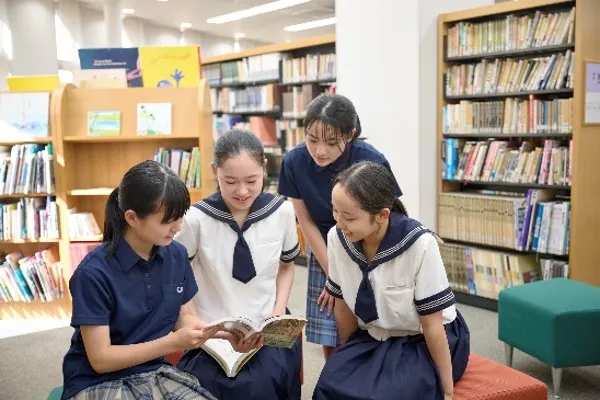
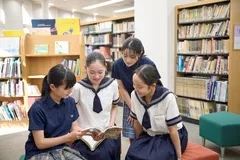
Surrounded by approximately 80,000 books, students deepen their collaborative and inquiry-based learning.
■Ahead of its 130th anniversary: Carrying the founding vision into the future of education
The school’s educational philosophy is “Living with Dignity.” The founder, Chiyo Horikoshi’s, aspiration to “create a world where not a single woman cries” has been passed down since the school’s founding in 1897. Students connect with society through hands-on experiences and learn alongside their families. The school views these efforts as a step toward the education of the future.
*The character “崎” in the principal’s name is officially read as “Tatsusaki.”
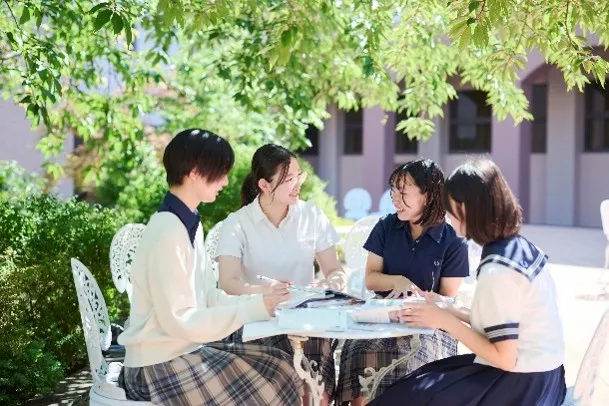
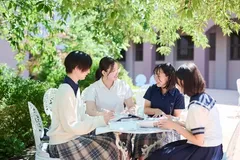
A lush, green campus located on the same grounds as Wayo Women’s University.
■ Schools Operated by the Wayo Gakuen Educational Foundation
Wayo Kokudai Girls’ Junior and Senior High School
https://www.wayokonodai.ed.jp/
Wayo Kudan Girls’ Junior and Senior High School
Wayo Women’s University
1897 (Meiji 30): Chiyo Horikoshi founded the Wayo Women’s Sewing Academy.
In 2027 (Reiwa 9), the school will celebrate its 130th anniversary.
Image
Logo Image
- Category:
- Services