
Preserving the “Unchanging Daily Lives” of Elderly People with Disabilities Fukuoka Day Service Center with a Capacity of 10 to Continue Individualized Functional Training Seeking Donations to Secure Professional Staff
~To Continue Providing Individualized Functional Training, Home-Cooked Meals, and Bathing Assistance~
株式会社日本福祉開発機構

Japan Welfare Development Organization Co., Ltd. (Headquarters: Hakata Ward, Fukuoka City;Representative Director: Masato Sakamoto), is running a permanent donation-based crowdfunding campaign on READYFOR titled “We Want to Help as Many Low-Income and Public Assistance-Receiving Seniors as Possible Live with Hope” to continue providing individualized functional training and daily living support to elderly people with disabilities at its community-based day service center, “House of Hope.”
“House of Hope,” operated by the company, is a community-based day service facility with a capacity of 10 people, housed in a converted private residence. In addition to individualized exercise programs tailored to each user’s physical condition and treatments provided by professionals, the facility offers a comprehensive range of services, including warm, homemade meals, bathing, outings, and opportunities for social interaction.
When providing support to elderly people with disabilities during the maintenance phase, dramatic changes may not always be evident in the short term. However, helping them maintain their physical functions and motivation to live, and supporting them so they can continue the lifestyle they have led up to now, is also a vital role of functional training.Amid growing operational challenges due to rising labor costs, inflation, and a declining number of service users, “House of Hope” is calling for ongoing donations to continue delivering individualized functional training and daily living support to the community.
READYFOR Permanent Donation Page: https://readyfor.jp/projects/wdoj0223
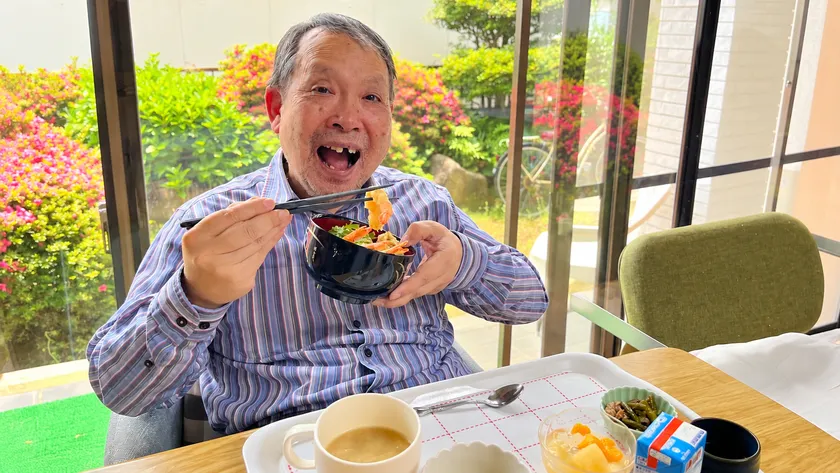
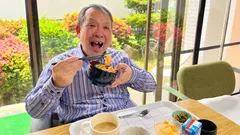
Residents of “House of Hope” enjoying warm, home-cooked meals
■ Supporting Unchanging Daily Life, Not Dramatic Improvements
In the recovery process from illness or disability, after the acute and recovery phases, there is a stage focused on maintaining physical function and daily living. At this stage, the goal is not merely to achieve major improvements; rather, it is important to provide opportunities for daily physical activity and to maintain current physical function and motivation for daily living as much as possible.
However, it is not easy for elderly people with disabilities to continue exercising on their own at home. Due to physical limitations or cognitive decline, they may find it difficult to understand exercise methods or to take the initiative to move their bodies.
Furthermore, since changes in physical function and motivation to engage in daily life are influenced by multiple factors—such as diet, medication, medical appointments, and living environment—it is impossible to attribute these changes solely to functional training. That is precisely why at “House of Hope,” we do not define success solely by dramatic improvements; instead, we prioritize helping our clients continue doing what they are currently capable of for as long as possible.We believe that even a daily life that may appear unremarkable is a valuable achievement sustained through continuous support.
The Ministry of Health, Labor and Welfare estimates that the number of care workers needed will reach approximately 2.4 million in fiscal year 2026 and approximately 2.72 million in fiscal year 2040. Securing and retaining personnel—including professionals—to sustain community-based care has become a common challenge for care service providers nationwide.
■ Individualized Functional Training Tailored to Each Person
At “House of Hope,” we design individualized exercise programs for each resident based on their physical condition and areas of impairment.Staff members in charge of functional training review medical records to assess physical and mental conditions and receive briefings from the facility manager regarding each resident’s specific situation and appropriate care methods. We create individualized exercise manuals for each resident to ensure consistent support even when staff members change.
When specialized staff are on duty, treatment sessions last approximately 30 minutes to 1 hour per resident, depending on the number of residents that day. Additionally, individualized exercise programs are tailored to each resident and take approximately 50 minutes to 1 hour per person. The duration of these individualized exercise sessions remains unchanged, ensuring that support tailored to each resident’s condition continues.
When nurses are on duty, they conduct the individualized exercise routines set for each resident in accordance with “Hope House” protocols. They adjust the exercises—such as seated ball exercises or lower-limb exercises performed while lying down—based on the resident’s physical condition and posture, providing one-on-one support.
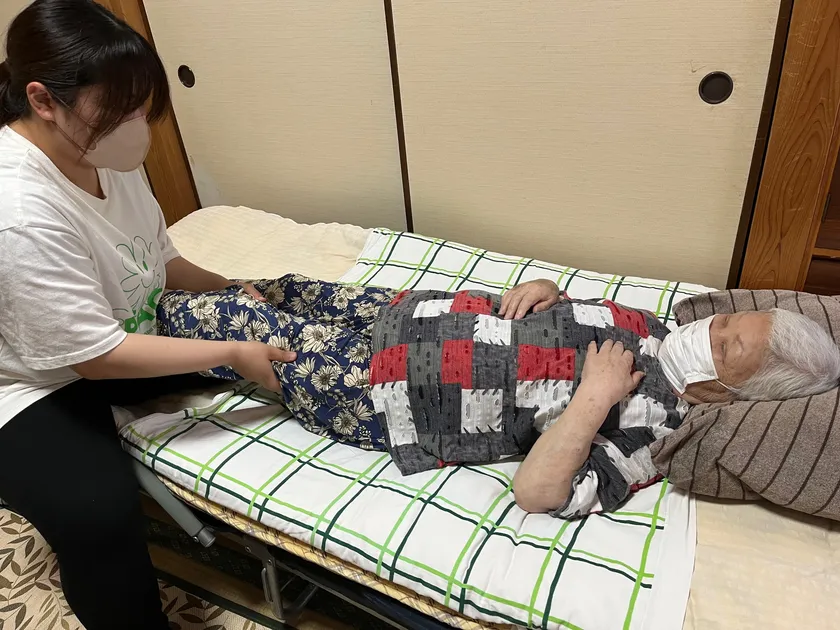
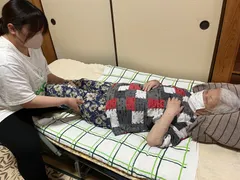
A professional providing treatment tailored to a resident’s condition
In addition, we utilize “TANO,” a system that mirrors the resident’s own movements on a screen avatar, allowing them to engage in full-body exercises and brain training in a game-like setting.Currently, about six residents use devices like TANO, with the most frequent users utilizing it about five days a week. For residents who find it difficult to initiate exercise on their own, staff members encourage them and create an environment where they can move their bodies comfortably without straining themselves.
■ Supporting Not Just Individual Functional Training, but Daily Life as a Whole
“House of Hope” is a community-based day service facility with a capacity of 10 people, housed in a converted private residence. Since users can spend time in an atmosphere similar to their own homes, the facility provides an environment designed with consideration for users with dementia, who often feel anxious about changes in their surroundings.
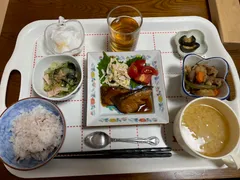
In addition to individualized functional training, the facility provides warm, homemade meals and bathing services.Meals consist of “one soup and three side dishes,” centered on menus familiar to the elderly, such as white rice, miso soup, simmered fish, and simmered chicken and vegetables. The texture and size of the food are adjusted to be easy to eat, depending on each user’s swallowing ability and denture use. On birthdays, we listen to the individual’s wishes as much as possible and sometimes prepare a special menu.
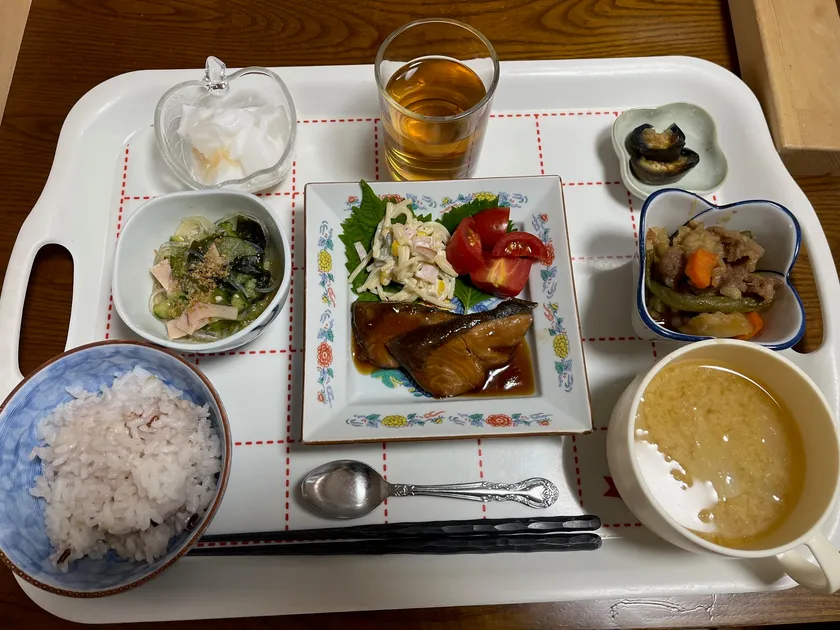
An example of the homemade meals served at Kibou no Ie
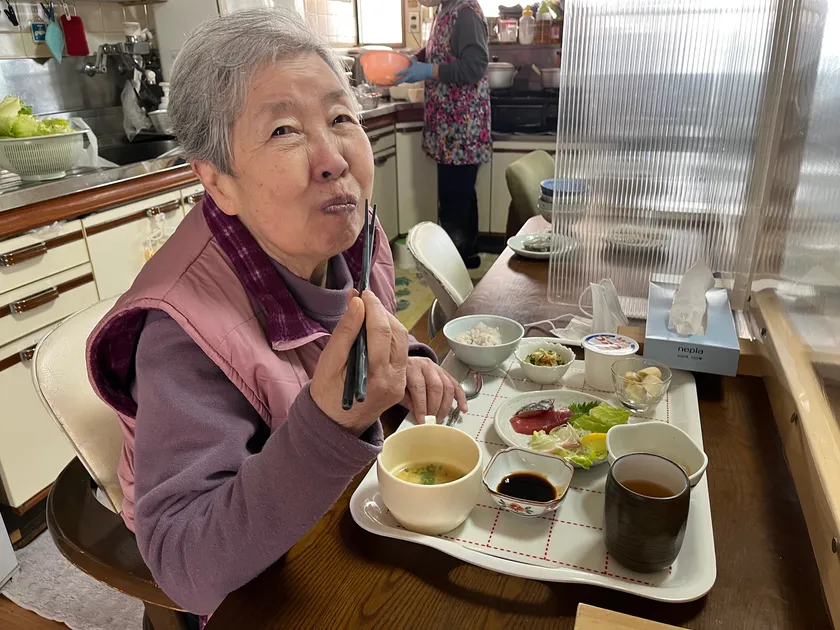
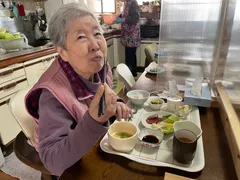
Residents enjoying their meals
A defining feature of “House of Hope” is that we do not treat functional training, meals, bathing, and social interaction as separate services, but rather provide them as an integrated support system to help residents continue living in the community they are familiar with.
■ Using Donations to Secure Professional Staff and Sustain Daily Living Support
At “House of Hope,” the burden of facility operations has increased due to a decline in the number of residents and revenue, coupled with rising costs for food, utilities, gasoline, and personnel.In particular, maintaining individualized functional training at a small-scale facility presents the challenge of securing a stable supply of qualified professionals, such as physical therapists, occupational therapists, licensed massage therapists, and nurses.
Until July 2026, one occupational therapist was regularly in charge of functional training; however, there is currently no full-time professional assigned to this role, and we are continuing to provide support by securing staff with the necessary qualifications on an ad hoc basis. As a small facility with a capacity of 10 residents, we aim to establish a system that ensures a stable supply of professionals so that we can continue providing individualized support that takes time with each resident.
Donations received will be used not only to secure staff, including professionals, but also to cover operational expenses that support residents’ daily lives, such as meals and bathing.
■ Main Uses of Donations
・Securing staff to provide individualized functional training and related personnel costs
・Expenses to continue individualized exercise programs and treatments provided by specialized professionals
・Cost of ingredients for providing homemade meals
・Utility costs necessary for bathing and facility operations
・Fuel costs for transportation and food procurement
・Facility maintenance costs to ensure residents can live with peace of mind
Our immediate goal is to sustain the operations of “House of Hope” and continue providing the support we currently offer, such as individualized functional training, meals, and bathing assistance. In the future, we hope that this approach—which integrates functional training and daily living support in a small-group setting—will spread to other communities as well.
■Message from Masato Sakamoto, Representative Director
We want people to be able to live with hope in the communities they are familiar with, even as they age or face disabilities.
The support provided by “House of Hope” is not solely aimed at significantly improving physical function. Rather, it is designed to help residents continue doing the things they have always been able to do for as long as possible, enjoy warm meals, take baths, and spend their days interacting with others.
To continue providing support to those who need “House of Hope,” we ask for your help.
“Your kindness will come full circle and surely return to you.”
Guided by the spirit of “Pay it forward,” we will channel the support we receive to elderly people and those with disabilities in our community.
■READYFOR Permanent Donation Overview
Project Name: Enabling a Life Full of Hope
We Want to Help as Many Elderly People as Possible Who Are on Low Incomes or Receiving Public Assistance
Format: Ongoing Donation
Start Date: July 31, 2026
URL: https://readyfor.jp/projects/wdoj0223
Use of Donations: Operating and maintaining “House of Hope,” ensuring staff availability, providing individualized functional training,
and other support such as meals and bathing
■Company Overview
Company Name: Japan Welfare Development Organization Co., Ltd.
Representative: Masato Sakamoto, Representative Director
Address: 1-1-12 Minami-Hachiman-machi, Hakata-ku, Fukuoka City, Fukuoka Prefecture 812-0886
Established: February 2011
Business Activities: Welfare Services (Community-Based Day Services)
Capital: 10 million yen
URL: https://wdoj.co.jp/
■Reference Information
Ministry of Health, Labor and Welfare: “Required Number of Care Workers Based on the 9th Long-Term Care Insurance Business Plan”
Image
Logo Image

- Category:
- Announcements & Recruitment
- Genres:
- Nursing care Social welfare Society(Japan)