
"Stay in History" at Fuji-no-Yu: Launch of "Digital Museum" Allowing Visitors to Enjoy the Facility’s Collection of Historic Maps of Matsumoto Castle and Artworks via Smartphone
An inn run by the Niki family, whose history in this area dates back to the Warring States period, offering a new cultural travel experience where you can zoom in on old Edo-period maps and calligraphy by literati and artists using your smartphone.
合資会社冨士之湯

"Fujinoyu: A Hidden Hot Spring Inn with Four Seasons of Colors," an 8-room hot spring inn in Asama Onsen, Matsumoto City, Nagano Prefecture, operated by Fujinoyu Limited Partnership(Proprietor: Shigejiro Niki, 20th generation [real name: Shinji Niki]) has been licensed as a travelers’ inn since Meiji 20 (1887). Ahead of its 140th anniversary in 2027, the inn has launched the “Digital Museum” experience program, which features high-resolution digital reproductions of historical documents andand artworks in the inn’s collection into high-resolution digital formats and has launched the “Digital Museum,” an experiential program that allows guests staying at the inn to view these items exclusively via QR codes located throughout the facility.
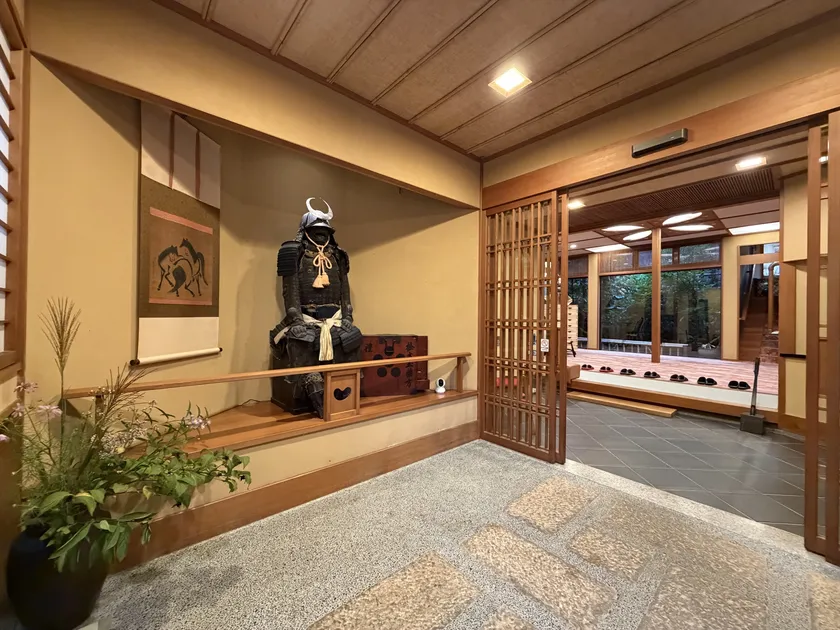
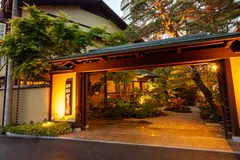
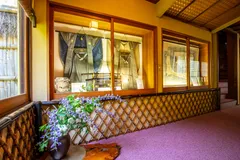
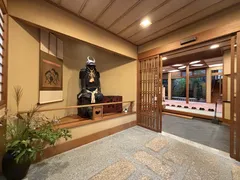
Fujinoyu_Windbreak Room
[The Gateway to Staying Amidst History]
The windbreak room at “Fujinoyu: A Hidden Inn of Four Seasons.” The suit of armor greeting guests at the entrance is a symbolic piece that quietly tells the story of the Futagi family, whose history dates back to the Warring States period.
This initiative features historical materials related to the Matsumoto Domain, ancient maps of Matsumoto Castle from the Edo period,maps of the castle town’s residential layout, sketchbooks left behind by literary figures and artists from the Taisho and Showa periods, and works by the Matsumoto-born Japanese-style painter Saigo Kogetsu—all of which have been digitized as part of our efforts to preserve the historical materials passed down through the Niki family and the artworks collected to safeguard local culture.Guests can use their smartphones or tablets to examine details that are difficult to see with the naked eye and relax in their rooms while enjoying the historical stories behind the works.
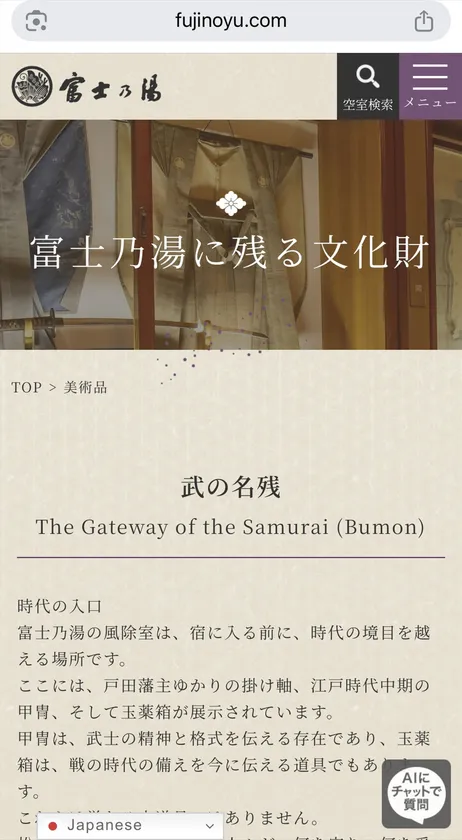
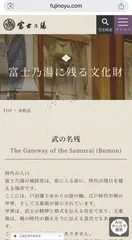
Smartphone Screenshot
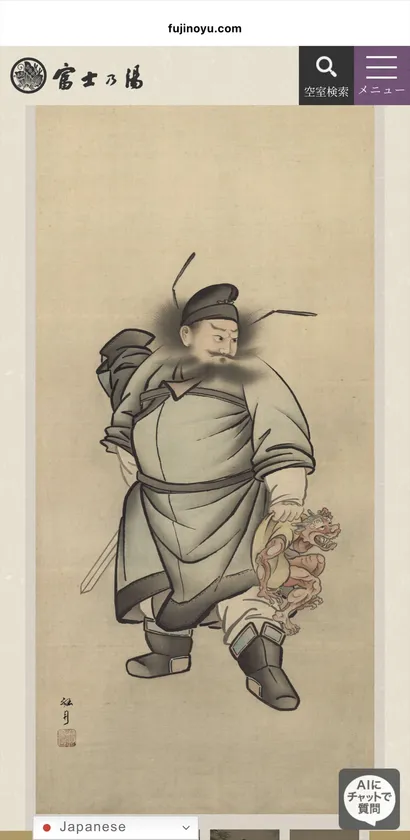
Smartphone Screenshot
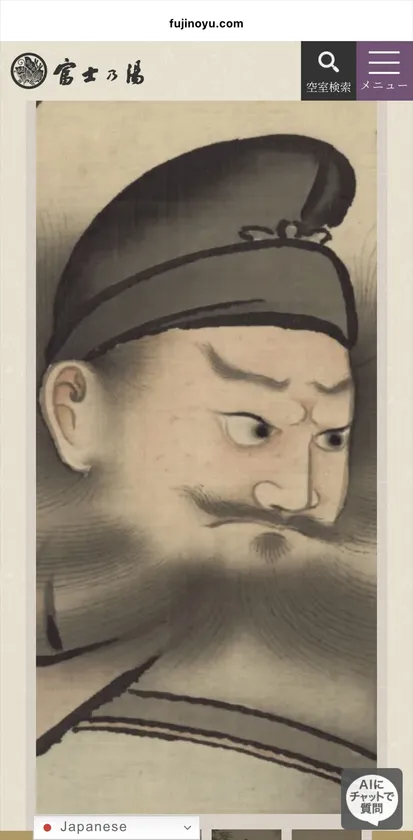
Enlarged Smartphone Screenshot
Furthermore, to the best of our knowledge based on publicly available information, we have not identified any other lodging facilities in Japan that combine physical historical and art materials passed down through the family with high-resolution digital archives, allowing guests exclusive access to view them via QR codes displayed throughout the hotel (*).
*As of September 2026, according to our research. This survey was based on publicly available information, such as the official websites and press releases of domestic lodging facilities, and does not imply that this is the “first of its kind in Japan.”
■ Three New Viewing and Stay Experiences Proposed by “Fujinoyu”
1. A New Cultural Experience Combining “Viewing the Actual Artifacts” with “Digital Zoom-In and Detailed Explanations”
The “Old Map of Matsumoto Castle” dating from around Shōtoku 3 (1713); the “Yōshin-chō,” a sketchbook in which literati and painters recorded their calligraphy and paintings over approximately 60 years, from Taishō 6 (1917) to around Shōwa 52 (1977);and original paintings by the Matsumoto-born Japanese-style painter Saigo Koketsu—all historical materials and artworks that have long been cherished by visitors—have been digitized. Visitors can now zoom in at their own pace to examine even the finest brushstrokes and intricate details that were difficult to see through the glass, while also taking the time to thoroughly explore the historical context and detailed narratives that could not be fully conveyed within the exhibition space alone.
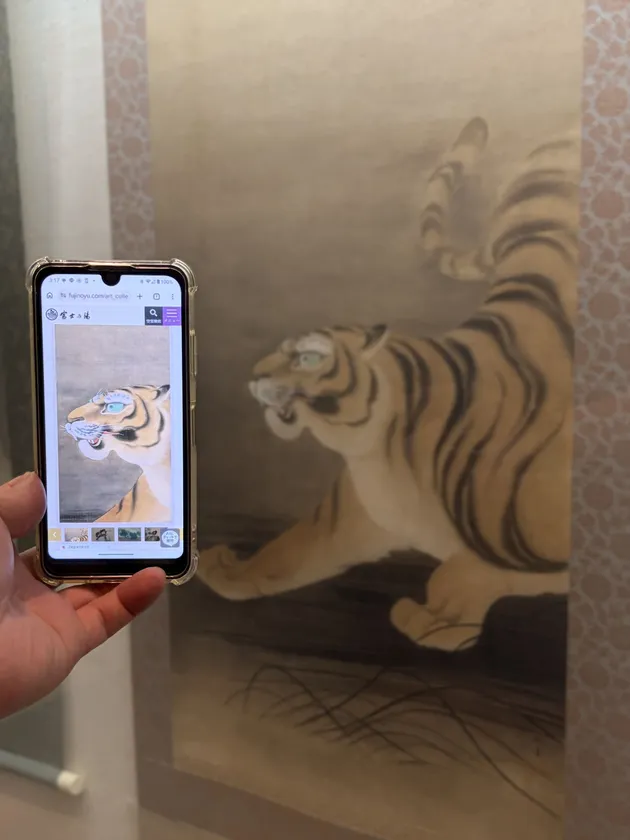
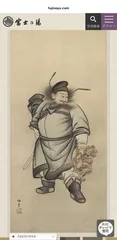
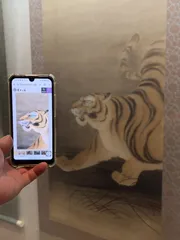
Saigo Kogetsu: Tiger
[The Fusion of Physical and Digital]
The museum’s hanging scroll (right) and a visitor in a guest room accessing the “Digital Museum” via their smartphone to zoom in on the details (left). You can clearly uncover the artist’s delicate brushwork and the stories hidden on the reverse side—details that were impossible to fully appreciate with the naked eye or through glass.
2. The “Saigo Kogetsu” Collection: Heirlooms Passed Down Through Generations and the Preservation of Local Culture
The museum’s collection consists primarily of historical documents and works of art that have been carefully preserved and passed down through generations of the Niki family.Furthermore, going beyond these heirlooms, the previous head of the family diligently collected works by the Japanese-style painter Saigo Koketsu—a native of Matsumoto who passed away at the young age of 38—driven by the belief that “the masterpieces of our hometown must not be allowed to fade into obscurity.”This collection thus has two distinct origins: heirlooms passed down through generations and works gathered to preserve and pass on local culture.
3. An “Intellectual Exploration Tour” to Asama Onsen and the Matsumoto Castle Town, Inspired by the Inn’s Collection
Guests who explore old Edo-period maps and local historical stories in the Digital Museum set out the next morning, armed with those memories, to explore the actual town of Asama Onsen and the area around Matsumoto Castle. We propose an exploratory stay that goes beyond simply viewing exhibits within the inn, serving as a gateway to deeply enjoying the history and culture of the entire region.
■ Concept: An experience of “Staying Amid History” and a journey “From the Inn to the Town”
Rather than a special exhibition space like a large art museum, authentic historical artworks are seamlessly integrated into the everyday scenery of the inn—such as the entrance, hallways, and hanging scroll galleries.
At Fuji-no-Yu, we offer a new cultural experience—one that involves “viewing, delving deeper, relaxing, and exploring”—through a two-day, one-night stay.
[Arrival | Encounter] Encountering Authentic Historical Treasures
Admire authentic historical artifacts seamlessly integrated into the inn’s surroundings, such as the suit of armor greeting you at the entrance and the works of literati and artists that adorn the interior.
[Stay | Delve Deeper] Unravel the “Details of History” with Your Smartphone
Scan the QR code to access the digital museum. Examine the delicate brushstrokes in enlarged images and carefully unravel the historical stories behind them.
[Relax | Rejuvenate] Savor the Famous Hot Springs and Shinshu’s Fermented Foods
Be soothed by the renowned waters of Asama Onsen, which boasts a 1,300-year history, and savor seasonal Shinshu specialties, fermented foods, and traditional Japanese cuisine prepared by the inn’s owner.
[Departure | Setting Out] With Old Maps in Hand, Take a Walking Tour of Asama Onsen and Matsumoto Castle
Armed with memories of the old maps of Asama Onsen from the Edo period (Kyōhō era) and the early Meiji era—as well as the old illustrations of Matsumoto Castle and the town layout plans—viewed online, set out the next morning to explore the actual hot spring town and the streets of Matsumoto.
Rather than treating cultural appreciation as something special and separate from daily life, we integrate it into the one-night stay itself. This is the new form of travel proposed by Fuji-no-Yu: “Staying Amid History.”
Furthermore, our overarching goal is not to confine the experience to the inn itself, but to use the inn as a starting point for guests to venture out into the wider region.
[Using the materials left at the inn as a “gateway to your journey,” head from Asama Onsen to the town surrounding Matsumoto Castle]
Rest your body in the hot springs, savor cuisine that incorporates Shinshu’s seasonal ingredients and fermentation culture, encounter authentic art and history, and explore the local area on foot. Through this series of experiences, Fujinoyu aims to provide a stay that nourishes both mind and body and leads to a sense of well-being.
・After exploring old maps of Asama Onsen from the Kyōhō and Meiji periods, venture into the alleys of the present-day hot spring town
・After learning about history from an old illustrated map of Matsumoto Castle from the Shōtoku era, visit the National Treasure, Matsumoto Castle, the next day
・If you’re moved by the works of Saigo Kotetsu displayed in the hotel, take a trip to the city’s art museums and cultural facilities
We strive to transform your stay at Fuji-no-Yu into an intellectual journey that delves deeply into the region’s history and culture.
■ Background: “A Deeper Appreciation Experience” Made Possible by Digitization
The museum houses a variety of historical documents and artworks, including the “Old Map of Matsumoto Castle” drawn around Shōtoku 3 (1713); the “Yōshin-chō,” a sketchbook containing calligraphy and paintings accumulated over approximately 60 years from Taishō 6 (1917) to Shōwa 52 (1977);as well as works by the Japanese-style painter Saigo Koketsu—a Matsumoto native who died at the age of 38—our museum exhibits and preserves a wide variety of historical materials and artworks.
However, displaying only the physical objects presented challenges such as “it being difficult to see the fine details of the works,” “captions (explanatory texts) alone being insufficient to convey the rich historical stories behind them,” and “being able to show only specific pages of book-format items like sketchbooks.”
Therefore, the museum has digitized these historical materials and artworks in high resolution. While preserving the same sense of wonder one feels when viewing the actual objects, we have created an environment where visitors can closely examine the details of the exhibits on a screen right at their fingertips and gain a deeper understanding of the history and stories hidden within the works.
■ How to Use the “In-Museum Digital Museum” and Overview
Guests staying at the hotel can access the service exclusively via their smartphones or tablets by scanning the dedicated QR codes located throughout the facility.
1. “History of Fuji-no-Yu” Page
This page provides an easy-to-understand explanation of the family’s history dating back to the Warring States period, their roles as village headmen, terakoya (private schools), and mountain patrol officers during the Edo period, and their history as a cultural inn that has welcomed literary figures and artists.
2. “Exhibit Collection” Page
This page features high-resolution images of historical documents, artworks, sketchbooks, and works by Saigo Kogetsu on display in the museum. You can zoom in on the screen to examine fine details and view detailed explanations, including the historical context of the works, key highlights, and modern-language translations.
[Request to Members of the Press (Guidelines and Precautions Regarding Publication and Disclosure)]
This digital museum is a special experiential feature exclusively for guests who have viewed the “authentic artifacts” on-site at our museum.
Therefore, we kindly ask that you refrain from publishing or displaying the “URL of the commentary page” and the “QR code” mentioned above in print publications, online articles, television programs, or other media.
*Please note that for URLs intended for readers and viewers, we would appreciate it if you could include a link to our official homepage (https://fujinoyu.com/).
■ About “Fujinoyu: A Hidden Retreat Amid the Four Seasons”
A tranquil, secluded inn with just eight rooms, nestled in Asama Onsen—Matsumoto’s “inner sanctum.”
This hot spring inn has been operated by the Niki family, who have lived in this area since the Sengoku period and served as village headmen, teachers at terakoya schools, and mountain patrol officers during the Edo period.It has been known as “Fujinoyu” in this area since Tenpō 3 (1832) and received official authorization as a travelers’ inn in Meiji 20 (1887).During the Taisho and Showa periods, many literary figures and painters visited, making it a hub for cultural exchange. In 2027, the inn will mark the 140th anniversary of receiving its official license as a travelers’ inn.
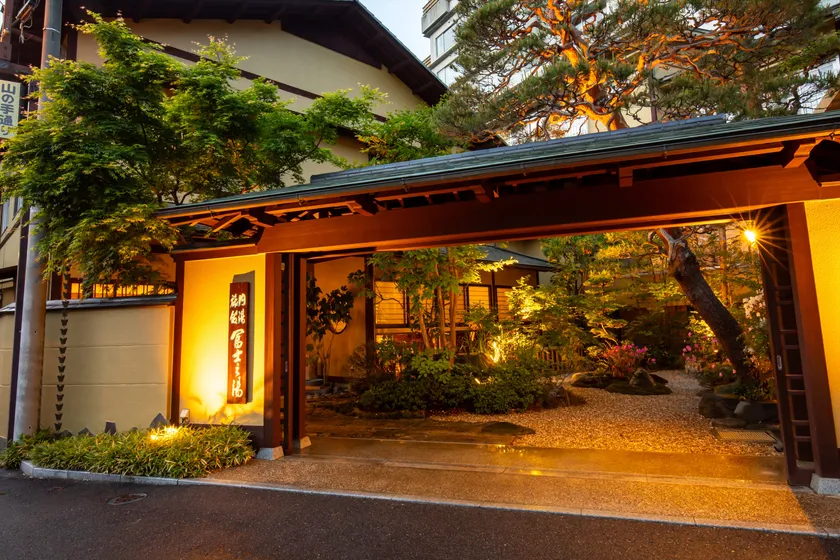
Fujinoyu Overview
● A serene atmosphere throughout the inn and private baths with tatami mats fed by a direct flow of spring water
With only eight guest rooms, we offer a quiet retreat away from the hustle and bustle. The inn features a large public bath and private baths with tatami mats fed by a direct flow of spring water, allowing you to enjoy the waters of Asama Onsen and the soft feel of the tatami mats.
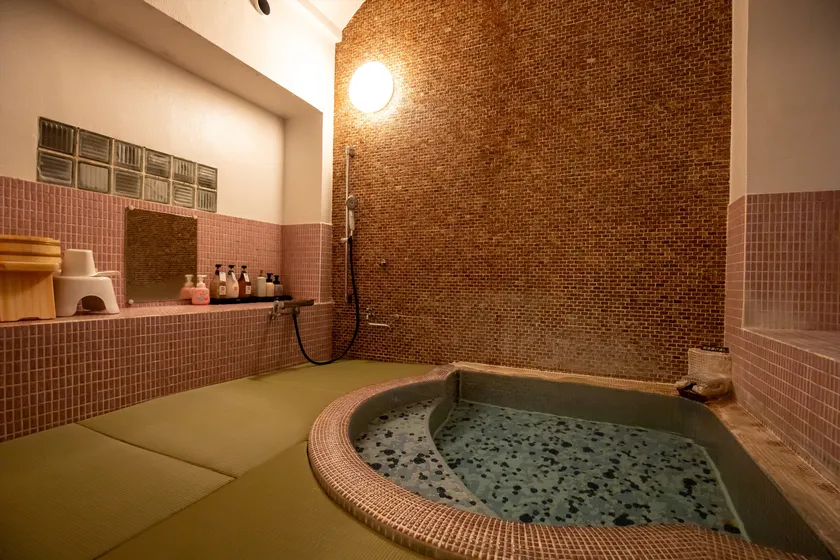
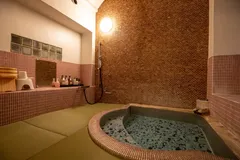
Fujinoyu Private Baths
A classic, free private bath with tatami flooring. Enjoy the direct-flow spring water from Asama Onsen.
● Traditional Japanese cuisine featuring fermentation, prepared by the 20th-generation head of the family
The cuisine is personally prepared by Shinji Futagi, the 20th-generation proprietor, who goes by the hereditary name “Shigejiro Futagi.”Using seasonal ingredients from the local Shinshu region and incorporating the “fermentation culture”—such as miso, koji, and amazake—nurtured by Nagano’s rich natural environment, we deliver delicate flavors that bring out the natural qualities of the ingredients.
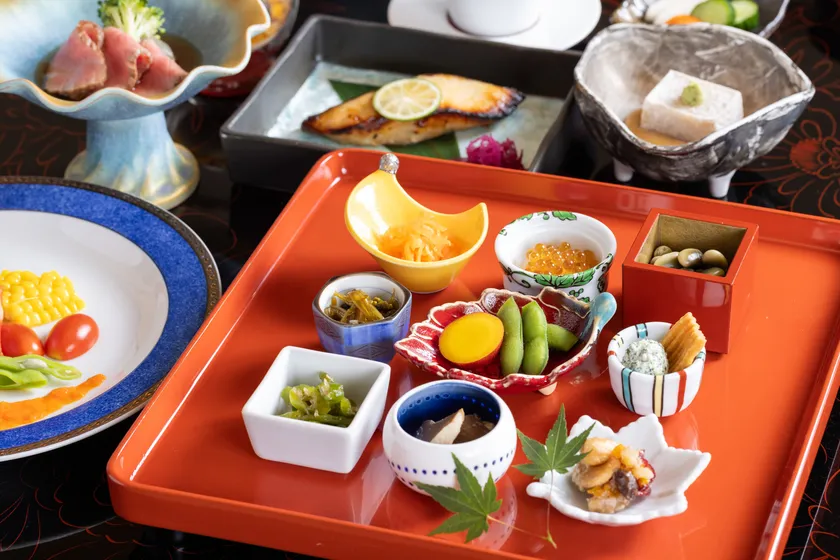
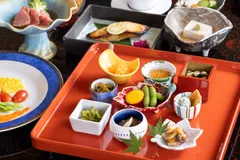
Fujino-yu: An example of a dish served on a traditional tray from over 80 years ago
(Dishes served on Kiso lacquerware crafted in Showa 17 (1942))
[Facility Overview]
Facility Name: Fuji-no-Yu—A Hidden Retreat with the Colors of the Four Seasons
Representative: Shigejiro Niki (20th-generation head; real name: Shinji Niki)
Address: 3-13-5 Asama Onsen, Matsumoto City, Nagano Prefecture 390-0303
Number of Guest Rooms: 8 in total
Official Website: https://fujinoyu.com/
*This project (introduction of a digital museum and facility improvements) is being implemented with funding from the Nagano Prefecture “Subsidy Program for Improving the Stay Environment at Lodging Facilities.”
Attachment: List of Materials in the Museum’s Collection
1. Items Passed Down in the Niki Family
(1) Materials Related to Baba Mino-no-kami
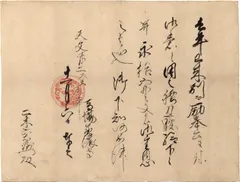
● Letter from Baba Mino-no-kami: A letter from Baba Mino-no-kami (Nobuharu), a retainer of Takeda Shingen.
Passed down through generations in the Niki family (family heirloom documents).
● Japanese Sword: A Japanese sword passed down from Baba Mino-no-kami (family heirloom).
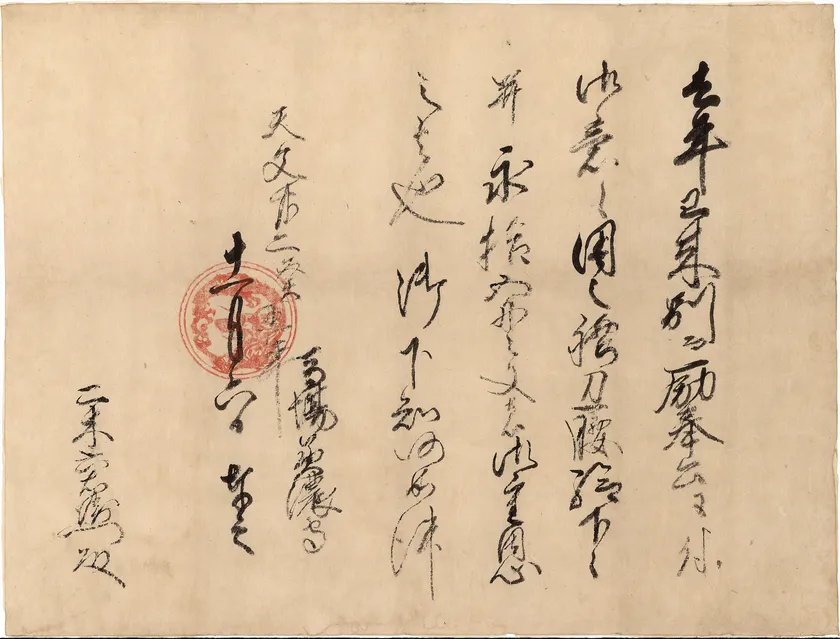
Letter from Baba Mino-no-kami (Family-Inherited Document)
(2) Materials Related to the Lords of the Mizuno Domain
● Kamishimo: A kamishimo said to have been bestowed by the lord of the Mizuno Domain.
2. Materials Related to the Lords of the Matsumoto Domain (Toda Family)
● Hanging scrolls of three generations of the Toda family: Hanging scrolls identified by a curator at the Matsumoto Castle Administration Office as belonging to three generations of the lords of the Matsumoto Domain (Toda family).
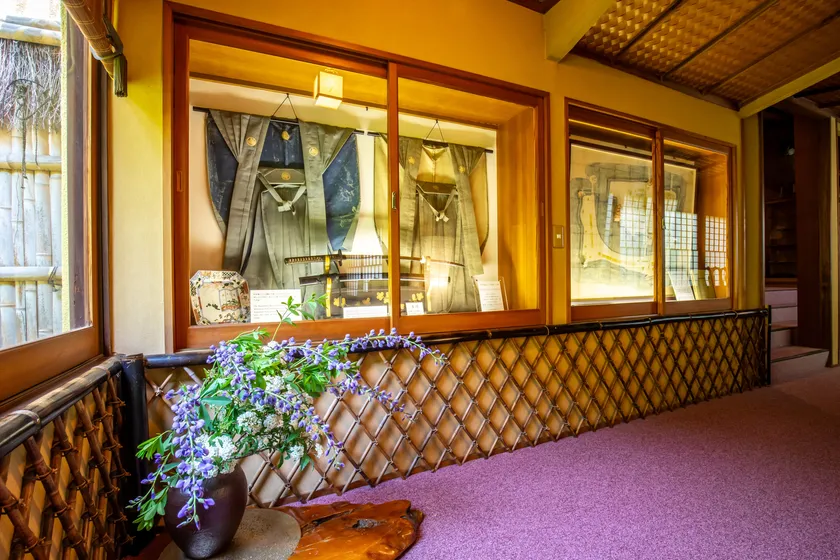
Fujinoyu: Kamishimo Passed Down Through Generations
3. Old Map of Matsumoto Castle
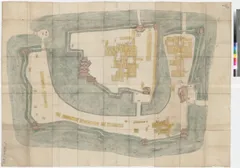
● “Historic Map of Matsumoto Castle” (circa Shōtoku 3 [1713]): A document evaluated by the Agency for Cultural Affairs as “suitable for use as a reference” during the restoration of the Taiko Gate at Matsumoto Castle, a National Treasure.
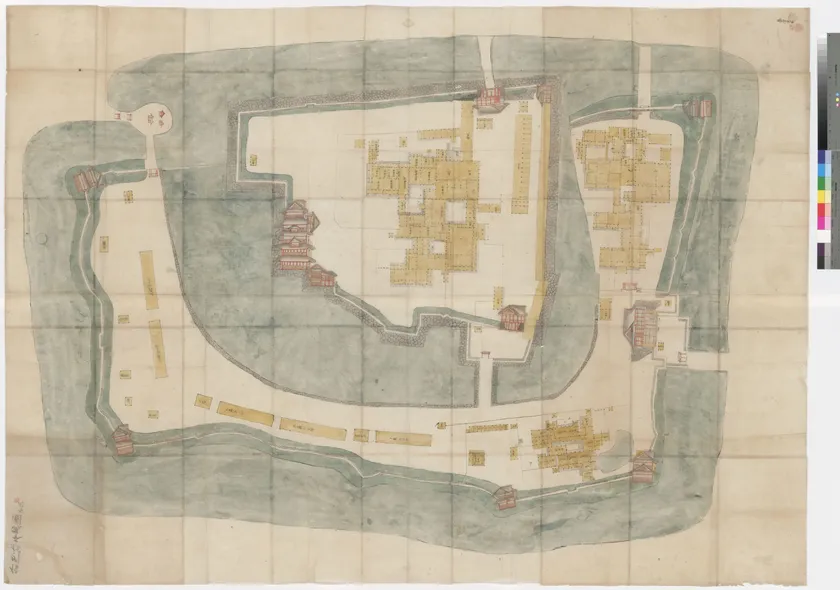
Map of Matsumoto Castle in Shinano
[Historical Map of Matsumoto Castle] A valuable map in the museum’s collection, believed to have been drawn around Shōtoku 3 (1713), which was used for the restoration of the Taiko Gate’s masugata (square bastion) at Matsumoto Castle, a National Treasure.The structure of the castle and the layout of the moats are depicted in meticulous detail, and the fine details come vividly to life through digitization. It is one of the museum’s most representative holdings and holds significant value as a historical research resource.
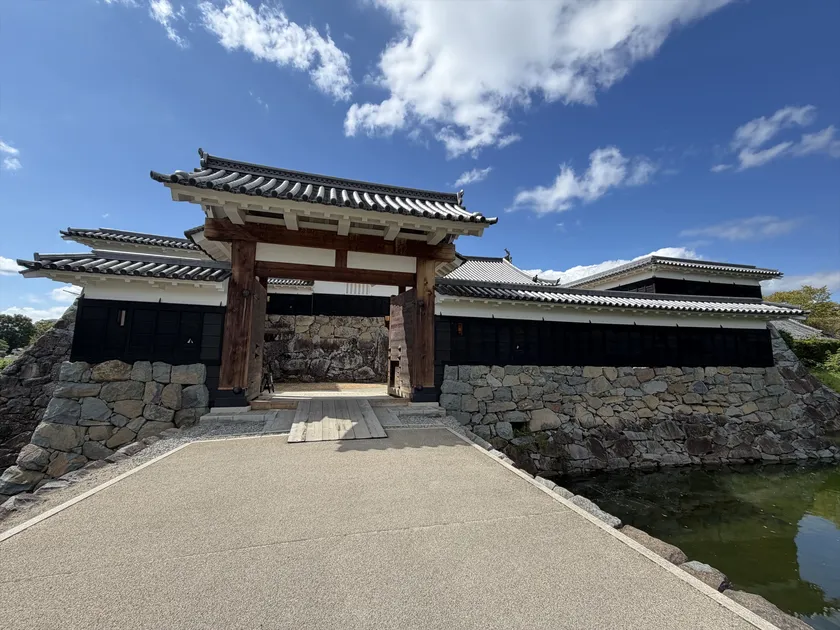
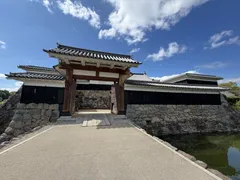
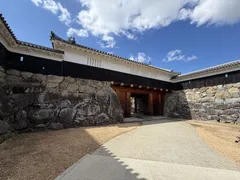
National Treasure: Matsumoto Castle’s Taiko Gate
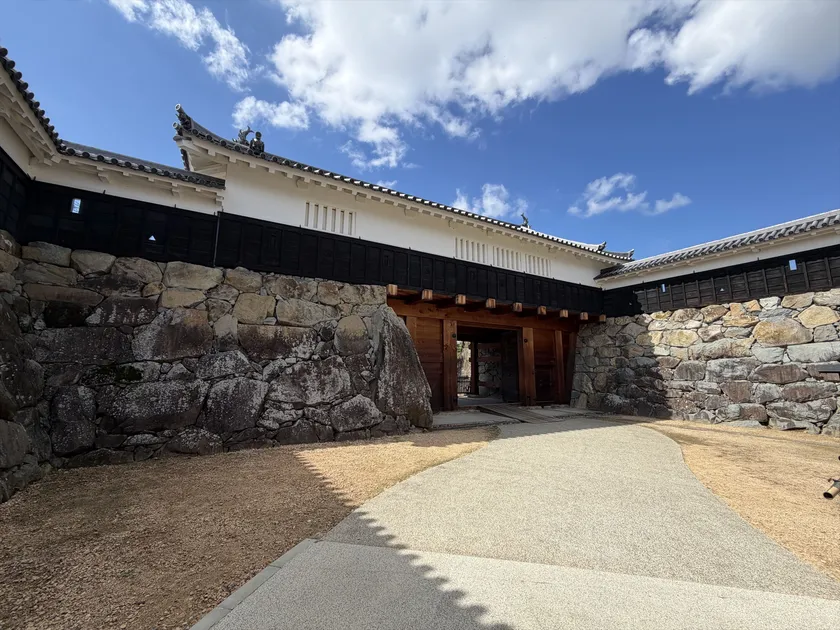
National Treasure: Matsumoto Castle’s Taiko Gate
The National Treasure Taiko Gate Masugata of Matsumoto Castle, for which an ancient map of Matsumoto Castle from this museum’s collection was used in its restoration
4. Sketchbook “Yōshin-jō”
A survey conducted by the Matsumoto City Museum of Art (June 12, 2026) confirmed that the album contains works by the following artists:
● Kondo Tōrai (1850–1925): Born in Aichi Prefecture. He created the cover of the sketchbook.
The year the cover was created is unknown.
● Kubota Shōmon (1838–1921): Born in Wada, Matsumoto City. He was a journalist, politician,
Shinto priest.
The collection includes a work from Taisho 6 (1917). In 1919, he established the
the Shōmon Library in 1919.
● Yuki Chikudo (1868–1924): A classical Chinese poet from Tajima Province.
● Hata Senrei (1865–1929): A painter of traditional Japanese art. The collection includes works bearing his handwritten inscriptions.
● Matsubayashi Keigetsu (1876–1963): A master of the modern Japanese painting world. Born in Yamaguchi Prefecture.
● Suwa Takusō (born 1918): A Japanese-style painter from Shimane Prefecture. Research materials indicate that a work believed to date from around 1977
(Shōwa 52).
● Anmoto Shunko: The collection includes works believed to date from around 1926 (Showa 1)
.
● In addition, several works by unknown artists.
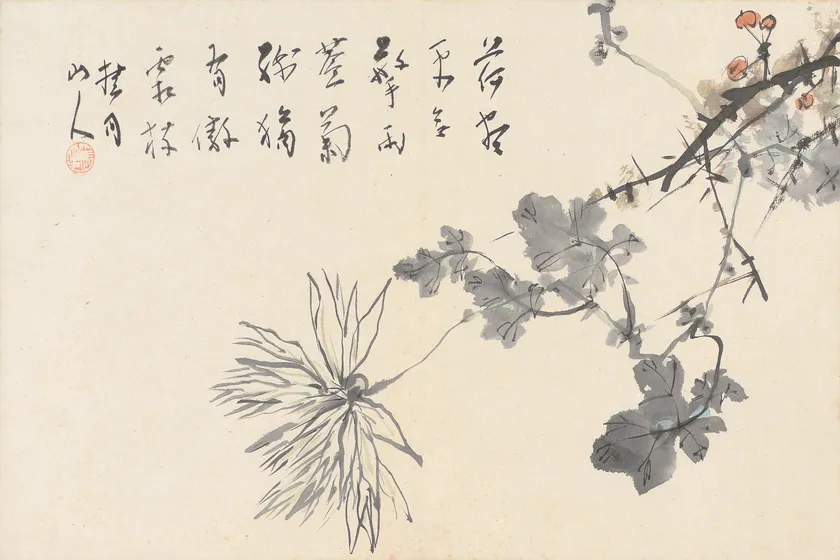
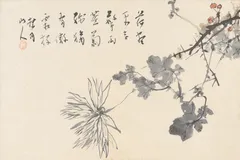
Sketchbook: Keigetsu Matsubayashi
[“Yōshintecho”: A sketchbook containing calligraphy and paintings accumulated over approximately 60 years, from the Taishō to the Shōwa eras] Calligraphy and paintings by Keigetsu Matsubayashi. Thanks to digitization, works that were previously only partially viewable due to the book’s physical format can now be viewed on a smartphone.
5. Works by Kondo Tōrai and Inui Nen
● Kondo Tōrai (1850–1925): The collection includes the cover of the sketchbook *Yōshintecho* as well as several other works.
● Kondo Kannen (1893–1984): Tōrai’s son. The collection includes a total of 30 works by both father and son.
6. Works by Keigetsu Matsubayashi
● Number of works: 3 in total
・1 work included in the sketchbook *Yōshintecho*
・2 separate works
7. Works by Saigo Kogetsu
● Saigo Kogetsu: A Japanese-style painter from Matsumoto. He was one of the “Four Heavenly Kings” among the disciples of Hashimoto Gahō. He died young at the age of 38. Fuji-no-Yu holds 27 of his works in its collection.
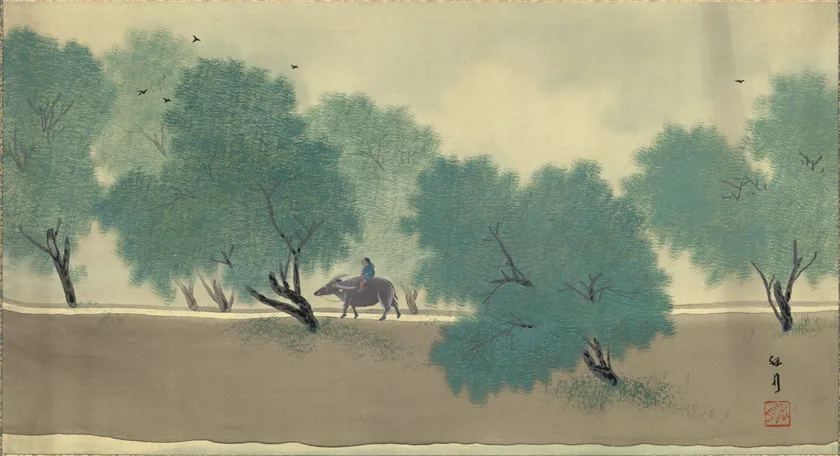
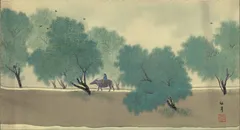
Saigo Kogetsu: “The Shepherd Boy Under the Willow”
A work from Saigo Kogetsu’s later years. Thanks to digitization, guests can now zoom in and appreciate even the brushwork and color expressions that are difficult to discern in the original painting.
8. Historical Documents
● All historical documents preserved at our facility are archived on microfilm by the Matsumoto City Document Division.
9. Other Materials
● Edo Period Map of the Castle Town’s Residential Layout
● Historic Map of Asama Onsen: Circa 1733 (circa Kyōhō 18)
● Historic Map of Asama Onsen—circa 1868 (early Meiji period)
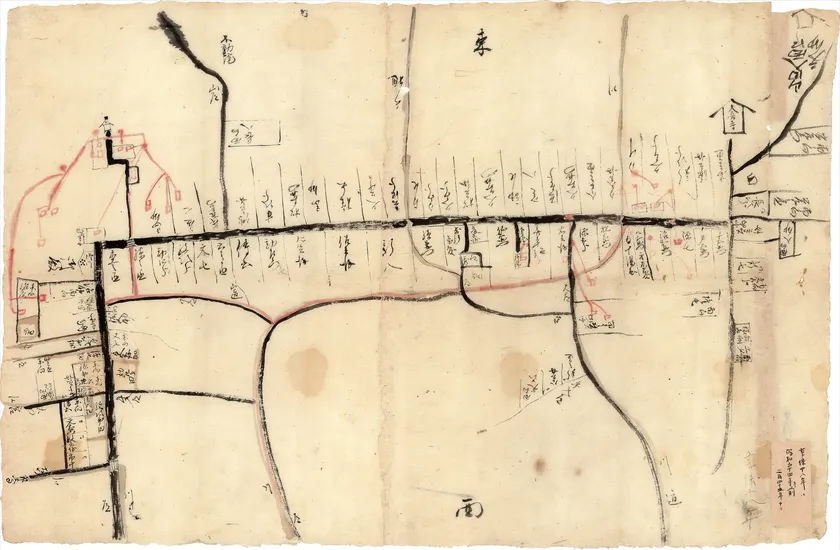
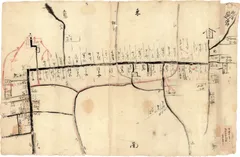
Historic Map of Asama Onsen from the Fuji-no-Yu Collection
[Historic Map of Asama Onsen from 1733 (Kyōhō 18)] This map vividly conveys how the streets and alleys of the Asama Onsen town were laid out during the mid-Edo period. It guides guests on an intellectual journey where they can “walk through the actual hot spring town while keeping the memories of this map in their hearts.”
Image

Logo Image
- Category:
- Services