
Anime Educational Resource That Won the Minister of Education, Culture, Sports, Science and Technology Award Marks Its First Anniversary Adapting Educational Materials for Children for Adult Learning Promoting “Understanding of Hearing Loss” Across a Wide Range of Generations
一般社団法人手話エンターテイメント発信団oioi

The General Incorporated Association Sign Language Entertainment Promotion Group oioi (Higashiyodogawa Ward, Osaka City; Representative Director: Nobuhiko Okazaki*) released the following animated educational materials—aimed at promoting understanding of hearing loss—free of charge on Tuesday, September 23, 2025 (a national holiday), to coincide with “Sign Language Day”:“How Do People with Hearing Loss Hear?” and “What Kind of Challenges Do People with Hearing Loss Face?”—which were released free of charge on September 23, 2025 (Tuesday, a national holiday), to coincide with “Sign Language Day”—have now marked their first anniversary since release.
Produced to help children learn about hearing loss, imagine the challenges people with hearing loss face, and consider how they can respond, these materials received the Minister of Education, Culture, Sports, Science and Technology Award at the 42nd Digital Educational Materials Competition in June 2026.Since their release, the materials have expanded beyond school classrooms to include adult learning settings such as teacher training, corporate training, and human rights seminars; as of August 2026, they are being used in over 170 locations nationwide.Hearing loss is an issue that can affect anyone. With this in mind, and to mark the first anniversary of its release, we aim to explore ways for businesses and local communities to utilize this educational material for adults, thereby spreading understanding of hearing loss to a wider range of generations.
*Note: The character “崎” is correctly pronounced “Tatsusaki.”
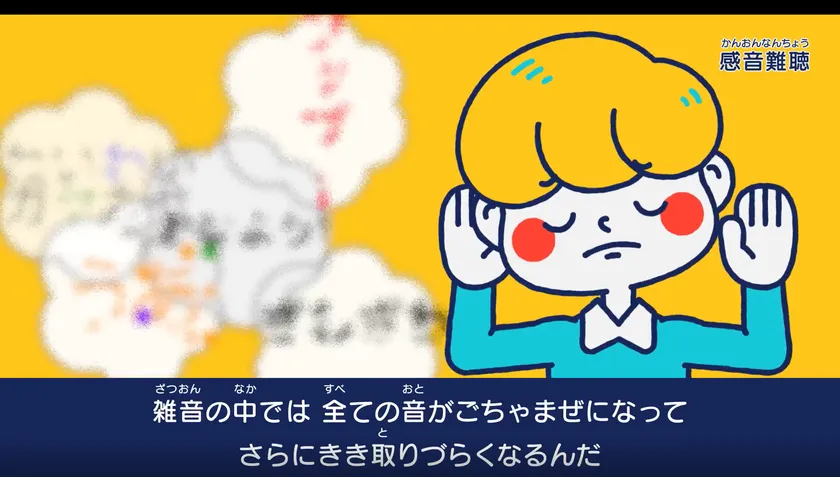
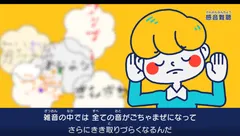
Main Visual: Explanation of Sensorineural Hearing Loss
<Educational Material Information>
Approx. 2 minutes per video; 7 videos total. Videos, user manuals, and worksheets are provided free of charge.
https://www.oioi-sign.com/hoh-edu-video/
<Also available for free on YouTube>
How Do People with Hearing Loss Hear?: https://www.youtube.com/watch?v=kRPw6Kfp_bM
What Kind of Challenges Do People with Hearing Loss Face?: https://www.youtube.com/watch?v=qdQaFV2O-cQ
■Over 1 Billion Young People Worldwide at Risk—Hearing Loss Is Not Someone Else’s Problem
The World Health Organization (WHO) predicts that by 2050, approximately one in four people worldwide will have some form of hearing loss.Furthermore, the WHO warns that hearing loss caused by loud noise is a problem affecting younger generations as well; more than 1 billion young people worldwide (ages 12–35) are at risk of hearing loss due to prolonged exposure to loud sounds through devices like earphones or at live music venues.In Japan, a large-scale survey targeting approximately 30,000 middle and high school students is planned to assess the true extent of earphone-induced hearing loss. Prolonged exposure to loud sounds leads to hearing loss because it damages the hair cells in the inner ear that convert sound vibrations into electrical signals; once severely damaged, these hair cells cannot be regenerated with current medical technology.Furthermore, hearing loss caused by earphones can progress without the person even realizing it. Precisely because it is difficult to restore hearing once it has been lost, it is important to learn how to protect your ears early on and to be mindful of volume levels and usage time.
■ “Understanding Hearing Loss” Is Just as Important as Prevention
Preventing headphone-induced hearing loss is important. However, not all cases of hearing loss can be prevented.Hearing loss can result from various factors, including congenital conditions, illness, aging, and noise exposure. Furthermore, how people with hearing loss perceive sound and the challenges they face vary from person to person. While hearing aids are devices designed to assist with hearing, they do not always allow users to clearly hear every sound or word.As hearing loss becomes a possibility for anyone, prevention alone is not enough. It is also necessary to understand how people with hearing loss hear and the challenges they face. Based on this understanding, the individual and those around them can discuss these challenges and brainstorm practical solutions to create an environment where everyone can live more comfortably together. This will lead to a society where, in the future, both you and those close to you can live comfortably even if you develop hearing loss.
■ Learn About How People with Hearing Loss Hear and the Challenges They Face Through Animation
To help spread this understanding of hearing loss, we created the animated educational videos “How Do People with Hearing Loss Hear?” and “What Challenges Do People with Hearing Loss Face?”“How Do People with Hearing Loss Hear?” is a video that uses sound and animation (including illustrations and text) to illustrate examples of how people with hearing loss perceive sound. By combining auditory cues with visual information, the video is designed to help viewers concretely visualize how each person’s hearing experience is unique.“What Kind of Challenges Do People with Hearing Loss Face?” is a video series that uses various everyday situations—such as during class, at lunch, in P.E., during recess, while moving around, and at work—as examples. It encourages viewers to imagine the kinds of challenges people with hearing loss face and to consider how to address them.This educational resource consists of seven short animated videos, each approximately 2 minutes long, and is available for free on YouTube. In addition to the videos, we provide a user guide and worksheets at no cost; the materials are designed to be easy to use even for those without specialized knowledge of hearing loss.
How Do People with Hearing Loss Hear?: https://www.youtube.com/watch?v=kRPw6Kfp_bM
What Kind of Challenges Do People with Hearing Loss Face?: https://www.youtube.com/watch?v=qdQaFV2O-cQ
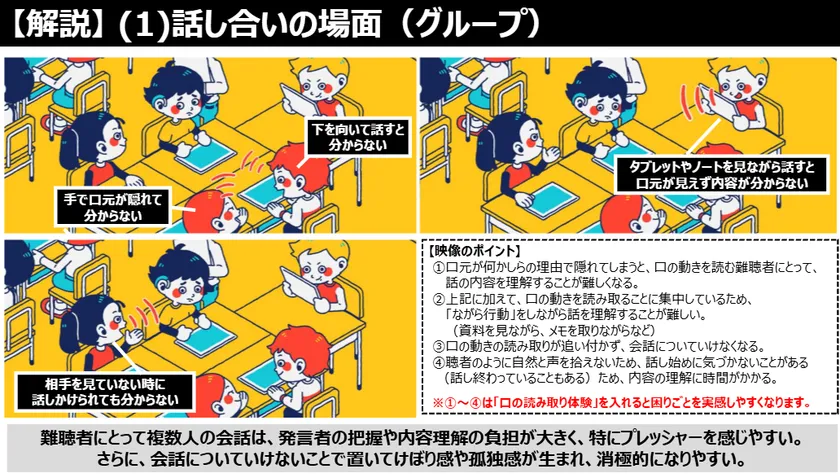
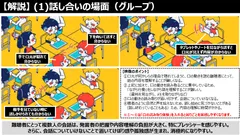
Learning Manual: Case Study Explanatory Materials (Describing examples of challenges featured in each video)
■ Educational Materials for Children Expand to Adult Learning
Since its release, this educational material—originally created for children—has been utilized not only in school classrooms but also in courses and training sessions for college students, faculty and staff, corporate employees, and the general public. It is also used in learning sessions organized by sign language clubs and real-time captioning clubs at schools and other venues to deepen understanding of hearing loss.A key feature of these materials is that even in settings where it is difficult to arrange opportunities to hear directly from people with hearing loss, participants can learn about hearing experiences and challenges through the videos and consider how they can respond appropriately.
*For information on the changes that have resulted from the use of these materials in various settings, please see the reference section “Changes Resulting from the Use of These Materials.”
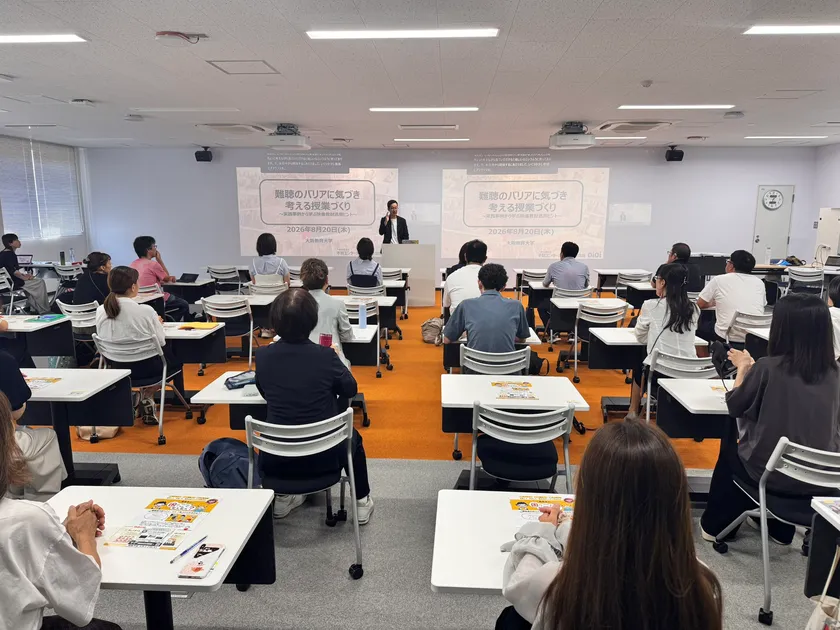
Scenes from the case-sharing session held in Osaka on August 20, 2026. Six teachers presented examples of how they used the materials.
■Regarding the Trial Lessons
We will hold a trial lesson using these teaching materials on the following date.
Date and Time: Sunday, October 11, 2026, 1:00 PM – 2:50 PM (Registration begins at 12:30 PM)
A sign language workshop will also be held from 3:10 PM to 3:55 PM
Venue: Shukutoku University Chiba Campus (Chuo Ward, Chiba City, Chiba Prefecture)
Details and Registration: https://www.oioi-sign.com/event_20261011/
■ Future Prospects
Moving forward, we will investigate the current state and challenges of lessons on understanding disabilities in elementary schools. We will also observe and analyze changes in children before and after lessons that incorporate video materials to verify the effectiveness of these resources. Additionally, we will continue to hold lesson demonstration sessions and case-sharing meetings to accumulate examples of successful implementation.Furthermore, we will explore ways to expand the use of these materials in businesses and local communities. Rather than simply acquiring knowledge, we aim to encourage participants to imagine the challenges others face, consider what they can do to help, and take action. Through these educational materials, we strive to create a society where everyone—regardless of whether they have a hearing impairment—can reach out to one another and live comfortably.
<Reference Information>
・NHK “By the Time You Notice, It’s Too Late: How to Protect Your Ears from Headphone-Induced Hearing Loss” (July 14, 2026)
https://news.web.nhk/newsweb/na/na-k10015176411000
・WHO “World Report on Hearing”
https://www.who.int/publications/i/item/9789240020481
・WHO “Deafness and Hearing Loss: Safe Listening”
https://www.who.int/news-room/questions-and-answers/item/deafness-and-hearing-loss-safe-listening
<Production Team>
In cooperation with: General Incorporated Association Kotoba no Kakehashi https://www.kotoba-bridge.org/
Sora-iro, a support group for families with children who have hearing loss https://sorairofukuoka.jimdofree.com/
Produced using illustrations from “Nancho Nan Nan,” a collaborative project by both organizations
Production: KOO-KI (Kuki Co., Ltd.) https://koo-ki.co.jp/
A creative studio highly acclaimed both domestically and internationally for its work in animation, commercials, and films.
It also has a proven track record in producing videos that address social issues.
<Organization Overview>
General Incorporated Association Sign Language Entertainment Promotion Group oioi (Incorporated in 2016)
Uses the power of entertainment to break down emotional barriers between hearing people and people with hearing impairments, promoting sign language and understanding of hearing impairments.
Website: https://www.oioi-sign.com/
Representative: Representative Director Nobuhiko Okazaki *The character “崎” is correctly pronounced “Tatsusaki”
Address: Domur Shin-Osaka 204, 1-19-14 Higashi-Nakajima, Higashiyodogawa-ku, Osaka 533-0033
Established: April 2016
Business Activities: Through sign language entertainment and outreach activities,
“barriers (misunderstandings, prejudices, etc.) that exist between hearing and deaf people”
.
URL: https://www.oioi-sign.com/
《Reference: Changes Brought About by the Use of Educational Materials》
These educational materials are used in a variety of settings, including school classes, courses, and training sessions. Here, based on reports from schools and organizations, we present examples of how learning has led to action and self-understanding, as well as feedback received from participants in courses and training sessions.
<Case 1: Students Without Hearing Impairments> Learning Leads to Considerate Behavior
At a certain middle school, these educational materials were used in a first-year class. Initially, the students believed that “if you wear a hearing aid, you can hear normally,” but through the materials, they learned that how a person hears when wearing a hearing aid varies from person to person.Later, when a member of our organization with a hearing impairment visited the school, a student who routinely wore a mask was approached by classmates who suggested, “Wouldn’t it be easier to understand if we could see your mouth?” and asked them to remove the mask.This example illustrates how “learning” about hearing loss prompted the students to think for themselves about the best way to communicate with the person in front of them and to take action accordingly.
<Case 2: A Child with Hearing Loss> Educational Materials as a Catalyst for Self-Understanding and Self-Advocacy
At another elementary school, teaching materials were used as a tool for a child in a class for students with hearing loss to communicate their hearing difficulties and challenges to classmates. After watching a video, the child realized, “I have the same difficulties,” and was able to clearly explain those challenges to classmates, along with how they would like them to respond.Teachers have also reported that, through listening to the children with hearing loss, they “realized that even among students with the same hearing loss, the specific challenges each individual faces are different.”
<Case Study 3: Adults> Educational Materials for Children Also Help Adults Understand Hearing Loss
Participants in lectures and training sessions conducted by our organization for college students, faculty and staff, and corporate employees—as well as those who utilized the educational materials—shared feedback such as: “I didn’t know there were individual differences in how people hear,” “This was my first time learning about sensorineural hearing loss,” and “This was a necessary learning experience not only for children but for adults as well.”Additionally, a sign language club that conducts activities to deepen understanding of hearing loss in schools reported that when they used the teaching materials, “the concept of hearing loss was conveyed clearly, and I was surprised that the children identified far more challenges than I had imagined.”
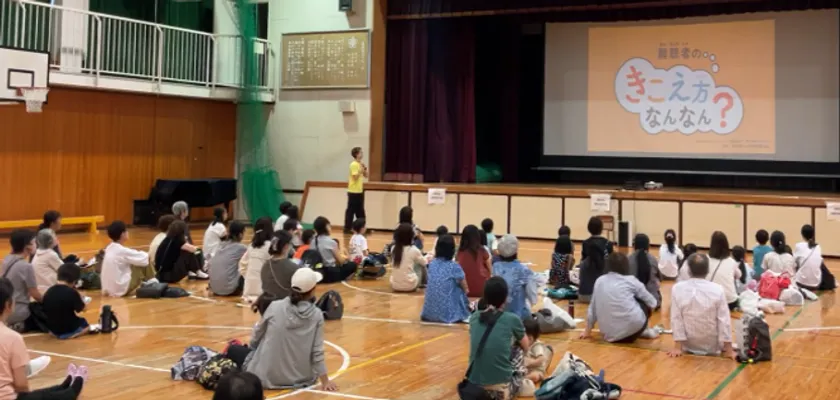
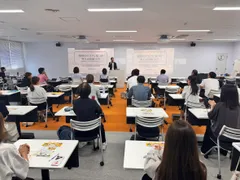
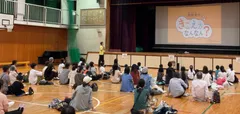
A scene from an oioi workshop incorporating animated educational materials (at a different venue than the one described in the main text)
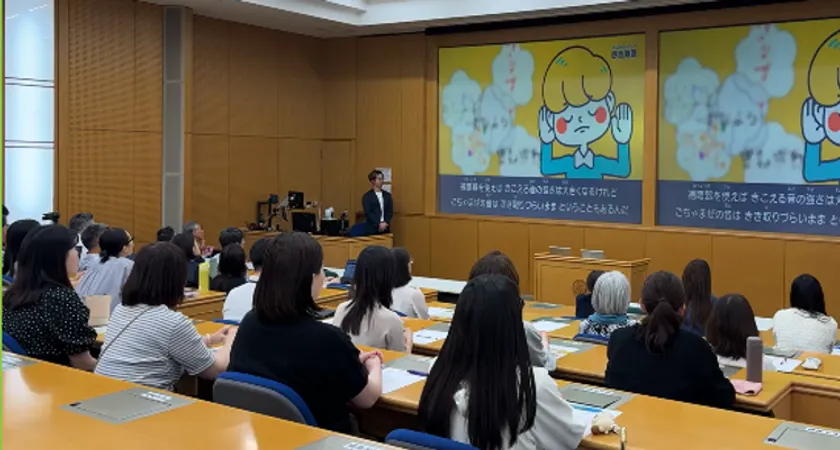
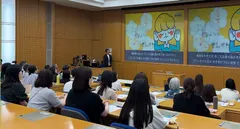
A scene from a workshop for university staff (at a different venue than the one described in the main text)
Image
Logo Image

- Category:
- Corporate Trends
- Genres:
- Education Social welfare Society(Japan)