
“Feeling Rested” Matters More Than Sleep Duration Sawada Acupuncture Clinic Shares Its Approach to Acupuncture Care for Sleep and Autonomic Nervous System–Related Symptoms
“Feeling Rested After Sleep”—An Indicator Highlighted by Japan’s Ministry of Health, Labour and Welfare Also Featuring the Approximately Five-Month Clinical Course of a Male Patient in His 30s
はりきゅう専門 澤田鍼灸院

“Sawada Acupuncture Clinic” (Director: Yuki Sawada), which provides acupuncture treatment in Kashiwara City and Chuo Ward, Osaka City, offers acupuncture care for a range of sleep and autonomic nervous system–related symptoms. These include shallow sleep, waking during the night, feeling tired even after sleeping, as well as palpitations, shortness of breath, sweating, physical tension, and fatigue.
The Ministry of Health, Labour and Welfare’s “Sleep Guidelines for Health Promotion 2023” emphasizes the importance of not only sleep duration but also “feeling rested after sleep”—the sense that sleep has provided sufficient rest. For adults, the guidelines recommend securing an adequate amount of sleep, with at least six hours as a general guideline, while taking individual differences into account.
This release introduces Sawada Acupuncture Clinic’s approach to patients with sleep and autonomic nervous system–related symptoms. With the patient’s permission, it also presents the approximately five-month clinical course of a male patient in his 30s who had experienced multiple symptoms for approximately seven years and has been receiving acupuncture treatment about once a week since March 22, 2026.
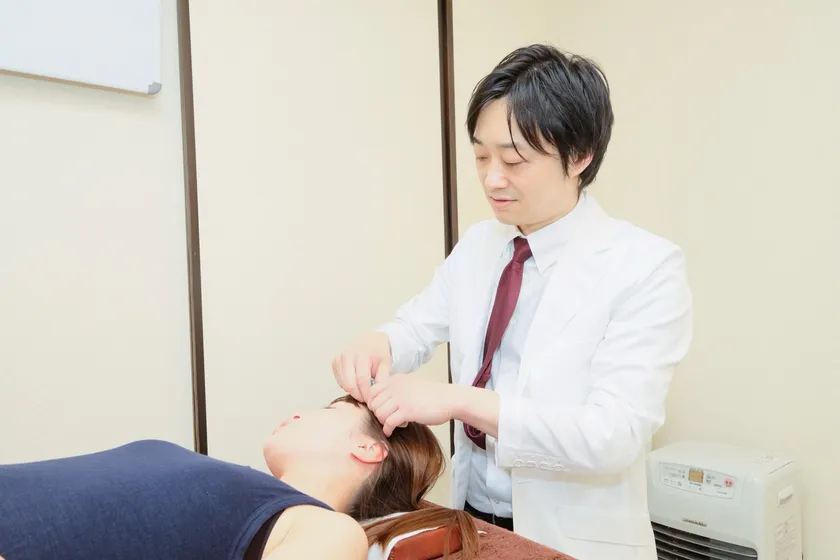
Acupuncture Care for Sleep and Autonomic Nervous System–Related Symptoms
■ It’s Not Just About “How Many Hours You Slept”—Do You Feel Rested in the Morning?
When it comes to sleep, it is important to consider not only how many hours a person sleeps, but also whether they feel sufficiently rested after sleeping.
According to data from the Ministry of Health, Labour and Welfare’s “Health Japan 21 (Third Term),” the age-adjusted percentage of people who reported feeling rested after sleep was 78.5% in fiscal year 2024, while 56.9% were getting sufficient sleep.
“I sleep, but I still feel tired.”
“I wake up several times during the night.”
“My body feels heavy from the moment I wake up.”
“I end up sleeping for long periods on my days off.”
These can also be important signs to consider when assessing sleep.
At Sawada Acupuncture Clinic, we look not only at sleep duration, but also at how easily patients fall asleep, whether they wake during the night, how they feel physically in the morning, and their level of activity during the day.
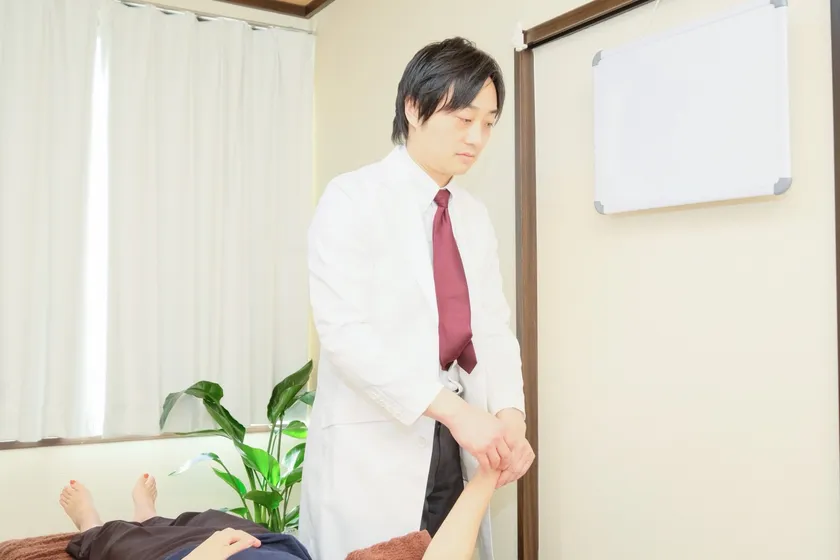
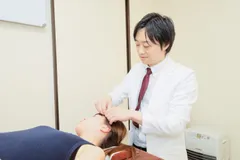
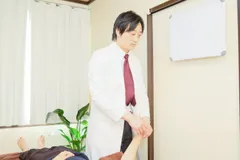
Acupuncture Treatment at Acupoints on the Wrist
■ Multiple Symptoms Alongside Sleep Problems, Including Palpitations, Shortness of Breath, and Sweating
The patient featured in this case is a male office worker in his 30s.
According to the patient, he had experienced multiple symptoms for approximately seven years, including:
・Shallow sleep and waking during the night
・Palpitations and shortness of breath
・Physical stiffness
・Fatigue and lack of motivation
・A sensation of tightness or a lump in the throat
・Sweating and a sensation of heat building up in the body
・Bowel irregularities
・Increased sensitivity to surrounding noise on trains and in crowded places
His concerns therefore extended beyond sleep problems and included a range of other physical symptoms.
He began receiving acupuncture treatment approximately once a week on March 22, 2026.
■ Changes Reported by the Patient Approximately Three Weeks After Starting Treatment
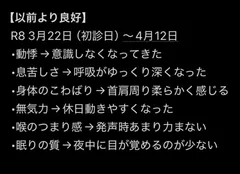
By April 12, approximately three weeks after his initial visit, the patient reported the following changes:
・He had become less aware of his palpitations
・His breathing felt slower and deeper than before
・His neck and shoulders felt less stiff
・He found it easier to be physically active on his days off
・He felt less need to strain when speaking
・He was waking less frequently during the night
At our clinic, we do not assess a patient’s condition solely on the basis of physical changes observed immediately after treatment. We also continue to monitor how the patient’s condition and daily life change over time.
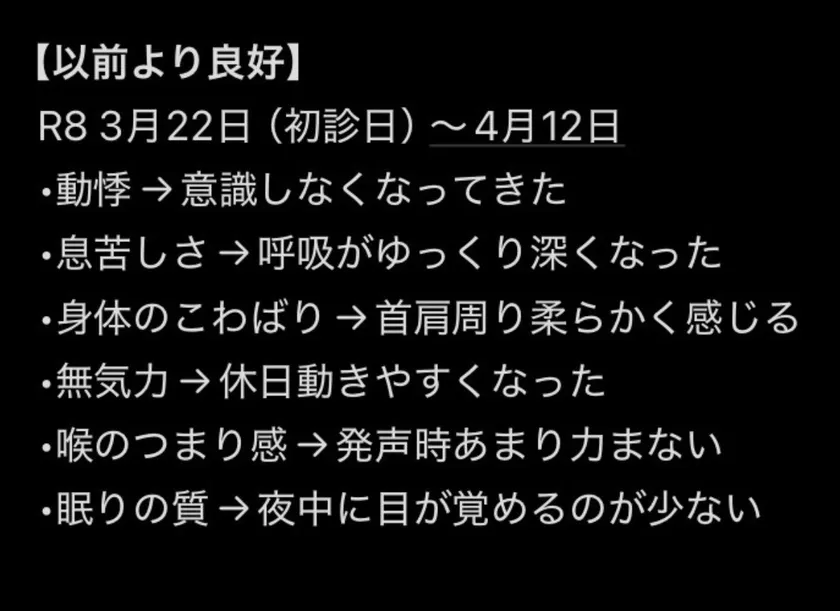
Progress of a Male Patient in His 30s Approximately Three Weeks After Starting Treatment
This summarizes the changes in physical condition and sleep reported by the patient from his initial visit on March 22, 2026, through April 12.
■ Approximately Five Months Later—Changes Beyond Sleep and in Daily Life
As we continued to monitor his progress, the patient reported changes not only in his sleep but also in other aspects of his daily life.
Previously, he was easily bothered by surrounding noise on trains and in crowded places and almost always used earbuds when going out.
However, when reflecting on his recent daily life, he realized that he had not taken his earbuds out of the house for approximately two months. He reported that he was now able to use public transportation and spend time in crowded places without being as bothered by surrounding noise as before.
He also reported finding it easier to be physically active on his days off and feeling that it had become easier to switch between “being active” and “resting.”
Regarding sweating and the sensation of heat building up in his body, he reported that recently, when he moves into the shade or a cool environment, the sweating and sensation of heat tend to subside more easily than before.
On the other hand, he still occasionally experiences physical fatigue and eye strain, and we continue to monitor his condition and progress.
This case is published with the patient’s permission.
This describes the clinical course of a single case and does not indicate that all patients will experience the same outcome.
■ We Don’t Focus Solely on “Sleep” During Sleep Consultations
At Sawada Acupuncture Clinic, even when a patient consults us about sleep, we do not focus solely on whether they were able to sleep. We also assess their physical condition in the morning, breathing, physical tension, fatigue, gastrointestinal condition, how they feel at work or while going out, and how they spend their days off.
Because some patients experience multiple physical symptoms alongside sleep-related concerns, we place importance on carefully observing each individual’s physical condition during treatment and continuing to monitor changes in their daily life over time.
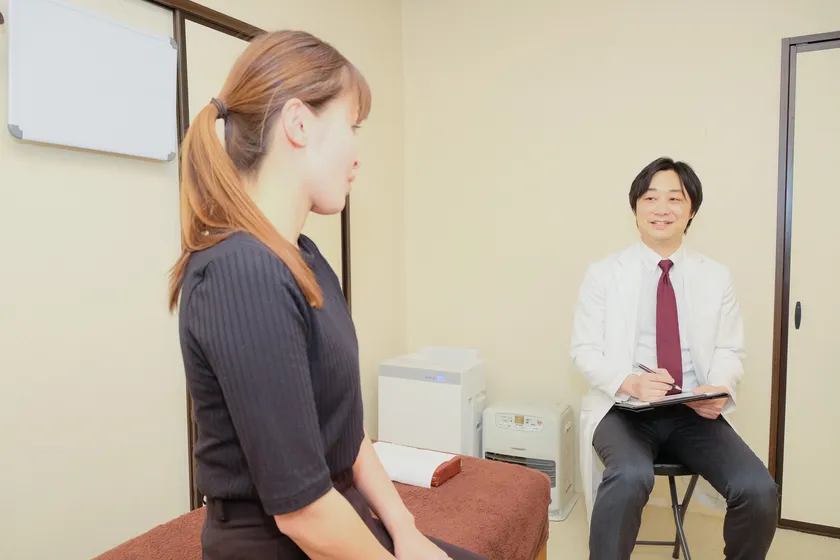
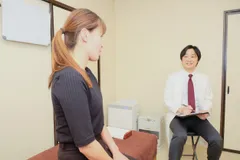
A scene from a consultation assessing sleep and daily life
■ Comment from Director Yuki Sawada
Clinic Director Yuki Sawada commented:
“When it comes to sleep consultations, people tend to focus on how many hours they have slept. In clinical practice, however, I believe it is also important to consider how often they wake during the night, whether they feel rested upon waking, and how well they are able to function during the day.
Some patients also come to our clinic with multiple concerns in addition to sleep problems, including palpitations, shortness of breath, sweating, and physical tension.
At our clinic, rather than focusing on a single symptom, we carefully observe each patient’s overall physical condition. We place importance not only on changes observed before and after treatment, but also on continuously monitoring how the patient’s daily life changes over time.”
■ Respecting Diagnoses and Treatments Provided by Medical Institutions
Sleep problems may sometimes be associated with underlying conditions such as sleep disorders, including sleep apnea, as well as physical or mental health conditions.
The Ministry of Health, Labour and Welfare’s sleep guidelines also indicate that when sleep problems or a reduced sense of rest after sleep persist, lifestyle habits should be reviewed while also considering the possibility of an underlying medical condition.
The Ministry of Health, Labour and Welfare also implements a project to promote the dissemination of information on integrative medicine, providing evidence-based information on complementary and alternative therapies that may be used alongside modern Western medicine. This information is intended to help patients, the general public, and healthcare professionals make informed decisions. Information on clinical trials and other research related to acupuncture and moxibustion is also provided. The project does not endorse any specific therapy.
At Sawada Acupuncture Clinic, we respect diagnoses and treatments provided by medical institutions and recommend medical consultation when necessary. As an acupuncture clinic, we also assess each patient’s individual physical condition and provide acupuncture treatment accordingly.
■ Facility Overview
Name: Sawada Acupuncture Clinic
Director: Yuki Sawada
Established: 2017
● Kashiwara Main Clinic
102 Honmachi Garden Heights, 3-8-11 Kokubun Honmachi, Kashiwara, Osaka, Japan
● Namba Branch
901 Ookini Dotonbori Building, 2-4-21 Takatsu, Chuo-ku, Osaka, Japan
Website: https://shinkyu-sawada.com/
Instagram: https://www.instagram.com/shinkyu.sawada/
Phone: +81-72-942-7011
Email: shinkyu.sawada@gmail.com
Location and other information are current as of the date of publication.
■ Reference Materials
Ministry of Health, Labour and Welfare
“Sleep Guidelines for Health Promotion 2023”
https://www.mhlw.go.jp/stf/seisakunitsuite/bunya/kenkou_iryou/kenkou/suimin/index.html
Ministry of Health, Labour and Welfare
“Health Japan 21 (Third Term)”
https://www.mhlw.go.jp/stf/seisakunitsuite/bunya/kenkou_iryou/kenkou/kenkounippon21_00006.html
Ministry of Health, Labour and Welfare eJIM
“Information Site for Evidence-Based Japanese Integrative Medicine”
https://www.ejim.mhlw.go.jp/public/index.html
Date Verified: September 1, 2026
■ Contact Information for This Press Release
Facility: Sawada Acupuncture Clinic
Contact: Yuki Sawada
Phone: +81-72-942-7011
Email: shinkyu.sawada@gmail.com
Image
Logo Image

- Category:
- Corporate Trends