
“I Can’t Get Up in the Morning” “Headaches Keep Me from Going to School” Sawada Acupuncture Clinic Reports on Acupuncture Care for Middle and High School Students with Orthostatic Dysregulation and Related Symptoms
Autonomic Nervous System–Related Symptoms Affecting School Life in Adolescents — Insights from Clinical Practice and a Long-Term Case Follow-Up
はりきゅう専門 澤田鍼灸院

Sawada Acupuncture Clinic (Director: Yuki Sawada), which provides acupuncture treatment in Kashiwara City and Chuo Ward, Osaka City, has treated middle and high school students—including patients diagnosed with orthostatic dysregulation (OD)—who experience difficulties in school and daily life due to symptoms such as difficulty waking up in the morning, headaches, and fatigue.
The type and severity of symptoms, as well as the duration of treatment, vary from patient to patient. Among the cases we have been able to follow, we have observed changes not only in physical symptoms but also in aspects of daily life, including waking, sleeping, going out, studying, and attending school.
In this release, we introduce the approximately one-and-a-half-year clinical course of one patient whose case is being shared with the permission of both the patient and her guardian. We also present our clinical approach to autonomic nervous system–related symptoms in adolescents.
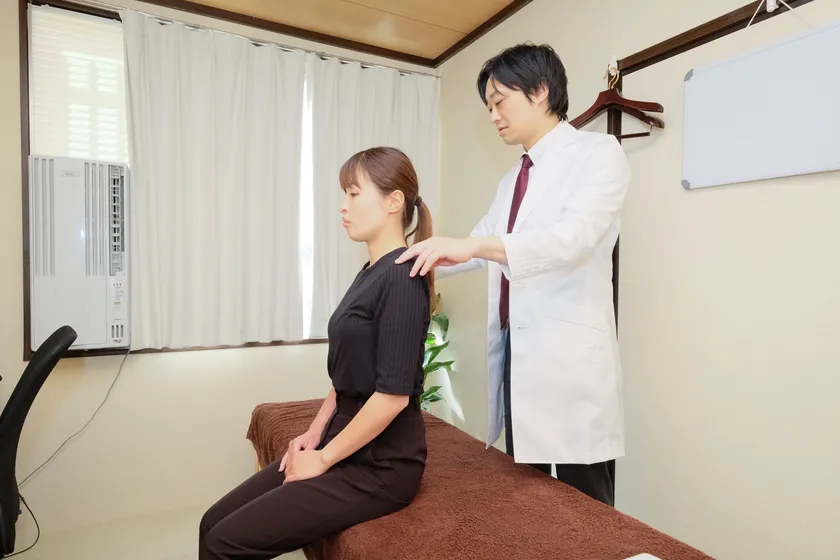
Observing Changes in the Patient’s Physical Condition and Movement Before and After Treatment
■ Orthostatic Dysregulation Is Estimated to Affect Approximately 10% of Middle School Students
Orthostatic dysregulation (OD) is a condition that commonly develops during adolescence. Symptoms may include lightheadedness, headaches, dizziness, and fatigue, and the condition involves dysfunction in autonomic regulation of the circulatory system, including blood pressure and heart rate.
According to the Japanese Society of Pediatric Psychosomatic Medicine, the prevalence of OD, including mild cases, is estimated at approximately 10% among middle school students. OD is also reported to be present in approximately 30–40% of children experiencing school refusal.
Because symptoms tend to be more severe in the morning, OD can significantly affect school life, contributing to difficulty getting up in the morning, tardiness, and absence from school.
Difficulty waking in the morning may sometimes be perceived by others as “laziness” or a lack of “motivation.” However, physical factors may underlie these difficulties, making understanding and support from family members, schools, and others around the child important.
■ Eight Middle and High School Students Treated Since 2024
Since 2024, Sawada Acupuncture Clinic has provided acupuncture treatment to eight middle and high school students—including patients diagnosed with orthostatic dysregulation—who presented with symptoms or difficulties such as:
Difficulty getting out of bed in the morningPersistent headachesSevere fatigueDifficulty sleeping at night and disrupted sleep patternsDizziness or unsteadinessDifficulty concentrating on reading or studyingDifficulty attending school
At our clinic, we do not assess a patient’s condition based solely on a single symptom such as a headache or difficulty getting up in the morning. We observe each patient’s physical condition, provide treatment accordingly, and continuously monitor their progress.
We also look at changes in daily life, including:
・What time the patient is able to wake up
・Whether the patient is sleeping well at night
・Whether the patient is able to attend school
・Whether the patient is able to read and study
・Whether the patient is able to go out independently
・Whether the patient has resumed hobbies, exercise, or other activities they previously enjoyed
We place importance not only on changes in symptoms but also on how the patient’s daily life changes over time.
Treatment duration and follow-up periods varied among the eight cases, and some patients discontinued treatment. Therefore, long-term outcomes have not been confirmed for all eight patients.
However, among the cases we have been able to follow, changes in physical symptoms and aspects of daily life have been observed.
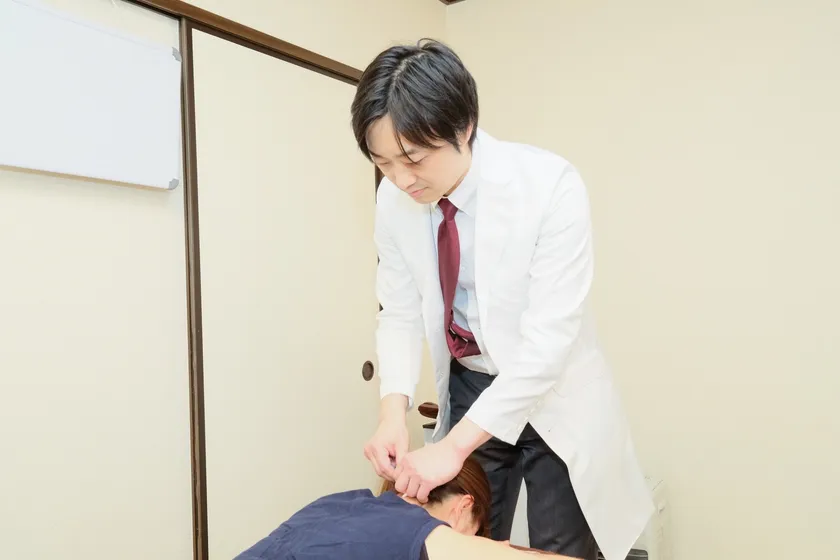
Acupuncture Treatment While Monitoring the Patient’s Physical Condition
■ A Third-Year Middle School Student Who Had Difficulty Attending School — Approximately 18 Months of Follow-Up
One case involved a female patient who first visited our clinic during her third year of middle school. Permission to publish this case has been obtained from both the patient and her guardian.
At her initial visit, she had severe difficulty waking up in the morning and experienced multiple physical symptoms, including severe headaches. She was almost completely unable to attend school.
Her headaches sometimes continued for long periods from the morning, and she also had difficulty getting sufficient sleep at night, significantly disrupting her daily rhythm.
During particularly difficult periods, she reported that even when she tried to read, she could not absorb the content. Reading text and composing sentences on her own had also become difficult.
She also experienced multiple symptoms, including palpitations, shortness of breath, hyperventilation, nausea, and fatigue. Her daily activities were significantly restricted, and she felt anxious about riding a train alone.
Among her complaints were frequent and prolonged episodes of what the patient and her family described as “burp-like symptoms.”
This term does not refer to a diagnosis made by a medical institution; it is simply the way the patient and her family described the symptom.
The First Change That Surprised Her Family
When treatment began, one of the first changes that surprised her family involved these “burp-like symptoms.”
After the first treatment, the symptoms, which had previously occurred frequently, temporarily ceased.
They occasionally returned depending on her physical condition or daily activities, but over time they generally became less frequent.
As treatment continued and we monitored her condition, gradual changes were also observed in her headaches, ability to fall asleep, and ability to wake up.
At our clinic, we do not draw conclusions based solely on an immediate change in a single symptom. We continue to monitor how the patient’s daily life changes over time.
From Waking at Around 3:00 p.m. to Around 8:00 a.m.
Over approximately one and a half years of follow-up, changes were observed in several aspects of her daily life.
Previously, she had difficulty sleeping at night and waking in the morning, and on some days she was unable to get up until around 3:00 p.m. She is now able to wake at around 8:00 a.m.
She is also able to fall asleep more easily than before. Her headaches have decreased compared with the past, although they still occur occasionally. The patient and her family report that getting sufficient sleep often helps them subside.
Her ability to read and write has also changed. She can now read passages, write independently, and engage in studying and reading that she enjoys.
She is also able to ride a train alone, something she previously felt too anxious to do, and now commutes independently by train to a school that suits her needs.
Previously, going up and down stairs without holding a handrail was difficult. She is now able to use the stairs without a handrail.
She has also resumed activities such as walking and her hobbies.
The patient and her family have told us that she has become much more energetic than before and that her natural smile and motivation have returned.
Her condition still fluctuates from day to day, and “burp-like symptoms” may reappear when she overexerts herself. However, compared with the time of her initial visit, the range of daily activities she is able to manage—including sleeping, waking, studying, going out, and commuting to school—has expanded considerably.
This case is published with the permission of the patient and her guardian.
This is the clinical course of a single case and does not indicate that all patients will experience the same outcome.
■ Looking Beyond Whether Symptoms Have Disappeared to How Daily Life Has Changed
At Sawada Acupuncture Clinic, we focus on more than the presence or absence of symptoms.
In addition to assessing physical condition before and after treatment, we monitor whether changes are reflected in daily life over time, such as:
・Being able to get up in the morning
・Being able to sleep at night
・Being able to read
・Being able to study
・Being able to go out independently
・Being able to attend school
・Being able to resume activities the patient previously enjoyed
We consider these changes in daily life an important part of following each patient’s clinical course.
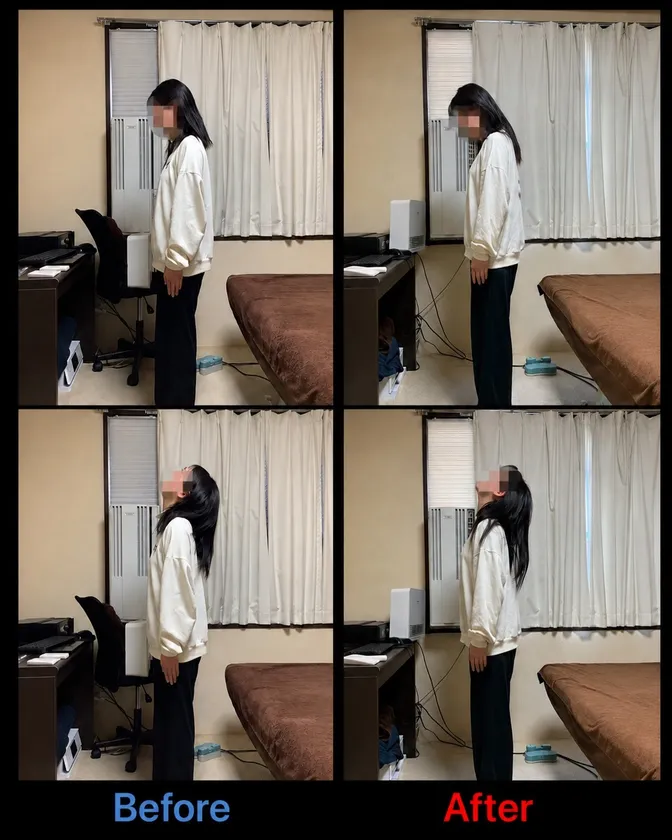
Changes in Neck Range of Motion Before and After Treatment
■ Comment from Clinic Director Yuki Sawada
Clinic Director Yuki Sawada commented:
“When a child has difficulty getting up in the morning or attending school for a prolonged period, it can be an extremely difficult time not only for the child but also for the family.
What I value in clinical practice is not looking at the patient solely through the name of a diagnosis. I carefully observe each patient’s physical condition, assess changes before and after treatment, and continue to follow their progress.
Immediate physical changes are important, but I believe what ultimately matters is how the patient’s daily life changes.
Being able to get up in the morning, read again, ride the train independently, or attend school—when a patient gradually regains the ability to do things that were previously difficult, their expression and daily life can also begin to change.
Being able to follow that process together with the patient and her family is deeply meaningful to me as a clinician.
I am still learning every day. I will continue to carefully observe each individual patient and place importance on the changes we can actually confirm in clinical practice.”
■ Respecting Medical Diagnosis and Treatment While Providing Acupuncture Care
If orthostatic dysregulation is suspected, it is important to consult an appropriate medical professional, such as a pediatrician, and receive a proper medical evaluation and diagnosis.
Sawada Acupuncture Clinic does not view Western medical care and acupuncture as opposing approaches.
We respect diagnoses and treatment plans provided by medical institutions while continuing to observe each patient’s physical condition and providing acupuncture treatment tailored to the individual.
When we believe further medical evaluation is necessary, we also consider it important to recommend consultation with an appropriate medical institution.
■ An Acupuncture Clinic Focused on the Autonomic Nervous System and Observable Changes in Clinical Practice
Sawada Acupuncture Clinic was established in 2017 and currently provides treatment at its Kashiwara Main Clinic and Namba Branch in Osaka.
In September 2025, the clinic issued a press release through @Press introducing its treatment philosophy, which places importance on observing the state of the autonomic nervous system.
This latest release goes a step further by presenting clinical observations involving middle and high school students with orthostatic dysregulation, difficulty waking in the morning, headaches, and related concerns, with a focus on both physical changes and changes in daily life.
Rather than focusing only on the name of a symptom or condition, we observe the patient’s body, provide treatment, and continue to monitor subsequent changes.
We also follow whether those changes are reflected in the patient’s daily life.
Sawada Acupuncture Clinic will continue to build on its clinical experience and share information about a range of health concerns related to the autonomic nervous system.
■ Facility Overview
Name: Sawada Acupuncture ClinicDirector: Yuki SawadaEstablished: 2017
Kashiwara Main Clinic102 Honmachi Garden Heights3-8-11 Kokubun Honmachi, Kashiwara, Osaka, Japan
Namba Branch901 Ookini Dotonbori Building2-4-21 Takatsu, Chuo-ku, Osaka, Japan
Website: shinkyu-sawada.com
Instagram: @shinkyu.sawada
Phone: +81-72-942-7011
Email: shinkyu.sawada@gmail.com
Location and other information are current as of the date of publication.
■ Reference Materials
Japanese Society of Pediatric Psychosomatic Medicine
“Orthostatic Dysregulation”
The Society reports that the prevalence of orthostatic dysregulation, including mild cases, is approximately 10% among middle school students and that OD is present in approximately 30–40% of children experiencing school refusal.
Verified: August 31, 2026
Japanese Society of Pediatric Psychosomatic MedicineClinical Guidelines for Pediatric Orthostatic Dysregulation, Revised 3rd EditionPublished in the Society’s journal, Vol. 32, No. 1, May 2023.
Image


Logo Image

- Category:
- Corporate Trends