
Materials from Japan’s first full-length color animated film, *The Tale of the White Serpent*, and Edo-period “Namazu-e Disaster Prints” on Display The 61st Meiji Koten-kai Tanabata Rare Book Auction
Featuring the first edition of Mokichi Saito’s *Shakkou*—which has garnered attention through the morning drama series— 1,138 items chronicling the history of Japanese culture will be on public display. July 3 (Fri) and July 4 (Sat) at the Tokyo-kosho-kaikan / Free admission
東京都古書籍商業協同組合

The Meiji Koten-kai, a member of the Tokyo Antique Books Dealers’ Cooperative Association, will hold the “61st Meiji Koten-kai Tanabata Rare Book Auction” on Sunday, July 5, 2026.
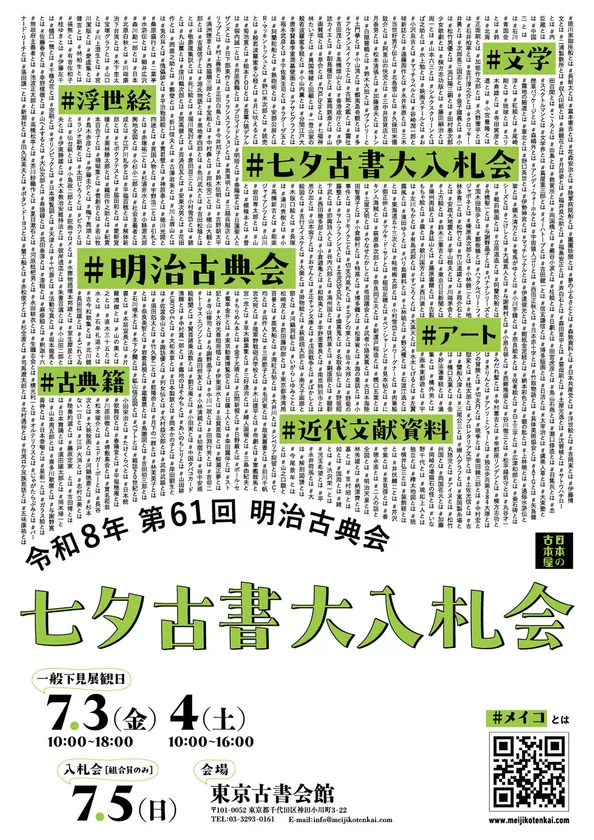
2026_Meiji Koten-kai Tanabata Rare Book Auction
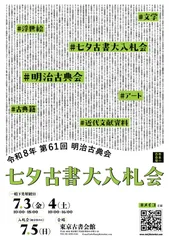
Prior to the auction, a “Preview Exhibition (Open to the Public)” will be held for two days, on Friday, July 3, and Saturday, July 4, to showcase the lots to the general public. Anyone can view 1,138 items that trace the history of Japanese culture—including materials related to *The Tale of the White Serpent*, Japan’s first full-length color animated film; ““Namazu-e Disaster Prints” published immediately after the Ansei Edo Earthquake; and the first edition of *Shakkou* by Mokichi Saito, who has garnered attention through the morning drama series—all free of charge.
This event is an annual public exhibition organized by the Meiji Koten-kai. The venue, which is normally reserved for members of the Antiquarian Booksellers’ Association, will be open to the public for this occasion. Visitors will not only be able to handle and examine the valuable items on display but also experience the atmosphere of the antiquarian book market up close.
■ Notable Items on Display This Year
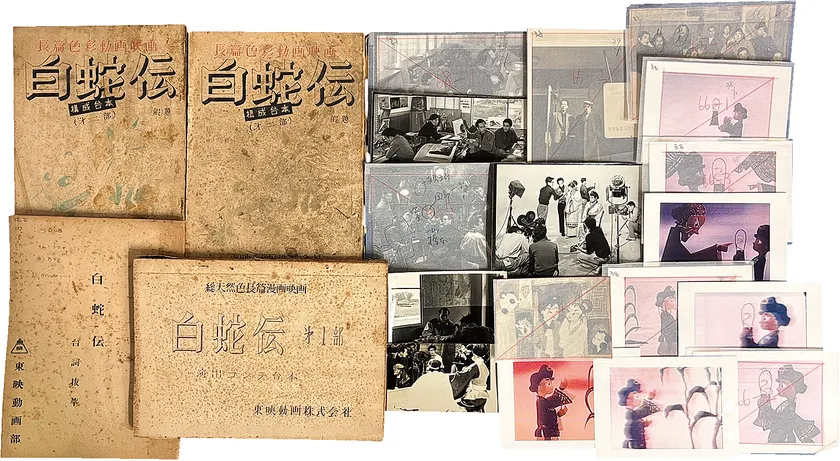
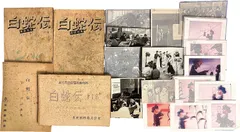
“The Tale of the White Serpent” Anime: Script and Related Materials (Lot No. 647)
(Description) A collection of related materials, including the screenplay, from *The Tale of the White Serpent*—Japan’s first full-length color animated film, released in 1958—will be exhibited as a single lot.It is known as the work that laid the foundation for Toei Doga (now Toei Animation) through its advanced animation techniques that brought animals and water to life. It is also highly regarded for influencing many creators, including director Hayao Miyazaki, who has stated that he was inspired by this film to become an animator.
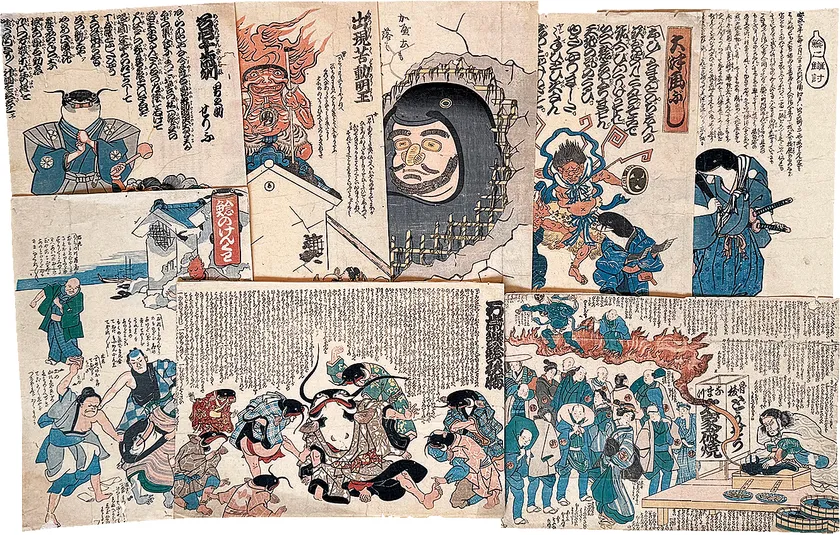
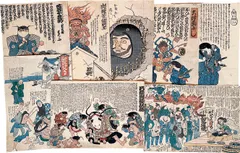
Namazu-e Disaster Prints—Unsigned—circa Ansei 2—24 sheets (Catalog No. 1065)
(Description) A set of 24 ukiyo-e prints titled “Namazu-e Disaster Prints” published immediately after the Ansei Edo Earthquake (1855), will be offered as a single lot. People at the time believed earthquakes were caused by giant catfish rampaging, and these prints depict their anxiety about the disaster, satire on the social climate of the time, and hopes for recovery.These prints are valuable historical documents that convey how the people of Edo perceived this major disaster.
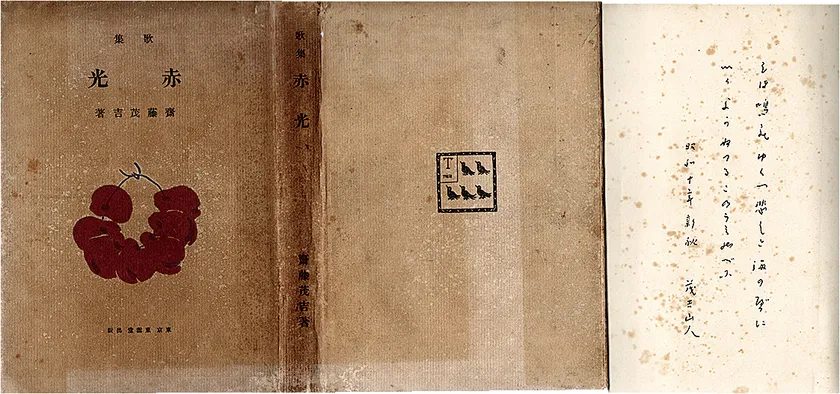
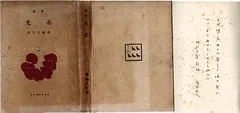
“Shakkou” by Mokichi Saitō—First Edition, Dust Jacket, with Handwritten Tanka and Signature (inscribed in Shōwa 16)—Large 2 format, 1 volume (Catalog No. 16)
(Description) This is the first edition of *Shakkou*, the first tanka collection by Shōkichi Saitō—a giant of modern tanka who is once again attracting attention after being chosen as the model for the NHK morning drama series *Honnō no Mokichi* in the first half of fiscal year 2028. This book, featuring tanka and a signature written by Saitō himself, is a valuable volume of high historical significance.
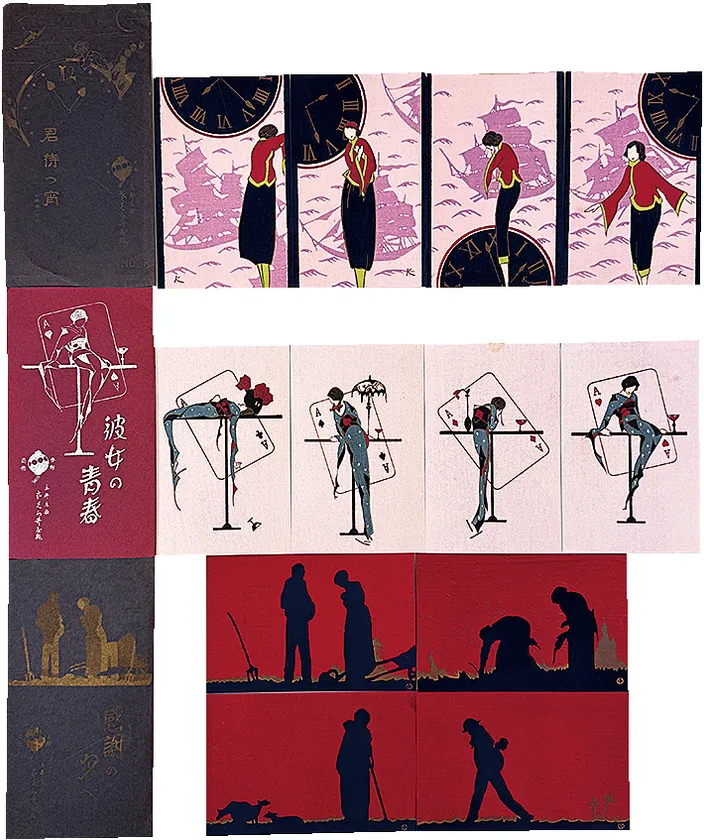
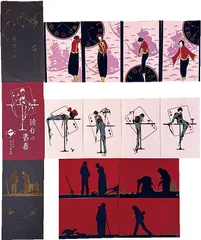
Kaiichi Kobayashi Postcards: “The Evening I Wait for You,” “Her Youth,” “An Evening of Gratitude”—3 sets, 12 cards (Catalog No. 565)
(Description) Three sets (12 cards total, complete set) of hand-colored woodblock-printed postcards by Kaichi Kobayashi, a designer who led the Kyoto Art Deco movement from the Taishō Romantic era through the early Shōwa period.These are representative works that were popular among the “modern girls” of the era, captivating viewers with their delicate colors achieved through beautiful multicolor woodblock printing. They are valuable historical materials that convey the pre-war postcard culture and modern design to the present day.
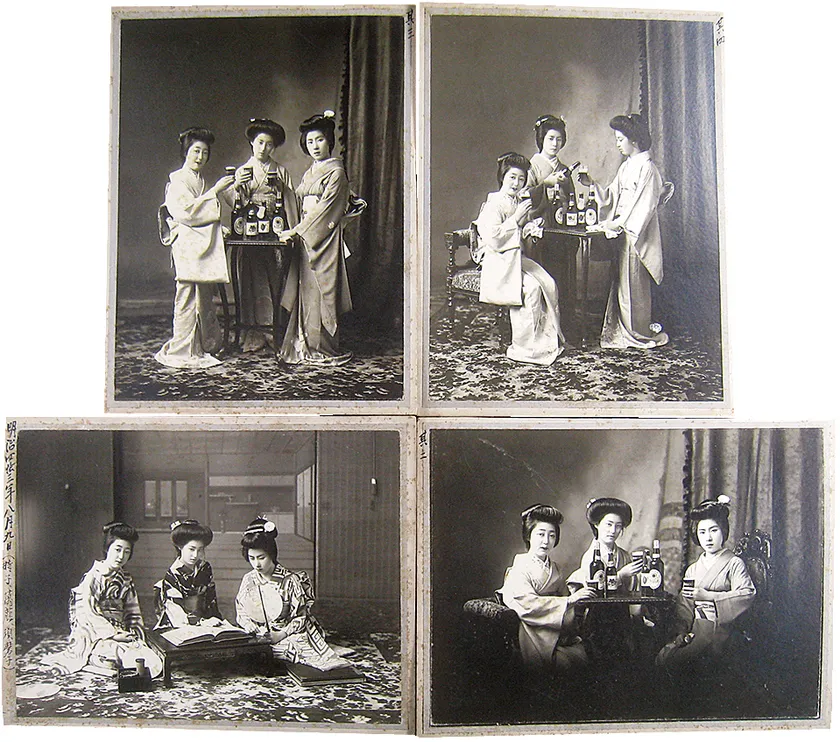
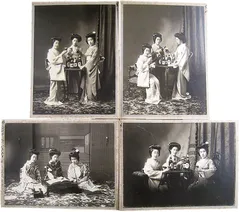
Meiji-Period Photographs of Beautiful Women: Tokiko, Manryu, Sumako, Meiji 43, 4 cards (Catalog No. 734)
(Description) A collection of photographs featuring popular geisha who epitomized the Meiji era, including Manryu—an Akasaka geisha hailed as “Japan’s Most Beautiful Woman”—as well as Tokiko and Sumako.Manryu received 90,000 votes in a geisha popularity poll and was also active as a model for advertisements for Kao Soap and the Mitsukoshi Department Store, among others. It is rare for surviving photographs of this kind to appear on the market.
■Other Highlights (Selected)
・22 pages of Yasunari Kawabata’s draft of “Snow Country” (Catalog No. 181)
Handwritten drafts by Nobel Prize-winning author Yasunari Kawabata that document the revision process leading up to the final form of his masterpiece, *Snow Country*. Although titled “Snow Country Excerpts,” these are drafts of the final chapter of the completed *Snow Country*, titled “Continuation of Snow Country,” and serve as valuable literary materials that shed light on the creative process.
・Ryunosuke Akutagawa’s manuscript “A Child’s Illness: At Ichiyutei” (Catalog No. 166)
A valuable handwritten draft whose whereabouts were once unknown. It is a work that actually took Akutagawa’s own sick child as its subject
.
・Books Published by Shigezaburō Tsutaya (Catalog Numbers 864 and 870)
Kōshihiji and share-bon books published by Shigezaburō Tsutaya, who gained attention in last year’s NHK Taiga drama. These are valuable materials that convey the publishing culture and townspeople’s culture of the Edo period to the present day.
・Collection of Phosphorus Match Labels for Export from the Meiji and Taisho Periods (Catalog No. 789)
This collection comprises 13 albums containing approximately 11,800 Japanese match labels from a period when the match industry flourished as an export business. It is a valuable collection that offers insight into the industrial history of modern Japan and the evolution of print design.
・*Selected Matsuran-fu* and *Matsuba-ran-fu* (Catalog Numbers 900–903)
Specialized books introducing the “pine-leaf orchid,” which became a major craze in the late Edo period. At the time, these plants were traded at high prices as rare items and gained such popularity that they became the subject of speculation. These are valuable materials that convey the Edo-period horticultural boom and the public’s enthusiasm to this day.
In addition, the list of items on offer is available on the Meiji Koten-kai official website.
Web Catalog: https://www.meijikotenkai.com/2026/catalog.php
■ Public Preview Exhibition
The 61st Meiji Koten-kai Tanabata Rare Book Auction
Date and Time: Friday, July 3, 2026, 10:00 a.m. – 6:00 p.m.
Saturday, July 4, 2026, 10:00 AM – 4:00 PM
Venue: Tokyo-Kosho-Kaikan (3-22 Kanda Ogawamachi, Chiyoda-ku, Tokyo)
Items on Display: antique paintings and calligraphic works
Organizers: Meiji Koten-kai
Admission: Free
Official Website: https://meijikotenkai.com
*The auction will be held on Sunday, July 5. Under the regulations of The Tokyo Association of Dealers in Old Books, bidding is conducted through member antiquarian booksellers. The auction is therefore not open to the general public.
*Final sale prices are not disclosed.
■About the Meiji Koten-kai
The “Meiji Koten-kai” is a membership organization comprising 23 specialized used bookstores affiliated with the The Tokyo Association of Dealers in Old Books. With a history spanning over 60 years, it specializes in modern literature, modern historical documents, ukiyo-e, and art materials. Currently, it operates a used book market every Friday.
While participation in regular markets is limited to member bookstores of the National Antiquarian Booksellers’ Association, the annual “Tanabata Rare Book Auction” features a preview exhibition (open to the public) where members of the general public can view the items up for auction.
Image
Logo Image

- Category:
- Events