
Approximately 70% of "requiring medical treatment/clinical checkups" after medical checkups do not visit a medical institution ~Association Health Insurance Kyoto Branch Releases "Kyoto Working Generation Health Data Book" Analyzing Big Data on Working Generation in Kyoto Prefecture Kyoto Health Databook for Working Generation" analyzing big data on the working generation in Kyoto Prefecture is now available.
全国健康保険協会(協会けんぽ)京都支部

The Kyoto Branch of the National Health Insurance Association of Japan (Shimogyo-ku, Kyoto City; Branch Director: Shunji Moridono; hereafter "the Kyoto Branch of the Association Health Insurance Corporation") has analyzed big data held by the Association and revealed that approximately 70% of those who have been judged as "requiring medical treatment" or "requiring close examination" in a health checkup have not visited a medical institution ("untreated persons"). The report revealed that about 70% of those who have been diagnosed as "requiring medical treatment" or "requiring close examination" have not yet received medical treatment.
Summary
This is the third edition of the "Kyoto Working Generation Health Data Book. The first volume focused on health issues by business category, while the second volume analyzed the effects of health management. This year's report focuses on the status of medical checkups after health checkups, and in addition to understanding the issues, it provides hints and data to help link health checkups to visits to medical institutions.
Kyoto Workers' Health Databook
https://www.kyoukaikenpo.or.jp/shibu/kyoto/assets/detabook2026.pdf
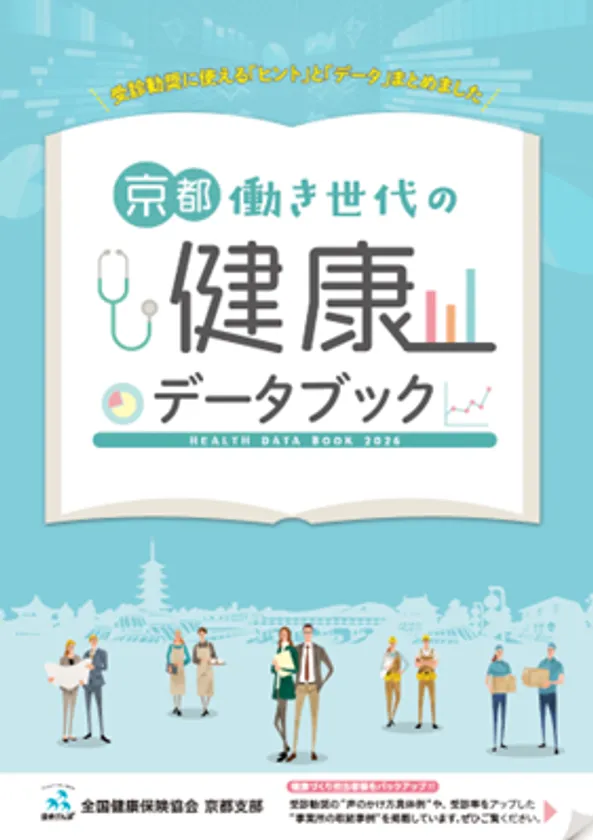
Cover of "Kyoto Health Databook for Working Generation
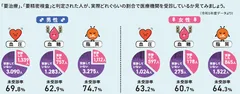
About 70% of those who were judged as "requiring medical treatment" or "requiring close examination" did not receive medical attention.
(Databook, p. 8.9)
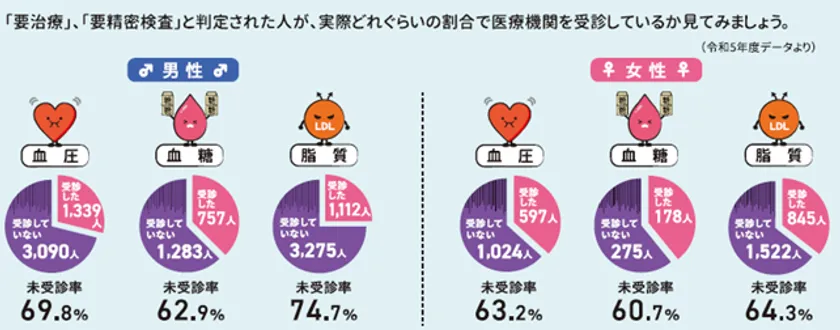
Percentage of people who received "medical treatment required" or "close examination required" as a result of medical checkups who visited a medical institution
The result that approximately 70% of the respondents have not been examined by a medical institution shows that many of those who should have been examined have not yet been examined by a medical institution. The fact that a large number of people are not receiving medical examinations indicates the existence of a wide range of problems.
Efforts and Trends to Increase the Rate of Medical Checkups
This Databook also includes points for business establishments to encourage their employees to receive medical examinations and a model of a recommendation letter (Databook pages 16 and 17), which can be used as support for business establishments in recommending that their employees receive medical examinations.
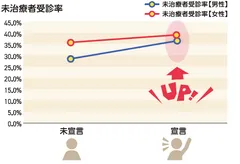
In addition, the "Declaration of Healthy Workplace from Kyoto" implemented by the Kyoto branch of the Japan Health Insurance Association is effective in promoting health checkups at workplaces. Data analysis shows that there is a difference of approximately 10% in the rate of male health checkups between business establishments that participated in the health declaration and those that did not.
*About "Declaration of Healthy Workplaces to be tackled from Kyoto
https://kyoto01.kyoukaikenpo.or.jp/
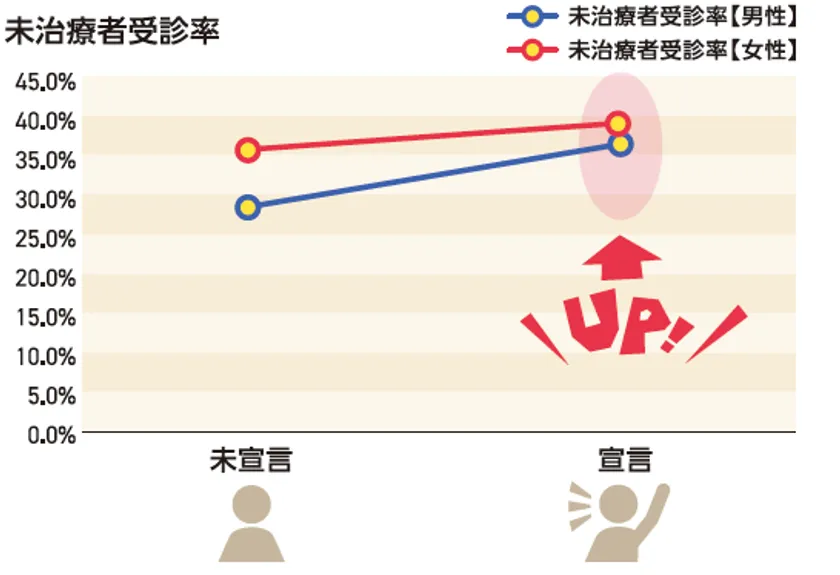
Difference in the medical checkup rate of untreated persons in the declaration entries
Issues and Future Directions Indicated by this Databook
The results of this survey indicate that there is a certain number of people who only receive health checkups but do not make use of the results of the checkups.
The health checkup is not the end of the process; it is important to take actions after the checkup.
This analysis clarifies the actual status of post-health checkups and trends by age group, and aims to provide an opportunity for those who need it to take appropriate action to receive it.
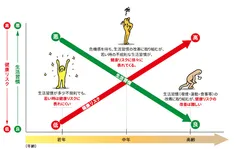
■Changes in health risk according to age (Databook, pp. 22-31)
The data also visualizes the relationship between health risk and lifestyle according to age, showing that while lifestyle tends to improve with increasing age, it is difficult to improve health risk once it worsens, suggesting the importance of correct lifestyle starting from the younger generation.
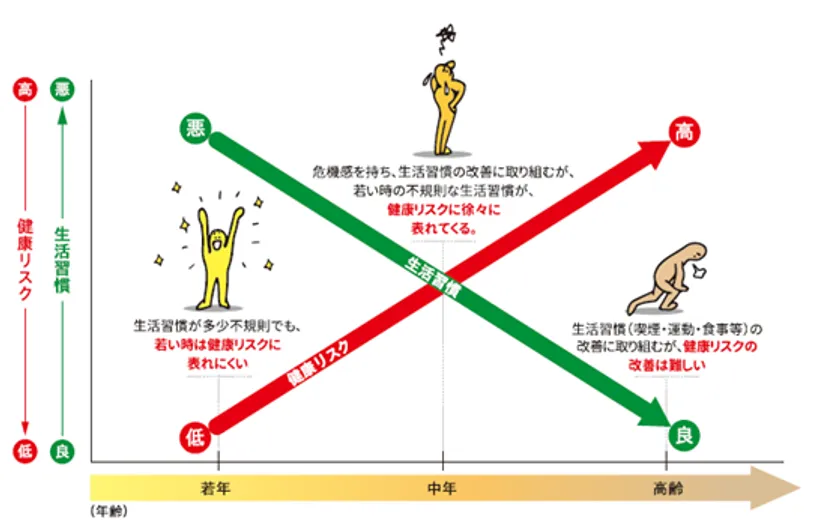
Changes in health risk according to age
For more detailed data, please refer to the following page.
The Kyoto Working Generation Health Databook
https://www.kyoukaikenpo.or.jp/shibu/kyoto/assets/detabook2026.pdf
Initiatives of the Kyoto Branch of the Japan Health Insurance Association
The Kyoto Branch of the Association Health Insurance Society (AHS) is committed to providing useful information on health promotion so that everyone can be active and healthy in the coming years.
The Kyoto Branch of the Japan Health Insurance Association (JHIA) is a medical health insurer with approximately 61,500 business establishments and 860,000 members in Kyoto Prefecture. The Kyoto Branch provides regular health checkups, recommendations and support for maintaining good health, insurance benefits, and other services to subscribers and business establishments.
As we enter the era of 100-year life expectancy, we believe that it is particularly important to create an environment in the workplace, where workers spend a long time, to improve their health literacy and prepare for a healthy future. We are promoting health promotion (collaborative health) in cooperation with business establishments.
Outline of the Kyoto Branch of the National Health Insurance Association of Japan
Name: Kyoto Branch of the National Health Insurance Association of Japan
Representative: Shunji Moridono, Branch Director
Location: Shunji Moridono, Branch Manager
2F Daiwa Securities Kyoto Bldg. 28-2 Tachiuri Higashi-machi, Shijo-dori Fuyamachi Nishi-iru, Shimogyo-ku, Kyoto City, Kyoto Prefecture
Daiwa Securities Kyoto Bldg. 2F
Image
Logo Image
- Category:
- Research & Reports