
Supporting the implementation of the N-E.X.T. High School Initiative
Guide and Implementation Handbook for Prefectural Boards of Education and School Administrators Available
笹埜健斗研究室

Kento Sasano (Professor, Okayama University) has released a "Proposal Evaluation Guide" and "Implementation Handbook" for prefectural boards of education and school administrators in order to implement the N-E.X.T. High School Initiative promoted by the Ministry of Education, Culture, Sports, Science and Technology as "sustainable educational reform with students as the subject" rather than simply introducing new tools. The guide is available for use by prefectural boards of education and school administrators. The guide provides practical support to lead the N-E.X.T. High School concept to "good implementation" by organizing issues such as avoiding vendor lock-in, visualization of total 3-year cost, portability of data, respect for teachers' expertise, and operational design according to local conditions.
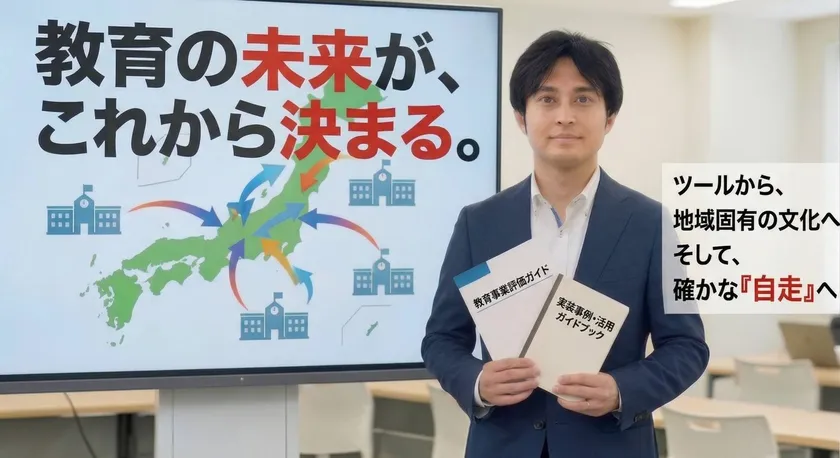
The "N-E.X.T. High School Concept" Paving the Way to the Future of Education
While the N-E.X.T. High School Concept is taking shape in various regions, there is a growing risk that proposals that are forward-looking and topical in the field of education will lead to the emergence of issues such as total cost, data migration, teacher burden, regional compatibility, and continuous operation after implementation. In response to this situation, the guide and handbook to be released this time do not judge proposals based solely on their novelty and convenience, but rather on their potential to "truly contribute to student-centered education," "enhance teacher expertise," "guarantee total cost over three years and portability after the contract ends," "fit the actual conditions of each region, including mountainous areas," and "provide a system that can be used in a variety of ways, including in the middle and mountain areas. The purpose of this guide is to support the implementation of the N-E.X.T. High School concept in a calm and practical manner from the perspective of whether schools and boards of education can ultimately run on their own.
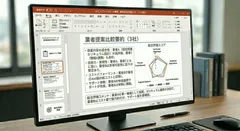
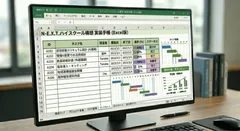
The "Evaluation Guide for Vendor Proposals" to be released this time takes as its starting point whether the proposal really contributes to "student-centered education," and considers the following factors: development of abilities necessary in the AI age, such as "the ability to ask questions by oneself" and "the ability to create value with others," improvement of teacher expertise, adaptation to local conditions, total cost over 3 years, return and portability of data after the contract is over, and the possibility of the proposal being implemented in a way that is practical. The "Implementation Handbook" is designed to enable confirmation of data return and portability after the contract ends, as well as sustainability, including in the event of withdrawal of the operator. In addition, the "Implementation Notebook" is designed to support the N-E.X.T. High School concept by organizing the current year's priorities and major KPIs in the concept map, then incorporating them into the project ledger, task management, weekly plans, and monthly reviews, and consistently supporting everything from homework organization after meetings to summaries for submission and progress visualization, so that the concept is not "introduced and done. This is a practical template for schools and school boards to continue implementing the N-E.X.T. High School Initiative on their own, rather than "implementing it and calling it quits.
The reason for making this guide and implementation handbook available free of charge is to expand the N-E.X.T. High School Initiative into a reform that can be replicated and sustained throughout the entire prefecture, rather than remaining an initiative of only a few advanced schools or specific businesses. Kento Sasano believes that the success or failure of educational reform depends not only on the creation of excellent individual cases, but also on the ability of boards of education and school administrators to identify proposals according to the conditions of their own regions and schools, design post-introduction operations, and run on their own while making repeated improvements. For this reason, this publication is designed so that prefectural boards of education, school administrators, educational DX personnel, and personnel in charge of promoting inquiry and information education can use it as a common foundation for making the N-E.X.T. High School concept take root in the community, in a way that is neither left to the vendor nor operated by a single person.
The public materials will be distributed free of charge on a dedicated page, and at the initial release, in addition to the "Vendor Proposal Evaluation Guide" and "Implementation Handbook," we plan to provide supplementary materials that can be easily utilized for comparison and review and at the start of operation. The public version will be continually updated as improvements are made along the practical flow of the system, including pre-introduction comparison and review, post-meeting homework organization, weekly progress checks, monthly reviews, and summary updates for submission, while providing opportunities for explanations and opinion exchanges for prefectural boards of education and school administrators. We intend to guide prospective users and interviewees through the distribution page and inquiry window, and to develop the N-E.X.T. High School concept as a common infrastructure that can actually continue to be implemented in each region.
Comment from Kento Sasano
The purpose of the N-E.X.T. High School Initiative is not to introduce new tools. It will be a true reform only when it supports learning in which students ask questions on their own and create value together with others, when teachers enhance their expertise not as mere operators but as companions, and when it becomes a sustainable system that responds to the actual conditions of the region. This is why I have released a tool that allows us to consider not only the buzz and convenience, but also the total cost over 3 years, data return and portability after the contract ends, continuity when the operator withdraws, and whether the school or school board can ultimately run on its own. We would like to make the N-E.X.T. High School concept not just an advanced case study, but a common foundation for making it take root as a 'good implementation' in each region."
Profile
Kento Sasano
Professor at Okayama University. He is a senior research fellow at Keio Research Institute at SFC, Keio University, and president of the Japan Education DX Promotion Association. He specializes in designing individualized, optimal, and collaborative learning experiences using AI. He has been conducting research and social implementation of Education DX, inquiry learning, and learning design. He has appeared in the media and provided information for Fuji Television's "Honma dekka! TV" and other media appearances and information dissemination.
For inquiries, please contact
Kento Sasano Lab.
E-mail : office@sasano.org
Public page : https://sasano.org/
Application for interview: https://sasano.org/#contact/
Image
Logo Image

- Category:
- Services