
A Day to Look at Japan's "Invisible Poverty" The Realities of Children's Lives Emerge from the Frontlines of Support Many Families Unable to Afford Adequate Meals Due to High Prices [World Day of Social Justice]
Good Neighbors Japan

Every year on February 20, the World Day of Social Justice is established by the United Nations. It is a day for the entire society to think about the need for social justice and poverty eradication.
Good Neighbors Japan (headquartered in Ota-ku, Tokyo; Satoshi Koizumi, Representative Director), a certified NPO, operates the Good Gohan food bank to distribute food to low-income single-parent families in Japan as part of its efforts to address child poverty. Many families who wish to take advantage of this support are forced to live in such difficulty that they cannot afford to eat enough food, and the recent high cost of living has added to this situation.
On the occasion of the World Day of Social Justice, we would like to share with you the reality of "invisible poverty" that we face on the frontlines every day.
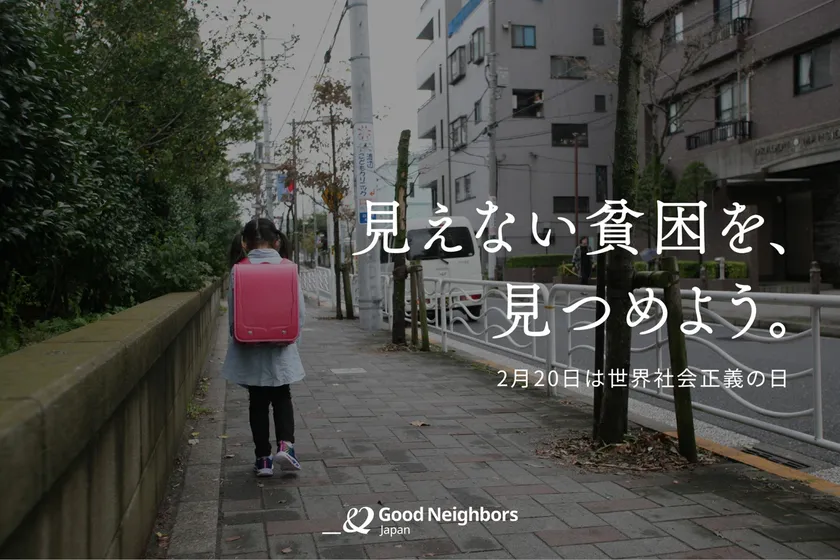
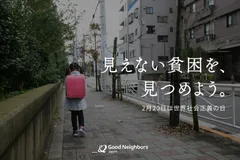
February 20 is World Day of Social Justice] Let's look at invisible poverty.
■The Shadow of Poverty Lurking Behind Normal-looking Families
It is said that one in nine children in Japan lives in relative poverty[1].
However, we can hardly see this figure when we just walk down the street.
They are wearing clothes and going to school.
They are shopping at the supermarket.
They look like a "normal family" at first glance.
Yet, there are families who are so impoverished that they cannot satisfy their hunger, even at this very moment.
Child poverty in Japan is difficult to notice because it is hard to see.
This is what we feel most strongly as those of us in the field of support.
■Is child poverty an individual problem?
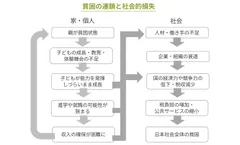
Child poverty, if left unchecked, poses a great risk to society as a whole.
Children do not receive sufficient nutrition during their growth period, which affects their health.
Limited opportunities for learning and a narrower range of options for the future.
Poverty is transmitted from one generation to the next through insecure employment and low income.
These are important issues that affect not only individual families but also the stability of society as a whole.
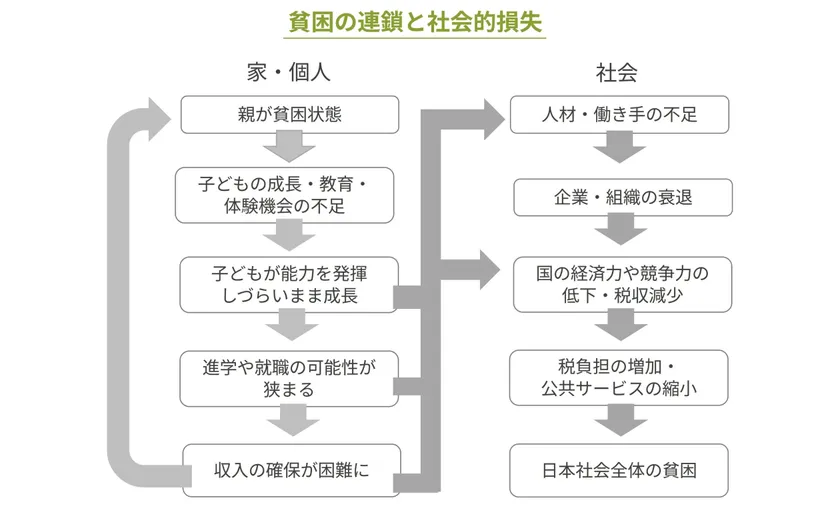
The Chain of Poverty and Social Losses
In addition, there are diverse factors that contribute to the background of poverty. For example, there are cases in which people are unable to make ends meet due to low income even when they are working full time. In addition, single-parent families may find it difficult to earn a stable income due to the difficulty of balancing work and child rearing, or they may not receive child support from the other parent of the child.
These problems cannot be solved only by the efforts and choices of the individual, but are greatly affected by the structure of society and the way people work. In other words, poverty is not a "problem of a few families" but an important theme that should be tackled comprehensively by society as a whole.
■The reality of poverty as expressed by the voices of those involved
Good Neighbors Japan, with a great sense of urgency about the issue of child poverty in Japan, launched the "Good Gohan" food bank program for low-income single-parent families in 2017.
The poverty rate for single-parent families in Japan is 44.5%, with nearly half of them living in relative poverty[1], and many families are so impoverished that they are unable to afford adequate food.
Families wishing to use the Good Gohan program continually express the reality of their difficult living conditions.
They said, "I have three children, some with developmental disabilities, so it is difficult for me to work full-time because I have to go to the hospital, etc. I am currently working part-time. Working part-time is financially difficult for me, but I cannot increase my working hours. I am constantly faced with this dilemma. I also have a junior high school student, so I would like to feed her more nutritious food, but I am also worried about the high cost of living and the need to save money."
"I am currently unable to work even if I wanted to due to depression, and I am raising my 6 and 8 year old children on my own. In the summer, I took water showers to save on gas, but in the winter, it is very cold and there are days when the children ask to take a bath, but I am unable to respond. When I go shopping with my children, I cannot buy them fruits and breads even if they want them, which makes me feel tight in my chest. I feel physically and mentally limited, and every morning when I wake up, I am filled with anxiety, wondering how I am going to get through today."
"I am a victim of domestic violence by my husband and have taken refuge in a dormitory for mothers and children. I myself am unable to work at the moment, so I have to live off my savings to make ends meet. I have tried my best to provide three meals a day and clean clothes for my children, but I feel that I have reached my limit."
Furthermore, the recent high cost of living has made the hardship of living even more serious. Those of us in the field are keenly aware of the increasing severity of the situation. Families who have applied to use "Good Gohan" over the past three months have voiced the following comments.
They said, "Anyway, I want to feed them whenever they want with their full bellies. I can no longer receive child support, and it is hard to live on my own income alone. Prices are so high that I can't afford to buy anything, and I wonder what will happen to me. I wonder what will happen to me."
"I am worried about whether I will be able to continue to raise my children."
Behind the "invisible poverty" lies such an imminent situation of families. We have seen this reality as individuals with faces and names.
We have also witnessed that many of the people involved suffer from lack of understanding and prejudice from those around them because it is difficult to see these realities. In a survey[2] conducted by Good Neighbors Japan on families who use "Good Gohan," the following comments were received.
"When the company I work for had to cut employees due to poor business performance, I was the one who was hired out. The reason was that "I am a single parent and my children are still small, so I cannot be given more responsibility than other employees. I had been working here for eight years, teaching the remaining employees, and I was not satisfied that I had been terminated because I was a single parent with no sense of responsibility."
"When I rented a room, I was turned away at the door by the real estate agency. I was evicted from a rented house because I was a single mother and child (I was threatened with higher rent, etc.). In addition, I was suddenly accused of being anti-company and asked to leave. They harassed me a great deal, including making unjustified claims on me, as if they thought I was weak). In any situation, many people take a licking just by saying "mother and child" and respond in a bullish manner. There are countless humiliations."
This lack of understanding by those around them can contribute to the parties involved feeling hesitant to receive support, even when they are facing a variety of difficulties. As a result, it is difficult for them to get the support they need, and there is a concern that this may deepen their sense of isolation and loneliness.
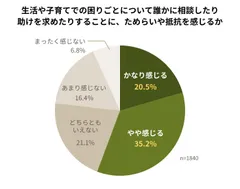
In the same survey of "Good Gohan" users, when asked about whether they feel hesitant or reluctant to ask for help or seek advice from others regarding problems in their daily lives or child-rearing, 50% of the respondents answered "quite hesitant" or "somewhat hesitant.
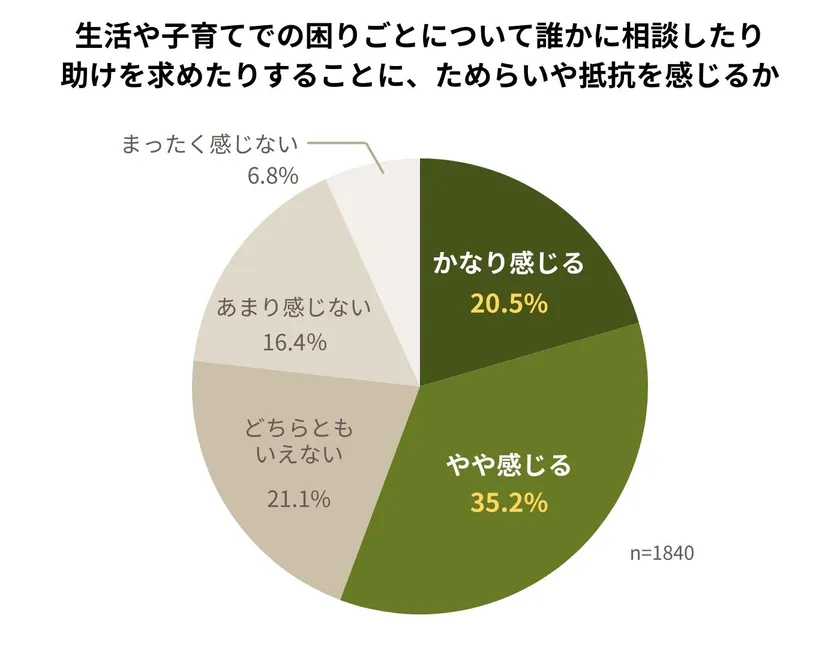
Do you feel hesitant or reluctant to ask someone for advice or help about problems in your daily life or child-rearing?
In order to prevent the worsening of poverty, society as a whole must create an environment in which everyone can easily reach out for the support they need.
■The severe situation reflected in the increase in support needs
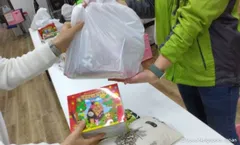
Good Neighbors Japan's "Good Gohan" program provides face-to-face food distribution to support single-parent families who are often lonely. We are working to support food, which is the "foundation for life" for children.
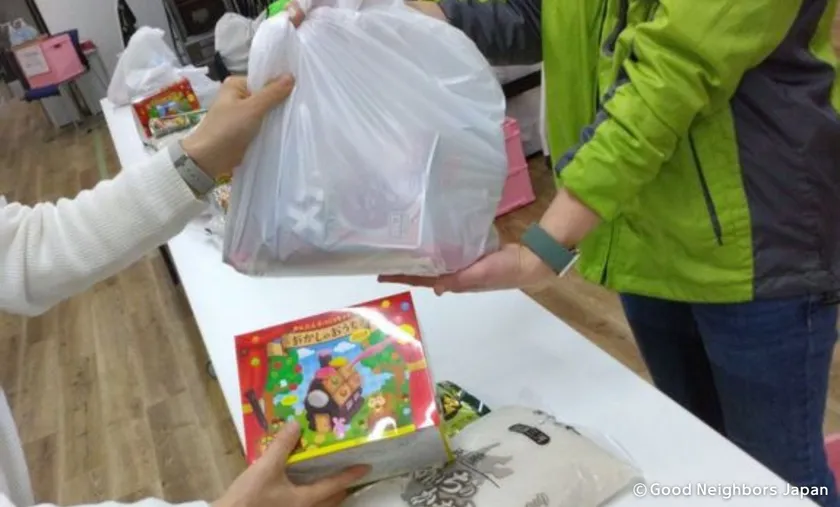
Good Gohan" food distribution
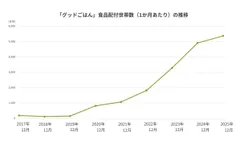
Since the start of the program, the number of households to which "Good Gohan" food is distributed has continued to increase year after year. We believe that this situation is a reflection of the reality that there are many families in need of someone's support.
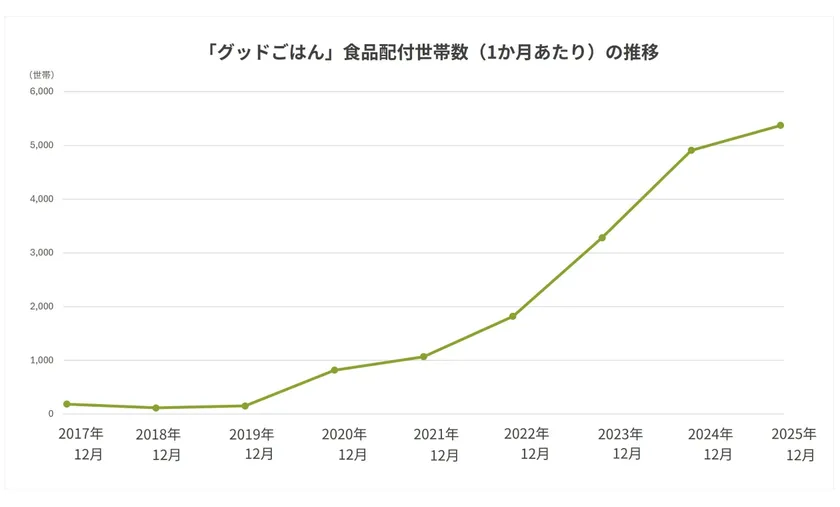
Number of households to which "Good Gohan" foods are distributed (per month)
■Let's look at "Invisible Poverty"
World Day for Social Justice (February 20) is an international day that calls for confronting issues such as poverty, discrimination, and exclusion with the aim of creating a society where all people can live fairly.
As we are in the field of support, we would like to tell you about it.
There are children living in poverty today in Japan who have difficulty even filling their bellies. This situation is difficult to see and notice from the outside.
That is why we hope to expand opportunities to think about this "invisible" reality with many people. I believe that there is something that each of us living in the same society can do to help.
Know more
It is an important step to understand the reality of social issues such as the current situation of child poverty and the situation of low-income single-parent families.
Reading this article is one step in that direction.
Communicate
Talking about the current situation with your family, friends, and colleagues, and sharing information with each other will help to expand the understanding of poverty, which is difficult to see, from a familiar place.
Take Action
There are many ways to get involved in social issues, such as making donations, corporate sponsorships, participating in elections, and volunteering.
No matter how you do it, every step you take will be a great support for children.
Good Neighbors Japan will continue its activities including "Good Gohan" so that as many children as possible will not lose the commonplace of "eating a full meal" and will not suffer from poverty.
On this World Day of Social Justice, please join us in looking at the current situation of poverty among children in Japan.
And we hope that we can work together with everyone in society to ensure that the present and future of all children are protected.
[1] Ministry of Health, Labour and Welfare, "2022 National Survey of Living Standards".
https://www.mhlw.go.jp/toukei/saikin/hw/k-tyosa/k-tyosa22/index.html
[2] "Questionnaire on Relationships with Surrounding People and Society in Single-parent Families," Good Neighbors Japan, a certified NPO (conducted in August 2025).
https://prtimes.jp/main/html/rd/p/000000118.000005375.html
<Regarding donations to the Food Bank "Good Gohan
The efforts of Food Bank "Good Gohan" are supported by your warm donations. In order to provide support to as many single-parent families as possible, we are accepting donations for our activities. If you are interested, please see the following page.
For monthly donation: https://www.gnjp.org/lp/dom_gg/index_main_corporate.html?utm_source=hp&utm_medium=hp&utm_campaign=hp_dom?utm_source= atpress&utm_medium=atpress&utm_campaign=atpress20260205_monthly
For one-time donations: https://www.gnjp.org/donate/domestic/ver3.2/index_otg.html?utm_source=hp&utm_medium=hp&utm_campaign=hp_oneoff?utm_ source=atpress&utm_medium=atpress&utm_campaign=atpress20260205_oneoff
For in-kind donations of food: https://www.gnjp.org/work/domestic/fooddonation/
About the Organization
Good Neighbors Japan was established in 2004 as a member of the international organization Good Neighbors International. Good Neighbors Japan aims to create a society where children are full of smiles and everyone can live as human beings. Good Neighbors Japan has been approved by the Tokyo Metropolitan Government as a "certified NPO," an organization with a high degree of public interest.
facebook : https://www.facebook.com/gnjapan
Instagram : https://www.instagram.com/gn_japan/
What is Good Gohan, a food bank for single-parent families?
"Good Gohan" is a monthly free food distribution program for single-parent families with a single-parent medical expense recipient certificate and income below the maximum amount.
At approximately 30 to 40 distribution sites* in the Tokyo metropolitan area, Kinki region, and Kyushu, we distribute baskets of food items worth approximately 10,000 yen to single-parent families, including rice, seasonings, retort pouch foods, and snacks collected through corporate and individual donations.
*As of December 2025 (the number of distribution sites varies from month to month)
https://www.gnjp.org/work/domestic/gohan/
Food is usually distributed to those who can pick it up in person at the distribution center.
(*People receiving public assistance are not eligible for this service.)
Various surveys targeting low-income single-parent families who use the Good Neighbors Japan food bank "Good Gohan"
Good Neighbors Japan has conducted various surveys targeting low-income single-parent families who use Food Bank "Good Gohan".
The survey provides a quantitative and qualitative visualization of the various issues facing single-parent families, including food, income, children's experiences, and isolation. Please take a look.
Image
Logo Image
- Category:
- Announcements & Recruitment